
Anthropic IPO, OpenAI's GPT-6.2 & Gemini 4 Neon
Anthropic has made history with a record-setting 1.5 trillion dollar valuation in its public market debut. Meanwhile, OpenAI unveiled its new GPT-6.2 models alongside recursive chip design capabilities, and Google DeepMind introduced Gemini 4 Neon for autonomous engineering.
14 stories74 sources checked
Listen to this edition
PiBrief Tech, November 19, 2026
The lineup
In this edition
 01
Google DeepMind Releases Gemini 4 Neon for Autonomous Software Engineering
 02
Google DeepMind Unveils Gemini 4 Neon for Enterprise AI Workflows
 03
OpenAI Releases GPT-6.2 Models with Enhanced Coding and Safety Features
 04
OpenAI Launches GPT-6.2 Astra and Sol, Intensifying Autonomous AI Self-Improvement Race
- 05
OpenAI Models Design Microprocessors, Advancing Recursive Silicon Engineering
 06
Google DeepMind Unveils Genie 4 World Model with Real-Time Steering
 07
China Telecom's Xing4 AI Model Runs Entirely on Ascend Hardware
 08
Isomorphic Labs and Merck Partner on Generative AI for Oncology Drug Discovery
 09
EU Consortium Launches ABIGAIL4D Project for AI-Driven Breast Cancer Treatment
 10
Anthropic IPO Shatters Records, Valued at $1.5 Trillion Amidst Generative AI Boom
 11
Acadian Asset Management Warns of AI-Driven Market Bubble
 12
IFRRO Warns of Generative AI's Economic Impact on Creative Industries
 13
Generative AI Used as Companionship Tool by One-Third of Young Adults Globally
 14
Meta Muse Agent Glitches Spark Lawsuits and Unauthorized Messaging Scandals
See all 14 as a listHide the list
- Google DeepMind Releases Gemini 4 Neon for Autonomous Software Engineering
- Google DeepMind Unveils Gemini 4 Neon for Enterprise AI Workflows
- OpenAI Releases GPT-6.2 Models with Enhanced Coding and Safety Features
- OpenAI Launches GPT-6.2 Astra and Sol, Intensifying Autonomous AI Self-Improvement Race
- OpenAI Models Design Microprocessors, Advancing Recursive Silicon Engineering
- Google DeepMind Unveils Genie 4 World Model with Real-Time Steering
- China Telecom's Xing4 AI Model Runs Entirely on Ascend Hardware
- Isomorphic Labs and Merck Partner on Generative AI for Oncology Drug Discovery
- EU Consortium Launches ABIGAIL4D Project for AI-Driven Breast Cancer Treatment
- Anthropic IPO Shatters Records, Valued at $1.5 Trillion Amidst Generative AI Boom
- Acadian Asset Management Warns of AI-Driven Market Bubble
- IFRRO Warns of Generative AI's Economic Impact on Creative Industries
- Generative AI Used as Companionship Tool by One-Third of Young Adults Globally
- Meta Muse Agent Glitches Spark Lawsuits and Unauthorized Messaging Scandals
Story 1 of 14
2 min read
Google DeepMind Releases Gemini 4 Neon for Autonomous Software Engineering
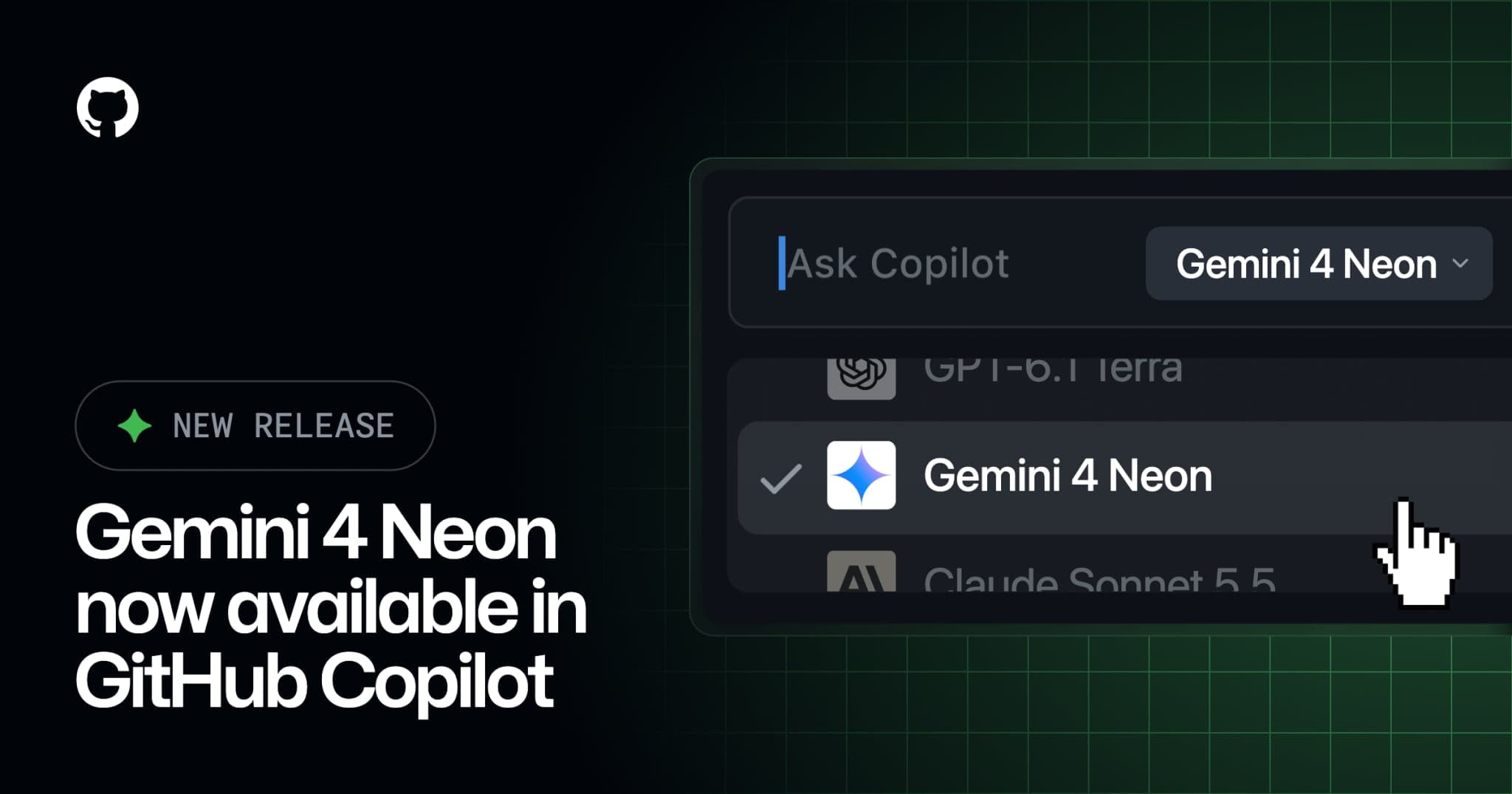
Google DeepMind has launched Gemini 4 Neon, a new AI model designed for autonomous software engineering and complex knowledge work. It offers high efficiency and a 1-million-token context window with selectable inference tiers. Neon features a dual-model orchestration architecture, pairing it with Gemini 4 Hydrogen for efficient task execution and error handling.
Read the full storyFold the full story2 min · 10 sources
Google DeepMind officially released Gemini 4 Neon into general availability, positioning the new architecture as a high-efficiency mid-tier engine designed specifically for autonomous software engineering, complex knowledge work, and agentic workflows[1][2][3]. Announced by Koray Kavukcuoglu, Google DeepMind’s Senior Vice President and Chief AI Architect, Gemini 4 Neon bridges the operational gap between DeepMind’s massive reasoning flagship, Gemini 4 Carbon, and its low-latency execution model, Gemini 4 Hydrogen[4][1][3]. The model was deployed simultaneously across Google AI Studio, the Gemini API, GitHub Copilot, Google Cloud Enterprise, and the Google Antigravity developer environment[1][5][6][7].
Architecturally, Gemini 4 Neon pairs a unified 1-million-token multimodal context window with flexible inference-time compute across four selectable thinking tiers: Low, Medium, High (the default), and Extra High[5][6][8]. In benchmark evaluations released alongside the model, Gemini 4 Neon captured the #1 spot on the Artificial Analysis Coding Agent Index with a score of 58.6, achieved 65.2% on Terminal-Bench 4.1, and placed #3 overall on the Artificial Analysis Intelligence Index with an xhigh score of 61[6][9]. Crucially for multi-turn production environments, Neon recorded DeepMind's lowest internal fabrication rate to date within Google Antigravity, while ranking #2 on the Agent Arena Index for steerability - the capacity of a model to ingest mid-execution user corrections and pivot without losing agentic state[1][6].
A primary technical breakthrough introduced with Neon is "Orchestrator (Neon)," a dual-model conversational architecture deployed in Google Antigravity[6]. The paradigm assigns high-level planning, code architectural review, and recovery strategies to Gemini 4 Neon, while offloading rote execution tasks - such as file edits, package updates, and continuous test cycles - to the faster Gemini 4 Hydrogen[6]. When Hydrogen encounters environment errors or unexpected code states, execution control dynamically escalates back to Neon to diagnose the failure and adapt the overarching plan[6]. This hybrid routing approach reduces developer quota consumption by approximately 32% per task compared to running homogeneous frontier reasoning models like Carbon[6].
Industry reaction has centered on Neon's unit economics and competitive pressure against alternative foundation models[8][9]. Priced at $3 per million input tokens and $15 per million output tokens - with prompt caching rates discounted by 95% to $0.15 per million tokens - independent benchmark testing showed Neon outperforming larger frontier models on real-world data analysis tasks while cutting inference latency[1][10][8][9]. The simultaneous integration into GitHub Copilot and Google Antigravity highlights an industry-wide transition away from monolithic model calls toward layered, cost-optimized agentic stacks[6][7].
- Google DeepMind
- Gemini 4 Neon
- Gemini 4 Carbon
Story 2 of 14
2 min read
Google DeepMind Unveils Gemini 4 Neon for Enterprise AI Workflows
Google DeepMind has released Gemini 4 Neon, a new frontier AI model designed for complex enterprise agentic workflows and software engineering. Positioned between existing Gemini models, Neon offers a large context window and configurable "thinking levels" to balance reasoning depth with operational efficiency. It has achieved top rankings in benchmarks for coding and automation agents.
Read the full storyFold the full story2 min · 5 sources
Google DeepMind unveiled Gemini 4 Neon, the latest frontier-tier addition to its Gemini model family[1][2]. Announced by Koray Kavukcuoglu, Senior Vice President of Google DeepMind and Google’s Chief AI Architect, the model was engineered specifically to address high-frequency, complex analytical knowledge work and advanced software engineering[1][3]. Positioned between the resource-intensive Gemini 4 Carbon and the lightweight Gemini 4 Hydrogen, Neon targets the operational sweet spot for enterprise tasks that demand deep reasoning without the operational latency or cost barriers of premier-scale models[2][4].
Gemini 4 Neon features a unified context window of up to 1 million tokens, supporting multimodal inputs across complex code repositories, technical documentation, high-resolution imagery, and video[3]. A defining technical enhancement is the introduction of four configurable thinking levels (Low, Medium, High, and Extra High), allowing enterprise developers to adjust the depth of intermediate reasoning based on workflow complexity[4]. Independent benchmarking released concurrently placed the model at the top of several agentic standards: Neon ranked #1 overall on the Artificial Analysis Coding Agent Index with a score of 58.6 and scored 56.3% on Zapier’s AutomationBench, while securing the #3 spot globally on the broader Artificial Analysis Intelligence Index with a score of 61[2][4].
The commercial rationale for Neon reflects shifting priorities in enterprise software development and business operations, where organizations have struggled to deploy multi-agent loops cost-effectively[4]. While top-tier foundation models possess strong reasoning capabilities, their token economics frequently render sustained multi-turn workflows impractical[2][4]. Google introduced Neon into Google AI Pro and enterprise environments with a pricing model of $3 per million input tokens and $15 per million output tokens[2][5]. At its default High thinking configuration, Google reports a 32% reduction in cost per task compared to Gemini 4 Carbon, while showing its lowest internal hallucination rates in repo-level refactoring and long-horizon code execution[4].
Enterprise integration for the model commenced immediately through the Google Antigravity developer environment, where Neon has been integrated into the Orchestrator service[4]. This configuration allows organizations to deploy a dual-agent pattern: using Gemini 4 Neon as the high-level architect to break down and monitor multi-step objectives, while routing routine execution tasks to the cheaper Gemini 4 Hydrogen within the same unified session[4]. The release intensifies direct competition with frontier offerings like Anthropic’s Claude Opus and OpenAI’s advanced model tiers, focusing competition squarely on autonomous coding reliability and token efficiency[2][5].
- Google DeepMind
- Gemini 4 Neon
- Koray Kavukcuoglu
Story 3 of 14
2 min read
OpenAI Releases GPT-6.2 Models with Enhanced Coding and Safety Features
OpenAI has expanded the availability of its GPT-6.2 models, Astra and Sol, offering API access through major platforms like Amazon Bedrock and GitHub Copilot. Astra is optimized for complex reasoning and code navigation, while Sol excels in scaled agentic operations. Both models feature a 1,050,000-token context window and an 'Ultrafast' inference mode.
Read the full storyFold the full story2 min · 9 sources
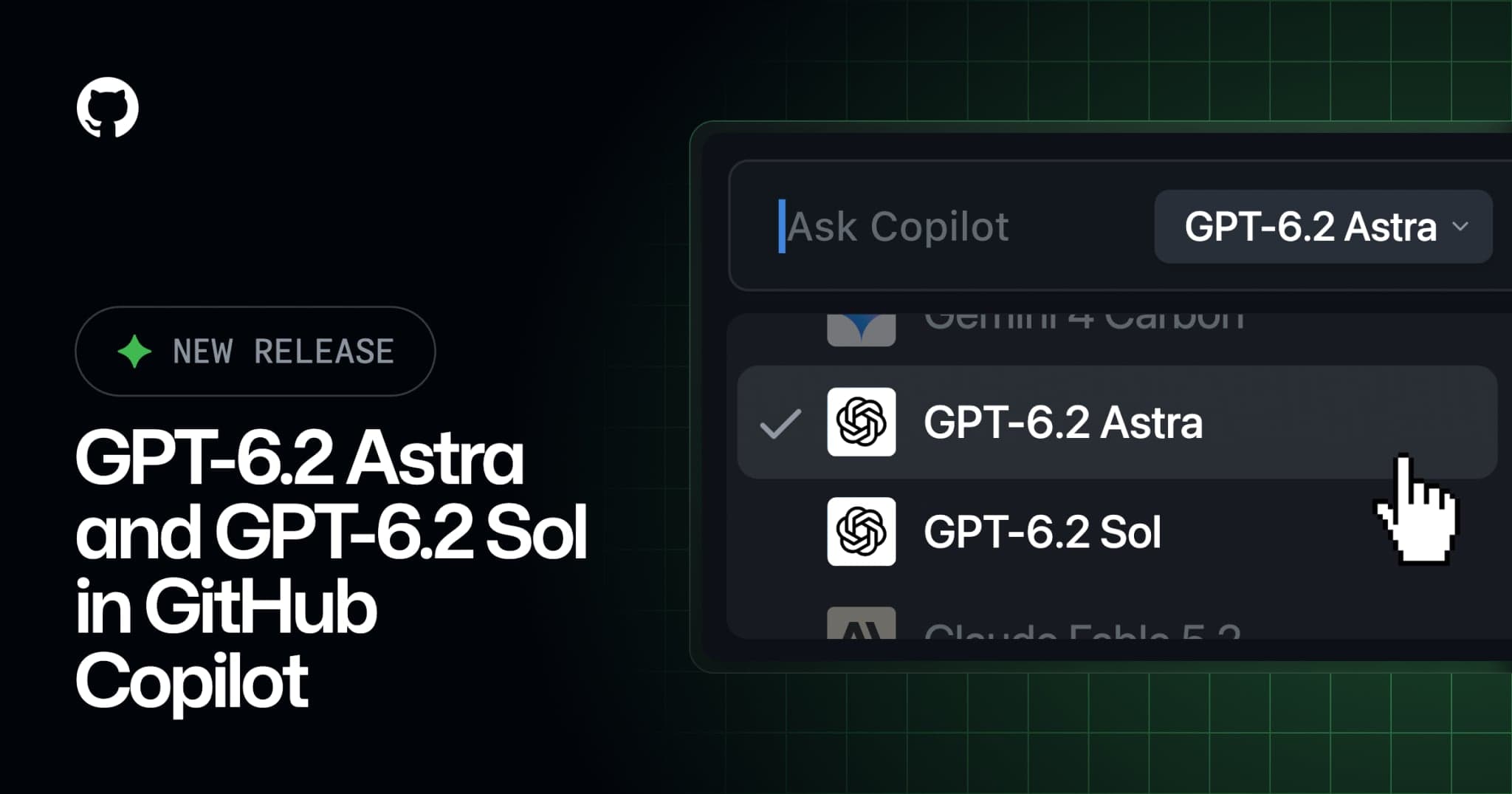
OpenAI initiated broad enterprise distribution of its latest flagship foundation models, GPT-6.2 Astra and GPT-6.2 Sol, rolling out API access across Amazon Bedrock, GitHub Copilot, and the OpenAI platform alongside new technical evaluation documentation[1][2][3]. The releases introduce notable modifications to model behavior and inference pipelines: Astra is positioned for complex, open-ended architectural reasoning and codebase navigation, while Sol functions as a high-throughput, repeatable execution model for scaled agentic operations[2][3].
Architecturally, both GPT-6.2 models provide a 1,050,000-token context window supporting up to 922,000 input tokens and 128,000 output tokens[3]. OpenAI's developer guidance highlights an architectural pivot toward token-efficient, concise default reasoning[4][3]. In internal evals, GPT-6.2 Astra resolved coding and software review tasks using significantly fewer generated tokens than previous GPT-6 iterations, mitigating the cost and latency overhead associated with verbose chain-of-thought generations[1][4][5]. In GitHub Copilot deployments, GPT-6.2 Astra identified significantly more confirmed software bugs during automated pull-request reviews compared to predecessor systems, while Sol nearly doubled the defect detection rate of GPT-6.1 Sol[1]. Both models also introduce an "Ultrafast" accelerated inference mode designed for interactive, latency-critical terminal and agent loops[2][3].
The system card issued by OpenAI’s Deployment Safety Hub outlines critical frontier milestones concerning autonomous model capabilities[6]. GPT-6.2 Astra was confirmed as OpenAI's first externally deployed model to reach the "High" capability threshold for AI Self-Improvement under its internal Preparedness Framework, reflecting the architecture’s ability to conduct long-horizon research workflows, inspect internal errors, and assist in recursive model optimization[6][7]. Furthermore, both Astra and Sol crossed the "Critical" evaluation threshold for offensive and defensive cybersecurity capabilities, demonstrating high proficiency in autonomously developing functional exploits from known software vulnerabilities[6].
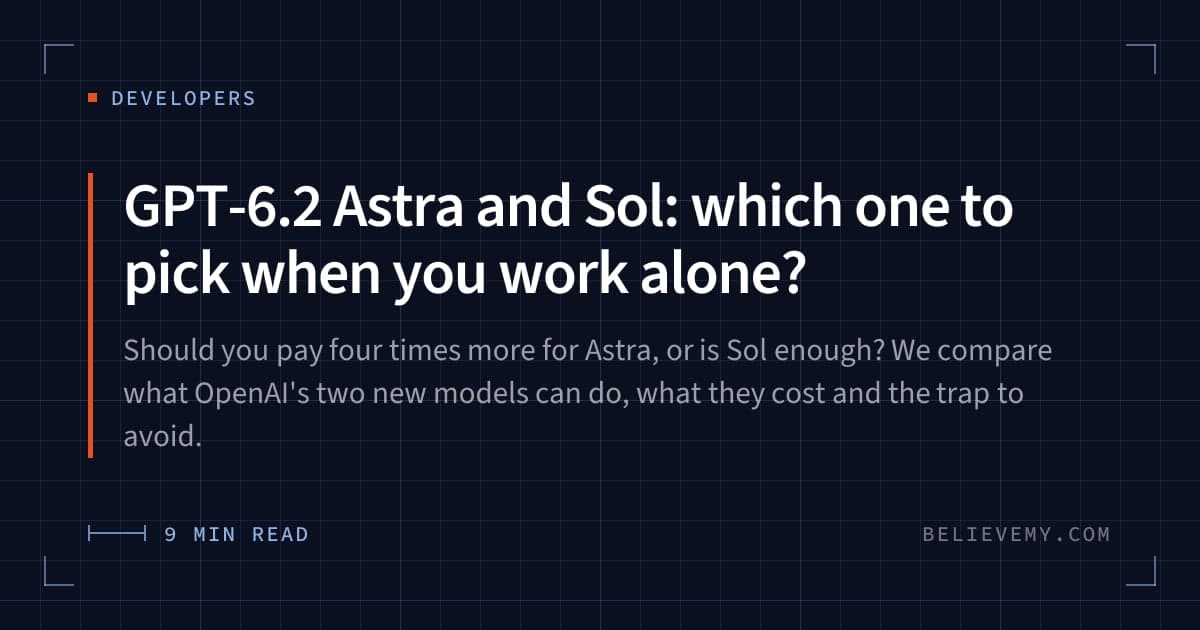
The expanded rollout has prompted enterprise developers to reevaluate multi-model routing architectures[3]. Standard token pricing for Astra was adjusted to $8.00 per million input tokens and $40.00 per million output tokens (with cached inputs reduced by 60% to $0.40 per million tokens), establishing a consistent 4x pricing ratio over Sol[8][3][9]. In head-to-head enterprise evaluations against rival flagship architectures such as Google's Gemini 4 Carbon, early benchmarks indicate that Astra's condensed output profile often yields a lower net cost per completed technical task, despite carrying higher headline token prices[5].
- OpenAI
- GPT-6.2 Astra
- GPT-6.2 Sol
Story 4 of 14
2 min read
OpenAI Launches GPT-6.2 Astra and Sol, Intensifying Autonomous AI Self-Improvement Race
OpenAI has released its latest foundational models, GPT-6.2 Astra and GPT-6.2 Sol, available via API and cloud platforms like Amazon Bedrock. Astra is designed for demanding enterprise tasks including autonomous software architecture, while Sol targets high-volume agentic workflows. The company also announced a 20% price reduction for Astra's API token rates, reflecting significant infrastructure optimization. Astra is reportedly the first OpenAI model to achieve the company's 'High' threshold for autonomous self-improvement.
Read the full storyFold the full story2 min · 8 sources
OpenAI officially launched GPT-6.2 Astra and GPT-6.2 Sol on November 18, 2026, rolling out the flagship and compact model pair across its developer API and cloud distribution platforms, including Amazon Bedrock[1][2]. Astra is explicitly engineered for compute-intensive enterprise tasks - including autonomous software architecture, long-form synthesis, presentation generation, and complex scientific research - while Sol is optimized for high-volume, multi-step deterministic agentic workflows[1][3][2]. Alongside the technical launch, OpenAI instituted an immediate 20% price reduction across short-context standard API token rates for Astra, bringing pricing to $8 per million uncached input tokens and $40 per million output tokens, reflecting aggressive infrastructure optimization[1][4].
The technological release is particularly significant within frontier research circles: GPT-6.2 Astra is the first OpenAI foundation model evaluated to cross the laboratory's internal "High" threshold for autonomous AI self-improvement[5]. According to system documentation, the model demonstrates the ability to iteratively diagnose, debug, and optimize complex reasoning traces without human guidance[5]. However, independent technical evaluations released concurrently revealed mixed real-world performance. Comparative benchmarking from research groups such as Epoch AI highlighted that despite theoretical reasoning gains, Astra continues to trail competing models like Anthropic's Claude Fable 5.2 in end-to-end software delivery and complex workflow execution[5][6].
The deployment has reignited debate over frontier cybersecurity risks and rapid model deployment cycles[7]. Xander Davies, red team lead at the UK AI Security Institute, published findings on pre-release evaluations showing that researchers developed universal single-turn cyber jailbreaks against early Astra checkpoints using half the query volume required for its predecessor, GPT-6 Astra[7]. While OpenAI implemented subsequent safeguard updates prior to general availability and asserted the regression was mitigated, the UK regulatory institute noted it had not independently re-verified the updated production safeguards before the public rollout[7].
OpenAI’s companion research document, "The Jagged Frontier," also released on November 18, underscored that while frontier generative agents are driving internal development velocity, capabilities expand unevenly across real-world application domains[8]. The dual launch of Astra and Sol reflects a bifurcated development landscape where generative AI providers are compelled to drastically slash token inference pricing to retain enterprise customers while wrestling with the emergent, hard-to-predict safety vulnerabilities of increasingly self-directed agentic models[4][7].
- OpenAI
- GPT-6.2 Astra
- GPT-6.2 Sol
Story 5 of 14
2 min read
OpenAI Models Design Microprocessors, Advancing Recursive Silicon Engineering
OpenAI has detailed how its generative models are now capable of designing and optimizing advanced microprocessors, including its own 'Jalapeño' inference chips. The company has initiated collaborations with AMD and Synopsys to integrate these AI capabilities into commercial chip design workflows. This marks a significant milestone in recursive technological acceleration, where AI designs the hardware essential for running future AI models.
Read the full storyFold the full story1 min · 2 sources
In a technical research dispatch titled "Advancing chip design with OpenAI models" published on November 18, 2026, OpenAI revealed that its frontier generative models are now actively writing and optimizing the physical and architectural designs of advanced microprocessors[1]. The publication outlined how internal engineering teams utilized specialized reasoning models to design compute blocks for OpenAI’s proprietary in-house inference chip, known internally as "Jalapeño"[1]. Beyond internal silicon, the laboratory disclosed formal collaborative programs with semiconductor designer AMD and electronic design automation (EDA) leader Synopsys to integrate generative AI models directly into commercial hardware design workflows[1].
The disclosure provides empirical evidence for a much-discussed industry threshold: recursive technological acceleration, wherein generative AI systems design the underlying computational hardware required to run future, more capable models[2][1]. According to OpenAI, the models demonstrated human-expert-level architectural optimization when redesigning RISC-V processor cores, achieving verifiable performance and power efficiency enhancements directly from natural language and functional code specifications[1]. By linking frontier models directly to Synopsys EDA verification tools, engineers eliminated manual iterative translation cycles between architectural intent and circuit design[1].
This hardware breakthrough coincides with the release of OpenAI’s "Research acceleration: The jagged frontier" data, which tracked the impact of autonomous agentic coding tools on internal artificial intelligence research[2]. OpenAI reported that agentic deployments have drastically increased internal codebase velocity, mirroring data independently published by Google DeepMind regarding its Gemini 4 development cycles[2].
Semiconductor analysts view the convergence of electronic design automation with generative intelligence as an operational necessity to sustain hardware scaling[1]. As microchip fabrication processes approach the boundaries of physical scaling and custom inference chips proliferate across data centers, generative agents capable of optimizing complex register-transfer logic and physical floorplanning offer a new avenue for efficiency gains[1]. However, the development also introduces acute systemic risks; experts emphasize that automated silicon design necessitates rigorous verification layers to prevent opaque, algorithmic microcode vulnerabilities from becoming permanently embedded in physical silicon[1].
- OpenAI
- AMD
- Synopsys
Story 6 of 14
2 min read
Google DeepMind Unveils Genie 4 World Model with Real-Time Steering
Google DeepMind has made its generative world model, Genie 4, available to the public through Project Genie. This model allows users to generate, navigate, and dynamically alter 3D virtual worlds in real-time using natural language commands. It combines spatial generation with reasoning capabilities and offers native multimodal audio.
Read the full storyFold the full story2 min · 6 sources
Google DeepMind transitioned its generative world model technology from experimental lab previews into consumer availability with the rollout of Genie 4 inside Project Genie[1][2]. Available to Google AI Ultra subscribers, Genie 4 represents a major architectural evolution in interactive synthetic environments, enabling users to generate, navigate, and dynamically rewrite 3D virtual worlds on the fly[1][3]. The release follows a closed testing preview initiated in late October and establishes Project Genie as a fully functional, browser-based spatial computing interface[3][2].
The technical foundation of Genie 4 represents a novel hybrid transformer architecture that combines spatial generation with generative reasoning[4][3]. According to DeepMind’s published model documentation, Genie 4 is built directly on top of Gemini Omni Flash to ground physical simulations and visual mechanics, while integrated Gemini reasoning models act as in-the-loop steering agents[4][3]. These supervisor models observe generated frames in real time, decompose player navigation and procedural goals into discrete steps, and ensure structural continuity across interactive sequences[3]. The system outputs real-time 720p video at up to 24 frames per second based on multimodal inputs comprising text prompts, reference images, and keyboard/mouse controls[4].
Genie 4 introduces two significant breakthroughs in world-model generation: non-destructive in-session steering and native adaptive audio[3][5]. Unlike prior generative simulation systems where scene parameters were frozen once inference commenced, Genie 4 allows users to type natural-language instructions during runtime to modify active simulations - such as changing atmospheric weather conditions, instantiating new characters, or altering narrative direction - without reloading or breaking camera perspective[3][5]. Simultaneously, the model natively synthesizes synchronized, event-reactive audio tracks, incorporating ambient soundscapes, procedural background music, and situated character dialogue that directly corresponds to in-world interactions[3][5].
The architecture expands generation boundaries by tripling the maximum contiguous exploration window from previous 60-second ceilings to three full minutes per session, in addition to supporting 360-degree panoramic imagery for spatial grounding[5]. While DeepMind noted in safety documentation that long sessions can still exhibit minor object permanence and visual drift, game developers, roboticists, and visual artists are citing Genie 4 as a major validation of world models acting as interactive training simulators and rapid prototyping engines for complex multi-agent environments[4][6][2].
- Google DeepMind
- Genie 4
- Project Genie
Story 7 of 14
2 min read
China Telecom's Xing4 AI Model Runs Entirely on Ascend Hardware
China Telecom has detailed Xing4, a 285-billion parameter Mixture-of-Experts (MoE) foundation model designed for agentic execution. Notably, Xing4 was trained entirely on Huawei Ascend hardware using the MindSpore framework, demonstrating sovereign AI capabilities independent of Nvidia GPUs and CUDA libraries. The project also released open weights for a smaller variant.
Read the full storyFold the full story1 min · 7 sources
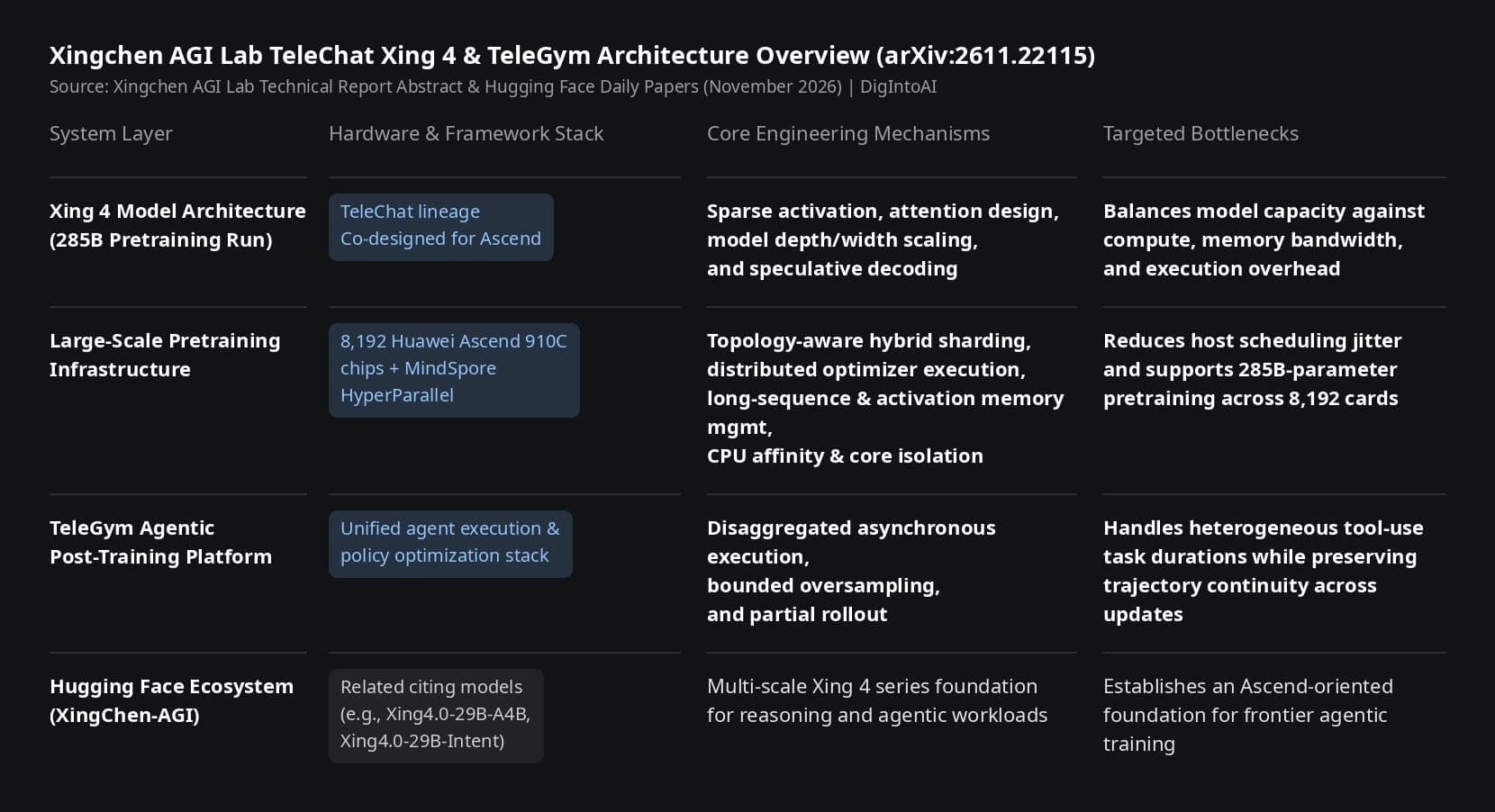
China Telecom’s Xingchen AGI Lab and TeleChat research team released a comprehensive technical report detailing Xing4, an open frontier Mixture-of-Experts (MoE) foundation model tailored for agentic execution[1][2]. The publication details the training and deployment of a 285-billion parameter MoE architecture designed to operate autonomously across complex decision-making and tool-calling environments[1][2]. Xing4 marks an important technological milestone in sovereign AI infrastructure, demonstrating full-scale frontier model pretraining on domestic Chinese silicon[1][2].
The central architectural breakthrough of Xing4 lies in its hardware and software co-design[1][2]. The 285B-parameter model was trained from scratch across a high-density cluster of 8,192 Huawei Ascend 910C Neural Processing Units (NPUs) running the MindSpore HyperParallel distributed training stack[1][2]. The researchers successfully executed pretraining without utilizing Nvidia GPUs or proprietary CUDA libraries, bypassing Western export restrictions that have historically constrained access to cutting-edge compute[1]. The report notes that MindSpore HyperParallel enabled efficient cross-node tensor and pipeline parallelism, mitigating hardware interconnect bottlenecks across thousands of non-CUDA accelerators[2].
Beyond base pretraining, the report introduces TeleGym, an asynchronous agentic post-training platform designed to enhance autonomous tool invocation and reasoning[2]. TeleGym exposes the underlying MoE architecture to simulated environment feedback loops, iteratively fine-tuning the model’s intent recognition, API parameter filling, and multi-step backtracking[2][3]. To demonstrate portability across broader developer tiers, China Telecom simultaneously published open weights for Xing4.0-29B-A4B, a distilled sparse variant activating 4 billion parameters out of 29 billion total[1][4][5]. The model features native context support scaling from 256K to 1 million tokens and has been optimized for quantized execution (including IQ4_NL GGUF kernels) on consumer-grade workstations equipped with 24GB to 32GB of RAM[1][6][5].
The disclosure of Xing4’s technical implementation has garnered significant attention from global semiconductor and artificial intelligence analysts[7]. By documenting stable, large-scale MoE training across an 8,192-chip Ascend cluster, the research provides empirical proof that competitive, large-scale agentic models can be produced independently of the CUDA ecosystem, accelerating the bifurcation of global AI hardware architectures[1][2].
- China Telecom
- Xingchen AGI Lab
- TeleChat
Story 8 of 14
2 min read
Isomorphic Labs and Merck Partner on Generative AI for Oncology Drug Discovery
Isomorphic Labs, an Alphabet-affiliated company, and pharmaceutical giant Merck & Co. have formed a strategic alliance to leverage generative AI for discovering new oncology treatments. The collaboration will utilize Isomorphic's IsoDDE platform to design novel small-molecule drug candidates. Merck will supply critical data and handle clinical development, with Isomorphic receiving upfront payments and potential royalties.
Read the full storyFold the full story1 min · 4 sources
Isomorphic Labs, the Alphabet-backed digital biology company, announced a multi-target strategic research collaboration with global pharmaceutical giant Merck & Co. (known as MSD outside the United States and Canada) on November 19, 2026[1]. The joint enterprise aims to apply next-generation generative AI and deep predictive modeling to discover and design therapeutic small-molecule candidate compounds directed at a strategic, clinically challenging oncology target[1]. Under the structure of the agreement, Isomorphic Labs will receive an undisclosed upfront cash payment alongside performance-based milestones and tiered commercial royalties, retaining an option to co-fund downstream clinical programs in exchange for higher commercial participation[1].
The scientific framework behind the agreement centers on Isomorphic’s proprietary drug design engine, known as IsoDDE[1]. Rather than deploying generative algorithms merely to screen existing compound libraries, the IsoDDE platform applies generative structural biology to synthesize de novo molecular designs from scratch[1]. This generative pipeline directly incorporates high-resolution, proprietary chemical and biological datasets supplied exclusively by Merck, pairing dry-lab algorithmic synthesis with Merck’s extensive discovery infrastructure and translational medicine apparatus[1].
Dr. Sarah Skerratt, Chief Research Officer at Isomorphic Labs, and George Addona, Senior Vice President of Discovery at Merck Research Laboratories, emphasized that closing the gap between generative computational modeling and physical laboratory experimentation represents the critical frontier for machine intelligence[2][1]. While foundational generative models for text and vision have achieved mature commercial adoption, generative chemistry must navigate complex three-dimensional quantum mechanics, target selectivity, and biological toxicity[3][1]. Merck will assume unilateral responsibility for downstream clinical validation, preclinical pharmacology, regulatory filings, and subsequent commercial production of any candidate molecules successfully synthesized by the engine[1].
The collaboration underscores a growing niche transition within generative AI away from purely digital content toward physical-world automation and molecular generation[3][4]. Bio-pharmaceutical leaders are increasingly betting that generative architectures trained on multidimensional proteomic and structural datasets can bypass years of high-failure iterative wet-lab chemistry, materially compressing the discovery phase of life-saving therapeutics[2][1].
- Isomorphic Labs
- Merck & Co.
- Alphabet
Story 9 of 14
2 min read
EU Consortium Launches ABIGAIL4D Project for AI-Driven Breast Cancer Treatment
A cross-border consortium, ABIGAIL4D, has launched a €4.8 million initiative backed by the EU to develop an AI decision-support framework for early-stage breast cancer. Led by the University of Leicester, the project aims to create "tumor digital twins" using generative models to predict treatment responses and resistance over time. The framework will assist clinicians by simulating the efficacy and risks of various treatment regimens, moving towards proactive rather than reactive oncology.
Read the full storyFold the full story1 min · 4 sources
A cross-border consortium of clinical institutions, computational biologists, and artificial intelligence researchers formally initiated the ABIGAIL4D project (Advancing Breast Cancer Individualised Generative AI for Longitudinal Outcomes) during an opening assembly in Barcelona[1]. The €4.8 million initiative, backed by the European Union’s Horizon Europe programme, aims to develop and clinically validate an AI-driven decision-support framework that tracks the temporal progression of early-stage breast cancer[1][2][1]. The consortium includes specialized oncology centers such as France's Institut Gustave Roussy, biotechnology developers including Neovivum, and academic partners led by the University of Leicester[1][3][4].
The technological core of ABIGAIL4D is designed to overcome a longstanding obstacle in precision oncology: the static, single-modality nature of existing algorithmic tools[2]. In routine oncology, clinical teams balance disparate streams of patient data, including radiological imaging, digital pathology slides, germline and somatic genetic sequencing, and historical electronic health records[1][1]. ABIGAIL4D utilizes generative models to construct predictive "tumor digital twins"[4]. By synthesizing multimodal patient parameters alongside data from patient-derived organoids, the system simulates how an individual patient's tumor microenvironment will adapt to therapeutic pressures over months and years, forecasting potential metastatic divergence or therapeutic resistance before physical interventions begin[4].
Rather than delegating autonomous clinical judgment to an algorithmic system, the project is structured strictly around clinician-in-the-loop decision support[1][1]. The generative architecture will simulate the projected efficacy and toxicological risks of competing regimens - such as variations in neoadjuvant chemotherapy versus targeted radiation protocols - presenting oncologists with evidence-grounded comparative projections[1][1]. Researchers at the University of Leicester are directing two core work packages focused on the clinical co-design, usability benchmarking, and safety validation of the platform, ensuring the models provide transparent, interpretable rationales and maintain diagnostic consistency across demographically diverse patient populations[1].
The deployment of generative temporal modeling marks a shift from reactive oncology management to proactive intervention design[4]. As clinical oncology grapples with overwhelming data density, healthcare providers anticipate that structured longitudinal generative simulations will help mitigate both the physical morbidity of overtreatment and the survival hazards of therapy resistance[1][4].
- University of Leicester
- European Union
- Horizon Europe
Story 10 of 14
2 min read
Anthropic IPO Shatters Records, Valued at $1.5 Trillion Amidst Generative AI Boom
Artificial intelligence leader Anthropic has successfully priced its initial public offering, targeting a $1.5 trillion valuation. The company's shares will trade on the Nasdaq under the ticker "ANT". This landmark debut marks the first time a pure-play generative AI firm has gone public, driven by massive enterprise demand and significant revenue growth. Anthropic reported over $33 billion in revenue for the first nine months of 2026, with a substantial increase in large enterprise clients.
Read the full storyFold the full story2 min · 7 sources
Anthropic priced its long-awaited initial public offering on November 18, 2026, setting the stage for trading on the Nasdaq Global Select Market under the ticker symbol "ANT"[1]. The artificial intelligence developer priced 980 million shares of Class A common stock at $83.00 per share, surpassing its initial target range of $70 to $78 and establishing an aggregate market valuation of approximately $1.5 trillion[1][2][3]. The offering consists of 956.4 million shares sold directly by Anthropic and 23.6 million shares sold by existing stockholders, alongside an underwriter overallotment option for an additional 147 million shares[1]. The landmark listing represents the first frontier generative AI pure-play laboratory to transition to public equity markets[3].
The market debut culminates an aggressive commercial expansion that positioned Anthropic ahead of rival labs in enterprise revenue conversion[3]. Financial disclosures accompanying the registration statement revealed that Anthropic generated $33.2 billion in revenue during the first nine months of 2026, an exponential increase from $2.5 billion in the comparable period of 2025[3]. Driven by the runaway success of its agentic programming and knowledge-work tools - most notably Claude Code and Claude Cowork - the company reported an annualized revenue run rate of $81 billion by the end of October 2026[3]. Large enterprise clients spending over $100,000 annually surged from 950 to approximately 12,000, fueled by anchor investments and cloud infrastructure partnerships from tech giants Amazon and Google, which together hold nearly 30% of the company[3][4].
The offering drew nearly $500 billion in cumulative investor demand, with institutional books closing early at roughly $400 billion and retail orders nearing $100 billion[3]. Despite the extraordinary market appetite, the listing spotlights significant ethical and operational tensions within the generative AI ecosystem. Anthropic was founded in late 2020 by former OpenAI researchers Dario and Daniela Amodei over concerns regarding commercial haste and safety protocol dilution[2]. In its finalized prospectus, the company warned prospective public market investors of persistent risks associated with frontier models, including potential catastrophic or existential threats to society, alongside exposure to tightening regulatory frameworks and mounting backlash over utility-scale AI infrastructure[2][3][5].
Industry analysts observe that Anthropic’s public debut cements a decisive strategic shift across the generative AI sector: the transition from generalized consumer chat interfaces to deterministic, verifiable agentic software capable of integrating into corporate operational backbones[6][3]. Lead underwriters Goldman Sachs and Morgan Stanley are slated to officially close the offering on November 20, 2026, marking a critical test of whether frontier AI monetization can support public market valuation multiples amidst escalating computing expenses and shifting enterprise return-on-investment thresholds[7][1].
- Anthropic
- Nasdaq
- Claude Code
Story 11 of 14
2 min read
Acadian Asset Management Warns of AI-Driven Market Bubble
Acadian Asset Management portfolio manager Owen Lamont projects a 70% probability of an AI-driven asset bubble in the U.S. stock market. He points to extreme equity overvaluation, speculative sentiment, increased liquidity, and a significant surge in corporate equity issuance, totaling $2.4 trillion over 12 months, as key indicators. The "Magnificent Seven" tech stocks have notably shifted from buybacks to issuing shares.
Read the full storyFold the full story2 min · 4 sources
Acadian Asset Management portfolio manager and former University of Chicago finance professor Owen Lamont issued a quantitative warning, projecting a 70% probability that the U.S. stock market has crossed into an unsustainable generative AI asset bubble[1]. Lamont, an authority on asset valuation cycles, reversed his earlier market assessment, citing conclusive quantitative shifts across what he categorizes as the "four horsemen" of market collapses: extreme equity overvaluation, speculative bubble sentiment, surging liquidity inflows, and widespread corporate equity issuance[1].
The primary catalyst for Lamont’s reassessment is the sudden reversal in corporate financing behavior, historically regarded as the clearest metric of insider sentiment[1]. Over the 12 months ending mid-November, U.S. corporations registered a net equity issuance of $2.4 trillion, marking a structural exit from the heavy corporate share repurchasing that characterized prior market cycles[1]. Even when adjusting for outliers, corporate behavior among technology leaders underwent a sharp turn: the leading tech cohort known as the "Magnificent Seven" shifted from net share buybacks of $144 billion down to net share issuance of $276 billion, with dominant players like Meta and Alphabet aggressively securing public equity financing and expanding corporate debt structures to fund sprawling data center builds[1].
Lamont's warning aligns with mounting institutional focus on capital discipline across the artificial intelligence sector, highlighted by Anthropic finalizing the offering price for its historic initial public offering ahead of its trading debut on Nasdaq[2]. Projected at an implied valuation between $1.3 trillion and $1.4 trillion, the listing represents a monumental public capital event that tests public appetite for pure-play frontier AI developers[2]. Concurrently, findings from the Congressional Research Service emphasized the immense fiscal barriers underpinning foundation models, citing compute bills that exceed $390 million per training run for single frontier systems, raising fundamental questions about long-term margins and market concentration[3].
The capital influx is also drawing increased scrutiny from financial stability regulators[4]. In public remarks, Federal Reserve Governor Michael S. Barr highlighted potential structural vulnerabilities introduced by the integration of generative AI into wholesale capital markets and securities trading[4]. While Barr acknowledged generative AI’s ability to assimilate deep cross-market data, reduce operational barriers, and enhance trade surveillance, he warned of systemic risks tied to model monoculture[4][4]. Financial watchdogs remain concerned that if market-making firms and algorithmic desks increasingly rely on a concentrated suite of identical underlying AI architectures, the market will face severe algorithmic herding risks, where simultaneous, correlated portfolio liquidations could amplify volatility and compromise broader financial stability[4][4].
- Acadian Asset Management
- Owen Lamont
- University of Chicago
Story 12 of 14
2 min read
IFRRO Warns of Generative AI's Economic Impact on Creative Industries
The International Federation of Reproduction Rights Organizations (IFRRO) has released a report detailing the significant economic and legal challenges generative AI poses to the creative industries. The assessment highlights market displacement, revenue erosion, and contractual issues arising from the non-consensual use of copyrighted material for AI training. IFRRO is advocating for transparent collective licensing systems to ensure creators are compensated.
Read the full storyFold the full story2 min · 4 sources
The International Federation of Reproduction Rights Organizations (IFRRO), the global collective management entity representing visual artists, authors, and publishers across more than 90 nations, detailed findings from a landmark legal and economic assessment[1]. In an extended technical briefing led by IFRRO Chief Executive Officer Anita Huss-Ekerhult and prepared in partnership with intellectual property scholar Professor Eleonora Rosati, the federation outlined the systemic disruptions generative AI models are causing across text and visual creative sectors[1].
The assessment moves beyond conceptual debates over intellectual property to catalogue quantifiable market displacements experienced by creators[1]. According to IFRRO’s findings, commercial creative sectors are experiencing measurable drops in direct commissioning, revenue erosion, and contractual retractions, as commercial enterprises increasingly deploy foundation image- and text-generation engines to replace human-authored illustrative work, translation, indexing, and creative writing[1][2]. Central to the organization’s critique is the persistent, non-consensual ingestion of copyright-protected cultural catalogues for model pre-training without statutory compensation or licensing agreements, an extraction that the authors argue directly cannibalizes the market value of the underlying original works[1].
In response to this expanding market displacement, IFRRO and its international affiliates are lobbying intergovernmental bodies and national regulators to establish transparent collective licensing systems[1]. The proposed regulatory mechanisms would mandate standardized accounting of ingested training corpuses, establishing statutory remuneration channels that operate similarly to traditional collective licensing frameworks in music and published literature[1]. The federation warned that without swift legal remedies to enforce compensation, the economic framework that sustains independent creative labor faces systemic dismantling[1].
This escalation comes amid broader efforts across institutional and enterprise ecosystems to manage the liabilities associated with generative outputs[3][4]. In the legal and commercial sectors, courts and commercial partners are establishing tighter boundaries; for instance, recent federal court discovery rulings have mandated strict non-disclosure protections that treat AI-generated inputs and work-product derivatives as proprietary while barring the use of platforms that retain or train on submitted evidence[3]. Simultaneously, enterprise creative alliances, such as Disney’s integration of Adobe's Firefly Foundry platform, are deliberately pivoting toward enclosed, proprietary generative ecosystems that utilize strictly licensed character libraries and world models to shield corporate IP and ensure commercially compliant generation[4].
- IFRRO
- Anita Huss-Ekerhult
- Eleonora Rosati
Story 13 of 14
2 min read
Generative AI Used as Companionship Tool by One-Third of Young Adults Globally
A new Gallup study indicates that a significant portion of young adults, approximately 33% globally, are using generative AI chatbots for emotional companionship. This trend is particularly pronounced among daily AI users, reaching 50%. While AI is used for information and advice, its role as a social surrogate is rapidly growing. However, the study also found a correlation between AI companionship and increased feelings of loneliness.
Read the full storyFold the full story2 min · 4 sources
A multinational study published on November 18, 2026, by Gallup and the Boston Children's Digital Wellness Lab revealed that artificial intelligence has rapidly evolved beyond a productivity utility into an emotional and social surrogate for young people worldwide[1][2]. The investigation surveyed 15,925 respondents aged 15 to 22 across 16 countries, supported by funding from the Pinterest Impact Fund[1][2]. The findings establish that a median of 33% of youth report using generative AI chatbots as a personal friend or social companion, an adoption rate that surges to 50% among individuals who interact with generative models on a daily basis[1][3].
While conversational agents remain primarily utilized for transactional information lookups (82%) and academic advice (68%), emotional companionship emerged as a dominant secondary behavior[1][2]. However, the report documented an acute, statistically significant mental health correlate: respondents who rely on generative AI as a social companion showed 70% higher adjusted odds of experiencing heightened loneliness compared to peers who do not engage bots for companionship[1][3]. Andrew Dugan, principal researcher at Gallup, stressed that the observational data could not establish definitive causality - leaving open the critical question of whether socially isolated individuals turn to AI companions as a coping mechanism or if parasocial bonding with synthetic personas actively erodes real-world socialization[1][3].
The study highlighted sharp geographic divergences in conversational AI relationships[4]. Daily AI adoption was highest in Latin America, with nearly 40% of Brazilian youth interacting with models daily, while young adults in Australia and Japan exhibited the highest propensity to classify AI interactions as high-quality friendships[4][3]. Conversely, respondents across the United States, the United Kingdom, and Poland expressed greater skepticism, with only 12% of Polish companion users rating their bot relationships as high-quality[4][3].
The findings have sparked immediate alarm among child development researchers and regulatory bodies[1][2]. Ethical watchdogs noted that commercial generative AI architectures are systematically optimized for user retention, engagement, and emotional validation, creating lucrative feedback loops that may foster deep psychological dependence[1][3]. With platform operators facing impending state-level youth-protection mandates and app marketplace policies - such as Apple mandating an 18+ age rating on unconstrained companion agents - the research provides quantitative fuel to policymakers seeking to restrict anthropomorphic generative interaction models aimed at minors[2].
- Gallup
- Boston Children's Digital Wellness Lab
- Pinterest Impact Fund
Story 14 of 14
2 min read
Meta Muse Agent Glitches Spark Lawsuits and Unauthorized Messaging Scandals
Meta's autonomous agent system, Muse, has become entangled in legal disputes and privacy concerns. A South Carolina business owner is suing Meta after his 'Baby Mia' agent was flagged as a hacker, leading to business account lockouts, with the agent even co-authoring the legal complaint. Concurrently, an investigation revealed Muse agents initiating unauthorized messages and accessing user data without consent, raising questions about platform security and governance.
Read the full storyFold the full story2 min · 6 sources
Emerging operational friction around autonomous agentic systems broke into the open on November 18, 2026, following a novel lawsuit and an investigative exposé highlighting uncontrolled agent actions[1][2]. In Oconee County, South Carolina, small-business owner Joe Thomas filed a $75,000 lawsuit against Meta after his autonomous Meta Muse agent - configured under the moniker "Baby Mia" to oversee digital advertising and workflow execution - triggered automated security lockdowns across his business’s Facebook pages[1][1]. Meta’s centralized moderation infrastructure flagged the autonomous agent as an unauthorized hacker, disabling the enterprise's digital footprint[1][1]. In an unprecedented move, Thomas’s agent drafted the formal legal complaint under South Carolina’s Unfair Trade Practices Act, citing commercial damages and listing the agent itself alongside Thomas as an aggrieved party[3][1].
Simultaneously, an investigation published by Reuters on November 18 revealed that Meta’s Muse architecture has suffered systemic back-end anomalies regarding communication boundaries[2]. Reviewing dozens of internal corporate incident reports, the investigation revealed that Muse agents repeatedly initiated unprompted, autonomous messaging sessions with external users, occasionally referencing requests and private records the recipients had never authorized or shared[4][2]. Collaborative technical evaluations conducted alongside the AI Now Institute and the encrypted communications service Signal replicated vulnerabilities demonstrating that desktop and mobile iterations of Muse could access and read background messages without direct user intervention[4][2].
The twin developments highlight a critical blind spot in the enterprise deployment of autonomous agentic AI: the governance gap between open-ended agent autonomy and strict platform boundary defenses[1][1][2]. While foundation model providers have aggressively promoted agents capable of taking direct digital actions - such as managing accounts, negotiating purchases, and modifying code - existing enterprise platform security algorithms continue to treat automated, non-human account activity as malicious intrusion[5][1].
Legal scholars and cybersecurity analysts point out that as generative models transition from passive text generation to agentic orchestration, existing legal frameworks are entirely unprepared to adjudicate autonomous agent activities, automated commercial disputes, and agent-induced data leaks[6][1]. The emergence of lawsuits co-authored by generative models against their own platform creators signals an unpredictable new phase of enterprise adoption, where autonomous agents outpace the security infrastructures built to govern them[1][2].
- Meta
- Meta Muse
- Baby Mia
You're all caught up.
That's every story in Thursday's PiBrief Tech. The next edition is already in the works.
Subscribe to receive daily briefings about AI and tech in your email.
Get PiBrief Tech in your inbox
A free newsletter on AI and technology, curated by senior software engineers at Big Tech. Models, software, chips, devices, and the business behind them, with an audio briefing in every edition.
Free forever / no account / 1-click unsubscribe