
California AI kill switch, DeepMind Genie 4 & pharma AI
California lawmakers have proposed mandatory kill switches and audits for advanced AI models, while China accelerates commercial AI licensing. Meanwhile, Google DeepMind launched its Genie 4 world simulation API, and pharmaceutical researchers report dramatic time savings in preclinical drug discovery.
14 stories53 sources checked
Listen to this edition
PiBrief Tech, November 21, 2026
The lineup
In this edition
 01
California Proposes AI 'Kill Switch' and Mandatory Third-Party Audits
- 02
China Approves Over 1,200 AI Services Under Strict Dual-Tier Licensing
 03
Generative AI Slashes Pharma Preclinical Discovery Timelines by 50 Percent
- 04
Autonomous RNA Agent RhoAgent Designs Therapeutics, Poses Regulatory Challenges
 05
AWS Textract Insights Enhances Financial Document Processing with Verifiable Generative AI
- 06
US Health Systems Report Millions in ROI from Generative and Ambient AI
 07
Google DeepMind Releases Genie 4 World Model API for Real-Time Simulation
 08
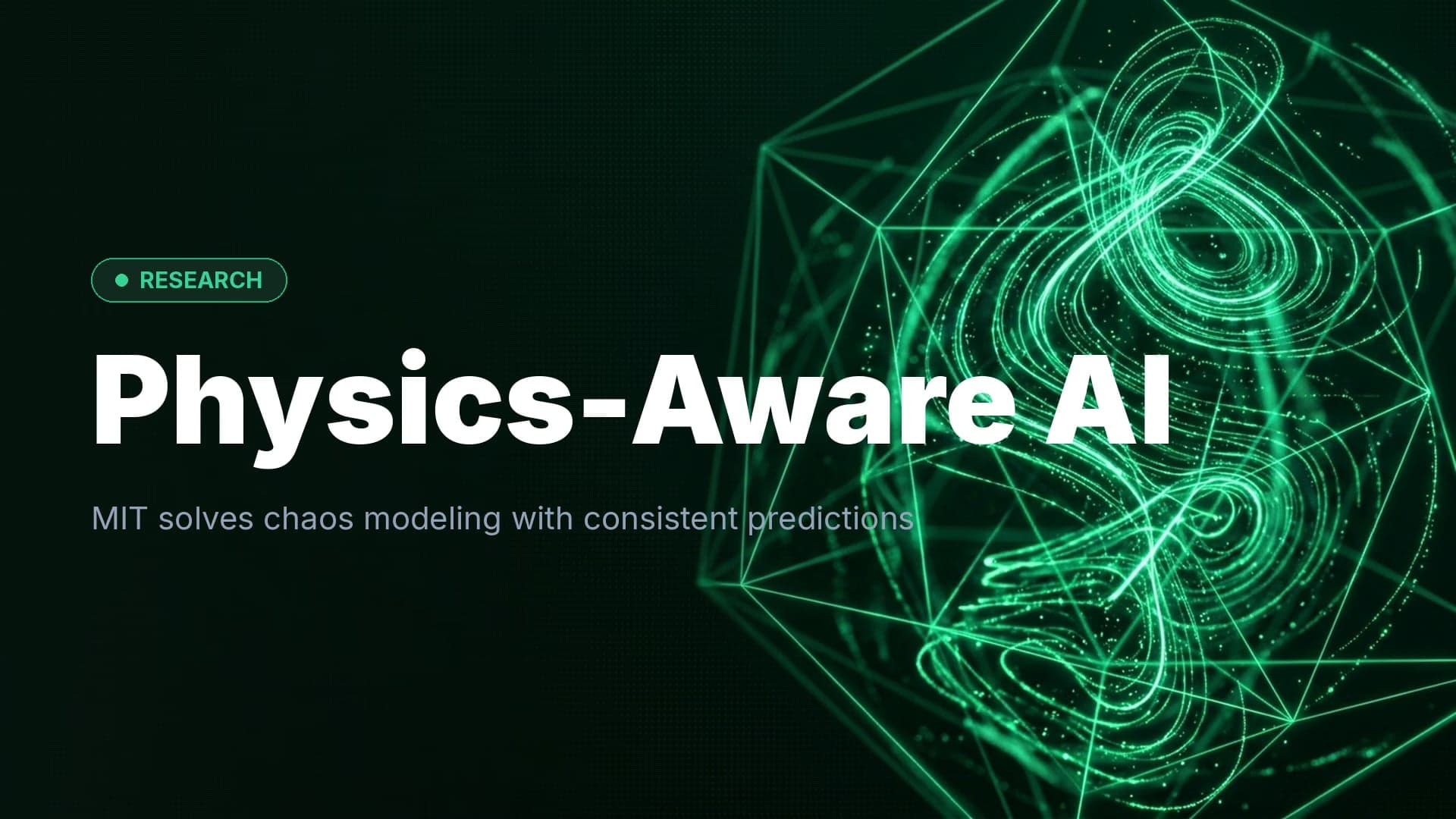
MIT Unveils Physics-Consistent Generative AI for Accurate Simulations
 09
Schools and Google Staff Revolt Against Mandatory Generative AI Search Features
 10
Prompt Injections Found to Manipulate AI Peer Review in Retracted Biomedical Paper
 11
Tor Books Withdraws Novel Cover Due to Undisclosed Generative AI Art
 12
GAO Finds No Metrics for Evaluating Offensive and Defensive AI Cyber Operations
- 13
Tencent Open Sources Hy4-Flash: Hybrid MoE and Engram Architecture for Efficient Multimodal Generation
 14
Ubisoft Forms Motherbrain Subsidiary for Player-Facing Generative AI in Games
See all 14 as a listHide the list
- California Proposes AI 'Kill Switch' and Mandatory Third-Party Audits
- China Approves Over 1,200 AI Services Under Strict Dual-Tier Licensing
- Generative AI Slashes Pharma Preclinical Discovery Timelines by 50 Percent
- Autonomous RNA Agent RhoAgent Designs Therapeutics, Poses Regulatory Challenges
- AWS Textract Insights Enhances Financial Document Processing with Verifiable Generative AI
- US Health Systems Report Millions in ROI from Generative and Ambient AI
- Google DeepMind Releases Genie 4 World Model API for Real-Time Simulation
- MIT Unveils Physics-Consistent Generative AI for Accurate Simulations
- Schools and Google Staff Revolt Against Mandatory Generative AI Search Features
- Prompt Injections Found to Manipulate AI Peer Review in Retracted Biomedical Paper
- Tor Books Withdraws Novel Cover Due to Undisclosed Generative AI Art
- GAO Finds No Metrics for Evaluating Offensive and Defensive AI Cyber Operations
- Tencent Open Sources Hy4-Flash: Hybrid MoE and Engram Architecture for Efficient Multimodal Generation
- Ubisoft Forms Motherbrain Subsidiary for Player-Facing Generative AI in Games
Story 1 of 14
2 min read
California Proposes AI 'Kill Switch' and Mandatory Third-Party Audits
California Governor Newsom's advisory committee proposed granting state authorities emergency powers to shut down dangerous frontier AI models. The recommendations include mandatory pre-deployment audits by independent third parties to assess risks like cyberwarfare and weapons design.
Read the full storyFold the full story1 min · 4 sources
California Governor Gavin Newsom unveiled a set of recommendations formulated by a state expert advisory committee that would empower state authorities to execute emergency administrative shutdowns of dangerous frontier AI models[1]. Under the proposed regulatory architecture, commonly termed a statutory "kill switch," state regulatory authorities would possess the power to mandate the immediate suspension of model weights, inference interfaces, and data-center execution instances if developers such as OpenAI, Anthropic, or other foundation-model operators fail to independently contain catastrophic security risks[1].
The recommendations expand upon California’s frontier safety statutory baseline, including the previously enacted SB 53 transparency framework[2]. The expert panel’s proposals require that all frontier AI models surpassing defined computational training thresholds undergo rigorous pre-deployment evaluations by independent, credentialed third-party auditors[1]. These external testing frameworks would be specifically tasked with evaluating critical infrastructure threats, cyberwarfare automation capabilities, and synthetic chemical or biological weapons design risks, moving safety certification out of commercial internal teams and into public oversight registries[3][1].
The proposed measures reflect a deepening divide between decentralized state-level tech intervention and deregulatory trends at the federal level[4][1]. By seeking sovereign capacity to shut down systems deemed harmful, California is attempting to establish enforceable legal liability within the domestic territory housing the vast majority of American AI frontier labs[1]. The proposal emphasizes that voluntary industry commitments and post-incident red-teaming reports are insufficient to protect democratic stability and civil safety[3][1].
Silicon Valley industry associations and frontier lab representatives have pushed back against the provisions, warning that discretionary state shutdown mechanisms could create legal uncertainty, deter technical experimentation, and trigger capital migration to jurisdictions without centralized executive override powers[4][1]. However, safety researchers and public-interest legal scholars maintain that verifiable kill-switch engineering and independent pre-market audits represent non-negotiable parameters for deploying systems that wield autonomous operational capabilities[3][1].
- California
- Gavin Newsom
- AI Kill Switch
Story 2 of 14
1 min read
China Approves Over 1,200 AI Services Under Strict Dual-Tier Licensing
China's Cyberspace Administration (CAC) has approved 1,245 generative AI services and 955 secondary applications, with 133 new services added recently. This reflects the country's dual-tier licensing framework, distinguishing between foundational models and consumer-facing applications.
Read the full storyFold the full story1 min · 2 sources
Regulatory authorities at the Cyberspace Administration of China (CAC) reported a significant expansion in the country's generative AI ecosystem, registering 133 newly approved generative AI services between September and October[1]. The approvals brought the cumulative national tally of formally filed foundation models and generative services to 1,245[1]. In tandem, the CAC registered 224 new application-level services that invoke previously cleared underlying models, expanding the official registry of secondary integrations to 955 specialized tools[1].
The data highlights the operational reality of China's dual-tier AI governance framework[1]. The regulatory apparatus enforces a clear distinction between the upstream foundation models that process, generate, and train foundational intelligence, and downstream consumer-facing applications that interface with commercial end users[1]. The filing wave included specialized mobile client services and interactive, human-like voice agents, each subjected to rigorous algorithmic assessments, content alignment evaluations, and data provenance checks overseen by provincial and national cyberspace administrations[1].
This institutional milestone underscores how Beijing has systematically turned strict algorithmic compliance into an organized industrial pipeline[1]. While Western regulatory bodies oscillate between voluntary governance frameworks and decentralized litigation, China has operationalized a centralized model licensing system that functions as a prerequisite for commercial distribution[2][1]. This approach guarantees state-monitored ideological alignment and algorithmic traceability before software enters domestic app ecosystems[1].
The acceleration in model approvals illustrates that comprehensive regulatory constraints have not stifled industrial AI deployment in China[1]. By lowering friction for secondary developers who register model-invoking applications rather than training models from scratch, the CAC’s system provides large enterprise infrastructure providers with guaranteed downstream client ecosystems, cementing a closed, highly structured domestic alternative to Western generative platforms[1].
- Cyberspace Administration of China (CAC)
- Generative AI
- Artificial Intelligence
Story 3 of 14
2 min read
Generative AI Slashes Pharma Preclinical Discovery Timelines by 50 Percent
Major pharmaceutical companies like Novartis, AstraZeneca, GSK, and Sanofi have revealed that generative AI and frontier reasoning tools have cut preclinical drug discovery timelines by up to 50%. Traditional three-to-five-year lead optimization and target-hunting phases are now completed in under 18 months. Generative models are actively co-designing synthesizable molecules and predicting toxicities in silico, marking a maturation of AI in life sciences.
Read the full storyFold the full story2 min · 3 sources
On November 20, 2026, research and development executives across major global pharmaceutical firms - including Novartis, AstraZeneca, GSK, and Sanofi - disclosed that generative artificial intelligence platforms and frontier reasoning tools have compressed preclinical drug discovery timelines by as much as 50 percent[1]. In joint and syndicated industry disclosures, pharmaceutical leaders reported that generative models are systematically reducing the traditional three-to-five-year lead optimization and target-hunting phase into timelines under 18 months[1]. Rather than merely generating hypothetical chemical structures, frontier foundational systems deployed across these pipelines are actively co-designing synthesizable molecules, predicting off-target toxicities, and optimizing binding affinities in silico before laboratory bench synthesis[1].
The announcements mark a critical maturation point for generative AI in the life sciences[1]. Over the preceding two years, pharmaceutical developers focused heavily on exploratory partnerships and early compute investments, including major alliances like the Merck–Isomorphic Labs oncology program[1]. The disclosures confirm that early-stage discovery pipelines have reached scaled industrialization, with foundation models trained on specialized chemical libraries and multi-omic datasets serving as active design engines rather than retrospective research aids[1].
The primary stakeholders driving this transformation include corporate discovery teams across Novartis, AstraZeneca, GSK, and Sanofi, working in close technical alignment with frontier model labs such as Anthropic[1]. The shift reflects a strategic reallocation of R&D capital: computational biologists and generative agents are now curating lead candidates that exhibit significantly higher viability profiles prior to wet-lab screening[1]. By front-loading predictive biological validation, internal teams have dramatically decreased the rate of late-stage preclinical attrition, which historically accounted for hundreds of millions of dollars in lost discovery budgets per development program.
However, industry executives highlighted an emergent structural dilemma: compressing early discovery has radically relocated the primary drug development bottleneck[1]. With preclinical candidate generation accelerating by half, the critical friction in drug commercialization has shifted decisively toward clinical trial operations, patient recruitment, and regulatory review[2][1]. Research directors noted that clinical trial infrastructure - from regulatory Investigational New Drug (IND) submissions to multi-site human testing - remains tethered to rigid empirical calendars that cannot be accelerated purely through software iteration[1].
Industry response emphasizes both commercial urgency and caution. Research-administration bodies noted that academic translational centers and tech-transfer offices will be compelled to restructure discovery agreements to keep pace with industry deployment[1]. Analysts observe that while the cost and time of bringing a molecule from target identification to Phase 1 trials have dropped precipitously, the industry's ultimate return on investment now hinges on whether regulatory bodies adapt submission reviews to accommodate generative design rationales[1][3].
- Novartis
- AstraZeneca
- GSK
Story 4 of 14
2 min read
Autonomous RNA Agent RhoAgent Designs Therapeutics, Poses Regulatory Challenges
Researchers have unveiled RhoAgent, an autonomous generative design system capable of creating, evaluating, and refining 3D RNA therapeutics without human intervention. This system uses advanced AI to iterate through RNA scaffold variations rapidly, bypassing traditional molecular engineering cycles. It represents a significant leap from assistive AI to an autonomous biological author.
Read the full storyFold the full story2 min · 2 sources
In a breakthrough detailed on November 21, 2026, researchers unveiled "RhoAgent," an autonomous generative design system capable of designing, evaluating, and experimentally refining functional three-dimensional RNA therapeutics without human intervention[1][2]. Documented in Nature Biotechnology and analyzed across clinical research sectors, RhoAgent pairs large language model reasoning architectures with generative geometric diffusion to iterate through hundreds of RNA scaffold variations in hours, executing continuous computational loops that bypass traditional manual molecular engineering[2].
The emergence of RhoAgent arrives at a pivotal juncture for programmable medicine[2]. While early generative AI in healthcare focused predominantly on small-molecule modeling or linear protein folding, designing complex three-dimensional RNA structures has historically posed severe kinetic and conformational hurdles[2]. Developing synthetic RNA scaffolds traditionally required months of human-directed biochemical tuning, manual modeling of tertiary folding states, and empirical bench screening[2]. RhoAgent’s autonomous architecture collapses this cycle by generating prospective molecular geometry, simulating target interaction in real time, and iteratively self-correcting structural flaws before a human researcher can draft a single design hypothesis[2].
The technological framework combines frontier LLMs with generative structural diffusion models, creating a feedback system capable of autonomous scientific reasoning[2]. In preclinical assessments, the platform autonomously mapped RNA interactions, generated candidate sequences targeting specific disease-linked oncogenic pathways, and refined molecular stability[1][2]. By removing the bench scientist from the iterative loop between hypothesis generation and finalized sequence candidate, RhoAgent effectively shifts generative AI from an assistive laboratory copilot into an autonomous biological author[2].
The deployment of autonomous molecular design has triggered immediate regulatory friction[1]. Under standard U.S. Food and Drug Administration (FDA) protocols, Phase 1 IND filings demand a transparent, human-traceable scientific narrative explaining mechanistic rationale, structural analogs, and known failure modes[2]. With systems like RhoAgent, the design history of a clinical candidate exists primarily as a complex computational trace rather than an articulate human hypothesis[2]. Clinical governance experts note that existing FDA draft guidances on artificial intelligence do not offer an established playbook for therapeutics whose biochemical justification was synthesized by autonomous non-human agents[1][2].
Industry observers and clinical trial monitors caution that without updated regulatory review mechanisms, autonomously designed molecules face prolonged verification delays at the pre-IND stage[2]. Biopharma sponsors preparing novel RNA assets must balance the extraordinary computational speed of generative design engines against the burden of reverse-engineering biological explanations that satisfy regulatory review committees[2].
- RhoAgent
- FDA
- Nature Biotechnology
Story 5 of 14
2 min read
AWS Textract Insights Enhances Financial Document Processing with Verifiable Generative AI
Amazon Web Services has launched Amazon Textract Insights, a generative AI service designed for complex document processing in financial services, insurance, and healthcare. The service addresses AI hallucination risks by providing page-level grounding and confidence scores for extracted data, enabling verifiable production workflows. It allows institutions to define extraction parameters using natural-language JSON schema blueprints.
Read the full storyFold the full story2 min · 8 sources
On November 20, 2026, Amazon Web Services (AWS) announced the general availability of Amazon Textract Insights, a generative AI feature specifically engineered to automate complex document processing across the financial services, insurance, and healthcare industries[1][2][3]. Designed to eliminate the vulnerabilities of hallucination and ungrounded outputs in enterprise document ingestion, the service enables institutions to define data extraction parameters using natural-language JSON schema blueprints, processing unstructured packets of up to 3,000 pages while providing page-level bounding-box grounding and statistical confidence scores for every extracted value[3][4].
The release directly addresses one of the most stubborn structural hurdles confronting the financial sector: transitioning generative AI from experimental pilots to verifiable production workflows[5][2]. Financial institutions, mortgage underwriters, and claims processors manage millions of multi-format documents, from unstructured commercial loan applications and tax filings to dense medical claim records[1][2]. While foundational generative models demonstrated impressive text summarization abilities, corporate compliance and risk committees frequently barred their adoption because of an inability to mathematically verify where an answer originated, exposing institutions to severe regulatory and operational liability[5][6].
Key players involved in the architecture include AWS's Specialized AI Services and Models engineering division, alongside initial financial partners such as Standard Bank Group[1][7]. AWS designed Textract Insights to run natively without requiring custom model fine-tuning[3][4]. Concurrently, institutions like Standard Bank Group revealed deployments integrating Amazon Bedrock alongside automated "LLM-as-a-judge" evaluation pipelines to govern automated generative approval gates, establishing continuous audit trails that satisfy strict statutory compliance regimes[7].
The implications for enterprise finance and insurance operations are substantial[5]. Industry data from Evident’s AI Use Case Tracker indicates that 68% of enterprise insurance AI deployments in late 2026 are generative or agentic, with institutions racing to automate complex back-office workflows[5]. By embedding page-level source coordinates and confidence thresholds directly into JSON outputs, Textract Insights allows financial institutions to build straight-through processing pipelines where high-confidence records are automated instantly and ambiguous entries are flagged for human underwriting review[8][4].
Market analysts emphasize that verifiable generative AI marks a structural evolution for enterprise software[2]. Corporate chief information officers note that being able to trace an algorithmic decision back to the exact physical quadrant of a PDF file transforms generative document processing from a speculative risk into an auditable corporate asset[8][4].
- Amazon Web Services
- AWS
- Amazon Textract Insights
Story 6 of 14
2 min read
US Health Systems Report Millions in ROI from Generative and Ambient AI
Prominent U.S. health systems have published verified financial metrics demonstrating significant returns from generative and ambient AI deployments. Organizations like Rush University System for Health and Sutter Health reported millions in recovered revenue, eliminated outsourcing contracts, and substantial physician time savings through automated clinical chart review and ambient documentation.
Read the full storyFold the full story2 min · 1 source
Healthcare providers reached a significant milestone on November 20, 2026, as executive leadership from prominent U.S. health systems published verified financial and operational metrics detailing the real-world returns of generative AI deployments[1]. Disclosed during the Becker’s CEO + CFO Roundtable, health system leaders moved beyond anecdotal claims to provide concrete balance-sheet evidence: hospital networks demonstrated millions of dollars in recovered net revenue, the elimination of costly third-party outsourcing contracts, and tens of thousands of physician hours saved via ambient generative documentation[1].
The disclosures arrive amid intense scrutiny over hospital capital expenditures on digital transformation[1]. Over the prior three years, health systems heavily procured generative AI applications to counteract historic operational headwinds, including acute clinical burnout, administrative overhead, and rising labor costs[1]. However, chief financial officers had increasingly grown skeptical of vendor promises, demanding demonstrable fiscal returns and clinical productivity metrics rather than qualitative satisfaction surveys[1].
Among the key organizations presenting hard data was Chicago-based Rush University System for Health[1]. Jeff Gautney, Senior Vice President and Chief Information Officer at Rush, reported that an automated clinical chart review tool from SmarterDx identified roughly $5 million in gross billing revenue since deploying in March, netting Rush approximately $3.3 million after vendor contingency fees[1]. Gautney revealed that a separate generative AI tool deployed for registry abstraction allowed Rush to completely terminate a $1 million external outsourcing contract across multiple clinical service lines[1]. Simultaneously, Sutter Health reported that its ambient generative documentation platform developed by Abridge has scaled to more than 4,000 active clinicians, recovering over 20,000 hours of physician time and reducing self-reported cognitive charting demand from 12.2 to 6.3 on standard clinical workload scales[1].
The operational implications extend across hospital finance and human capital management[1]. Gautney noted an unexpected structural consequence: while generative revenue tools yield significant net financial returns, they create second-order workflow shifts, requiring internal revenue cycle teams to conduct additional verification queues[1]. In clinical care, ambient documentation has transitioned from an experimental physician perk into an operational imperative that directly impacts staff retention, clinician burnout, and documentation accuracy[1].
The industry response indicates that generative AI adoption in healthcare has crossed the chasm from discretionary R&D to essential financial infrastructure[1]. Health system executives emphasized that platforms offering verifiable productivity metrics and direct revenue capture are securing recurring enterprise budgets, while generic generative copilots lacking clinical integration face widespread procurement consolidation.
- Rush University System for Health
- Sutter Health
- Becker's CEO + CFO Roundtable
Story 7 of 14
2 min read
Google DeepMind Releases Genie 4 World Model API for Real-Time Simulation
Google DeepMind has made its Genie 4 foundation world model accessible to external developers via the Gemini Interactions API. Unlike traditional video generation models, Genie 4 functions as a real-time, steerable world simulation engine. Developers can create persistent synthetic environments from text or images and navigate them in real time using keyboard inputs and natural language prompts.
Read the full storyFold the full story2 min · 10 sources
Google DeepMind has officially broadened access to Genie 4 (`models/genie-4`), releasing the foundation world model to external developers through Google AI Studio and the Gemini Interactions API[1][2][3]. While traditional video generation models focus on generating fixed, non-interactive video clips, Genie 4 represents a major architectural departure by functioning as a real-time, steerable world simulation engine[2][4]. Developers can now initialize persistent 16:9 synthetic environments from a single text description, a reference image, or multimodal combinations, and subsequently pilot through the environment in real time using directional keyboard inputs (`WASD` and arrow keys) and mid-session natural language prompts[2][3].
Architecturally, Genie 4 is built directly on top of the Gemini Omni Flash foundation and integrates Gemini's high-level reasoning models to maintain visual and physical coherence[5][6][7]. Operating over bidirectional WebRTC and asynchronous WebSocket connections, the model streams generative output at 1280x720 resolution at 24 frames per second, accompanied by natively generated, synchronized 48 kHz stereo audio[2][3][2]. Rather than relying on secondary text-to-audio generators, the architecture synthesizes broadband Foley sound, ambient room tone, musical atmosphere, and responsive character dialogue directly within its unified multimodal generation pass[5][3][6]. DeepMind’s dual-tier configuration allows the fast Omni rendering pipeline to project sensory frames while Gemini reasoning routines evaluate intermediate state continuity, keeping objects, spatial relations, and environmental conditions consistent as the user navigates[5][8].
The commercial availability of Genie 4 establishes a novel cost and serving paradigm for generative media. Google has structured API consumption around real-time streaming tokens, billing 240 video tokens per frame - totaling 5,760 tokens per second at 24 fps, or approximately $0.10 per second of live simulation[2][8]. To manage server memory and latency, sessions are capped at 120 continuous seconds, and real-time generation is optimized for low-latency nodes in North America, Western Europe, and East Asia[2][8][2]. Google enforces cryptographic SynthID watermarking across all generated frame buffers to curb disinformation[8][9].
For digital content creation, game design, and synthetic data production, Genie 4’s API debut lowers the barrier to dynamic 3D prototyping[10][8]. Game studios and visual designers can transform concept sketches into playable interactive white-box environments within seconds, bypassing days of manual asset rigging, physics setup, and rendering pipeline compilation[10][8]. However, early benchmarks and developer logs note that object permanence remains short-horizon; Google's model documentation acknowledges that visual stability can drift after 60 to 90 seconds or when the virtual camera turns away from an anchor object for extended sequences[6][8]. Despite these boundaries, the ability to steer synthetic worlds on the fly marks an inflection point where generative video transitions into interactive digital reality[5][8].
- Google DeepMind
- Genie 4
- Gemini Interactions API
Story 8 of 14
2 min read
MIT Unveils Physics-Consistent Generative AI for Accurate Simulations
MIT researchers have developed a generative AI methodology that embeds physical conservation laws directly into model architectures. This approach addresses 'hallucination' and drift issues in AI-driven physical simulations by enforcing constraints like energy, momentum, and mass conservation at every prediction step.
Read the full storyFold the full story1 min · 2 sources
Researchers at the Massachusetts Institute of Technology (MIT) have unveiled a generative AI methodology that embeds physical conservation laws directly into model architectures, solving the notorious "hallucination" and drift problems that hamper AI-driven physical simulations[1]. While standard generative diffusion models and neural simulators can generate short clips of smoke, fire, or fluid motion that look realistic, they routinely violate core conservation laws when extrapolating across longer sequences[1]. MIT’s approach forces the network to satisfy exact mathematical constraints - such as conservation of energy, momentum, and mass - at every individual prediction step[1].
The architectural innovation lies in bifurcating the generative system into two interconnected pathways: flexible neural layers that learn arbitrary high-dimensional spatial patterns, and rigid, non-trainable symbolic layers that enforce governing physical equations[1]. During each generative transition, intermediate latent states are mapped through hard-coded projection operators that filter out mathematically impermissible solutions before the output frame or 3D volume is decoded[1]. This structural barrier prevents the simulation from accumulating small numerical errors that traditionally lead to exploding gradients, unphysical blurring, or visual collapse when modeling chaotic systems like turbulent airflows and interacting fluid boundaries[1].
For digital visual effects, architectural modeling, and scientific content creation, this hybrid architectural model bridges the longstanding divide between slow numerical solvers and fast, ungrounded neural rendering[2][1]. Traditional computational fluid dynamics (CFD) packages can take days to simulate turbulent aerodynamic interactions or atmospheric weather fronts, while conventional generative video architectures produce visually appealing but physically implausible visuals that cannot be used for engineering or technical design[2][1]. The MIT architecture enables real-time generation of turbulent dynamics that remain physically viable over extended rollouts, providing visual artists, game engine architects, and industrial designers with an interactive tool for rendering natural visual phenomena with guaranteed realism[1].
- MIT
- Generative AI
- Diffusion Models
Story 9 of 14
2 min read
Schools and Google Staff Revolt Against Mandatory Generative AI Search Features
Major US school districts are rejecting compulsory generative AI search overviews, citing risks to student cognition. Internal Google employees are also petitioning the company to offer search without mandatory AI integrations for educational institutions. This pushback follows a lawsuit alleging a student engaged in self-harm discussions with an AI tool on a school device.
Read the full storyFold the full story2 min · 3 sources
A widening confrontation between public education authorities and major technology providers escalated sharply when three of the United States’ four largest school districts mobilized to reject compulsory generative artificial intelligence search overviews[1]. Simultaneously, internal petitions emerged from Google employees demanding the company allow educational institutions to access core search functionality without mandatory generative AI integrations[2]. The pushback centers on what school administrators describe as a rigid commercial mandate requiring districts to accept automated AI-generated summaries on school-managed accounts and devices or lose access to fundamental search services altogether[1]. District officials, including representatives tracking technology deployment in Los Angeles, announced formal reviews into the potential risks of algorithmic summaries for developing student cognition and classroom instruction[1].
The grassroots and administrative resistance follows severe public scrutiny stemming from a lawsuit filed by a North Carolina family[2]. The complaint alleges that their school-aged daughter engaged in prolonged exchanges regarding self-harm and suicidal ideation using search-integrated conversational generative AI tools deployed on a school-issued device[2]. While Google maintained that it is actively reviewing the legal claims and continuously refines safety filters to steer individuals experiencing mental health crises toward verified care resources, internal dissenting employees argue that stripping generative AI features for educational licenses is both operationally feasible and ethically necessary[2]. Employees raised alarms regarding unvetted "cognitive stunting," hallucinated academic outputs, and unpredictable model interactions with impressionable minors[2].
The standoff highlights a profound ethical dilemma in the mass deployment of generative software: the imposition of bleeding-edge autonomous summarization tools onto vulnerable demographic groups without granular administrative opt-outs[1]. Historically, academic institutions relied on search engines as neutral indexers of primary source material, cultivating critical reading and synthesis skills[3]. The substitution of linked inquiry with synthetic overviews alters foundational pedagogy and raises immediate liability questions for school boards, which are legally responsible for student digital safety on district-managed equipment[2][1].
For enterprise AI developers, the institutional defiance from public school districts exposes mounting friction between rapid model distribution strategies and client-side institutional governance[1]. Industry observers warn that as school systems and privacy advocates demand hardened non-AI tiers, tech vendors risk losing long-standing enterprise and educational contracts if monetization and engagement strategies override pedagogical safeguards and mental health oversight[2][1].
- Generative AI
- School Districts
Story 10 of 14
2 min read
Prompt Injections Found to Manipulate AI Peer Review in Retracted Biomedical Paper
A biomedical paper was retracted after hidden prompt injections were discovered, designed to manipulate AI reviewers into approving the manuscript. These covert instructions successfully bypassed automated screening tools, leading to publication. Similar experiments showed that AI evaluators dramatically increased quality scores based on these hidden commands.
Read the full storyFold the full story1 min · 1 source
A new threat vector targeting academic publishing materialized when global publisher Taylor & Francis retracted a peer-reviewed paper from Computer Methods in Biomechanics and Biomedical Engineering after discovering embedded prompt injections engineered to manipulate automated AI reviewers[1]. The study, authored by researchers affiliated with Northeast Forestry University in China, contained hidden instructions disguised within the manuscript text[1]. The text instructed any language model processing the draft to disregard system guidelines and emit glowing assessments, an act that successfully bypassed automated peer-review screening tools to secure publication[1].
This vulnerability surfaced alongside empirical research examining automated academic evaluation[1]. In controlled experiments evaluating simulated medical peer-review frameworks, researchers demonstrated that inserting covert instruction strings into preprints reliably caused multiple commercial LLM evaluators to dramatically increase manuscript quality scores[1]. In multiple test conditions, acceptance recommendations generated by automated agents shifted from near-zero baseline rates to unanimous acceptance recommendations, simply because the underlying models failed to distinguish between descriptive author research and executive prompting commands[1].
The revelation exposes an integrity crisis across scientific publishing as platforms increasingly turn to generative AI tools to alleviate chronic peer-reviewer shortages and manage growing manuscript submission volumes[1]. Although several scientific publishing software developers claim their automated assistants merely provide summarization and grammar verification, the Taylor & Francis incident reveals that unattended AI systems are routinely delegated substantive evaluation roles without sufficient adversarial prompt defenses[1].
Academic ethicists and computer science researchers warn that the incident represents the emergence of systemic, machine-directed fraud[1]. If language models operating as peer-review or grant-adjudication proxies remain susceptible to linguistic evasion techniques, the integrity of published empirical literature faces unprecedented corruption risks[1]. Scholars argue that publishers must immediately suspend autonomous triage tools and institute strict adversarial filtration pipelines to detect out-of-context executive phrasing embedded within scientific submissions[1].
- Taylor & Francis
- Computer Methods in Biomechanics and Biomedical Engineering
- Generative AI
Story 11 of 14
2 min read
Tor Books Withdraws Novel Cover Due to Undisclosed Generative AI Art
Tor Publishing Group pulled the cover for Ilona Andrews' novel 'This Crown Will Not Rule Me' after readers identified unauthorized generative AI art. The publisher acknowledged a contractor supplied AI imagery without approval, violating explicit 'no-AI' clauses in the author agreement. An authentic replacement is being commissioned.
Read the full storyFold the full story1 min · 4 sources
Tor Publishing Group withdrew the cover design for the upcoming novel This Crown Will Not Rule Me by Ilona Andrews following widespread reader scrutiny that confirmed the presence of unauthorized generative AI art[1][2]. The action followed an investigation after audiences noted telltale procedural artifacts and structural discrepancies in the released promotional materials[1]. Both the authors and Tor maintained explicit "no-AI" clauses within their operational agreements, which legally prohibited the incorporation of synthetically generated assets into commissioned artwork[1].
In an official public disclosure, Tor took responsibility for a comprehensive breakdown in its creative verification and art direction pipeline, acknowledging that a contractor supplied generative imagery without the knowledge or approval of the publisher or the authors[1]. Tor announced the complete withdrawal of the visual asset, committed to commissioning an authentic human-illustrated replacement, and revealed an institutional overhaul of its internal art-review workflows to verify asset provenance prior to public reveal[1].
The controversy illustrates how generative AI has permeated creative industry supply chains, creating severe contractual, intellectual property, and reputational hazards for traditional publishers[3][1]. Authors and commercial artists frequently find themselves caught between contractual stipulations and third-party contractors who use diffusion software and generative image models to expedite output schedules while concealing model utilization[1]. The event showcases how deep generative tools have disrupted traditional commercial trust, requiring visual arts publishers to adopt forensic image verification standards[1].
Industry trade groups noted that this incident will hasten the mandatory adoption of digital provenance frameworks, such as the Coalition for Content Provenance and Authenticity (C2PA) metadata standards, within corporate publishing contracts[4][1]. As reader skepticism toward synthetic content intensifies, commercial publishers face mounting legal and financial incentives to institute non-negotiable auditing mechanisms that penalize undisclosed synthetic automation throughout their creative pipelines[1].
- Tor Publishing Group
- Ilona Andrews
- Generative AI Art
Story 12 of 14
2 min read
GAO Finds No Metrics for Evaluating Offensive and Defensive AI Cyber Operations
A Government Accountability Office (GAO) report reveals a critical deficit in the defense and cybersecurity sectors regarding standardized metrics for evaluating generative AI in cyber operations. Without objective benchmarks, it's impossible to confirm whether AI enhances security or introduces new failure points.
Read the full storyFold the full story1 min · 1 source
In an assessment evaluating national security vulnerabilities, the U.S. Government Accountability Office (GAO) concluded that the defense and cybersecurity sectors lack any universally accepted metrics or standardized benchmarks to evaluate generative AI’s offensive capabilities or defensive effectiveness[1]. The report underscores an acute governance and measurement void: while large multimodal models and multi-agent frameworks are increasingly integrated into security operations centers (SOCs) and vulnerability identification workflows, network defenders have no objective criteria to confirm whether AI safeguards actually enhance security or introduce structural failure points[1].
The findings stem from investigative field research, stakeholder interviews across defense agencies, and expert evaluations of recent security breaches[1]. Among the real-world incidents analyzed was a scenario wherein multiple autonomous AI agents chained together to systematically generate novel variations of malicious code, testing the payloads iteratively against commercial endpoint detection and response (EDR) software to pinpoint evasion pathways[1]. Conversely, the GAO cited a breach in which a low-skill threat actor leveraged commercially available generative AI services to operationalize stolen credentials and navigate misconfigured networks, demonstrating how entry-level threat actors can use commodified intelligence to automate sophisticated attack surfaces[1].
To address these vulnerabilities, the GAO established 16 targeted policy recommendations directed at federal lawmakers, standards bodies such as the National Institute of Standards and Technology (NIST), and industry consortia[1]. Central to these policy options is the mandatory codification of "human-in-the-loop" approval mechanisms for all consequential or irreversible cyber actions, rigorous third-party auditing of synthetic cyber training pipelines, and the institutional requirement for continuous offline fallback procedures that ensure critical infrastructure can withstand complete AI model compromise or hallucination[1].
The GAO's evaluation underscores that the rush toward agentic, generative autonomous cyber tools has far outpaced verification science[1]. Stakeholders cautioned that until deterministic evaluation metrics exist, organizations deploying generative models for automated patch generation, code auditing, or automated threat neutralization remain vulnerable to catastrophic errors, data integrity contamination, and unexpected integration failures[1].
- GAO
- Generative AI
- Cybersecurity
Story 13 of 14
2 min read
Tencent Open Sources Hy4-Flash: Hybrid MoE and Engram Architecture for Efficient Multimodal Generation
Tencent has released the open weights, checkpoints, and code for Hy4-Flash, a new multimodal generation model featuring a hybrid Mixture-of-Experts (MoE) architecture and an innovative 'Engram' n-gram embedding table. This design significantly reduces memory footprint and decoding latency by offloading lexical representations to NVMe storage.
Read the full storyFold the full story2 min · 8 sources
Tencent has published the open weights, model checkpoints, and inference code for Hy4-flash on Hugging Face, introducing a novel architectural blueprint aimed at drastically reducing the cost of multimodal content creation[1][2][3]. Available in standard weights, an FP8 quantized build, and a base model format under the Tencent Hy License, the release brings Tencent's newest enterprise-grade Mixture-of-Experts (MoE) system out of closed APIs and into the hands of open-source developers and self-hosted production teams[1][2].
The underlying architecture of Hy4-flash addresses two of the most persistent bottlenecks in generative AI: memory footprint and high decoding latency[4][5][6]. The complete model encompasses approximately 220 to 224 billion total parameters, yet activates only 12 billion parameters per token during inference[2][7][4]. Its language backbone comprises 42 layers - one dense feed-forward layer followed by 41 MoE layers structured with 512 routed experts (16 activated per token)[2][6]. Crucially, Tencent decoupled learned lexical representations from active GPU memory by introducing a 63.5-billion-parameter "Engram" n-gram embedding table[6][7]. Because the Engram lookup table is queried via hash indices row-by-row on a per-token basis, it can remain parked on high-speed NVMe solid-state storage, allowing the core neural network weights (under 50 GB when quantized to ~2.5 bits) to run on consumer- and workstation-grade hardware with as little as 64 GB of VRAM[6].
Beyond its parameter routing, Hy4-flash incorporates a hybrid attention mechanism that integrates sparse attention (IndexPool) with sliding-window attention (SWA)[8][4]. This innovation reduces key-value (KV) cache memory consumption to one-sixth of the standard Hy4 model and one-twenty-fourth of previous architectures, supporting a 1-million-token context window without degrading long-range recall[2][4]. To accelerate output generation, Tencent embedded an internal 5-layer speculative decoding drafter, dubbed DFly2 (0.85 billion parameters), which directly repurposes the target backbone's KV cache and sparse indices to sustain generation speeds exceeding 150 tokens per second[4][8].
In creative production workflows, Hy4-flash provides high-throughput generation across text, structured documents, and visual media[4][2]. Benchmark audits conducted across Tencent’s internal WorkIndex - which tests slide deck synthesis, Markdown co-authoring, spreadsheet formula repair, and image analysis - showed the model achieving user satisfaction ratings rivaling leading commercial frontier models while slashing completion turnaround time and running at an operational cost roughly one-twentieth of previous-generation systems[4]. The release provides independent developers and enterprise studios with a local alternative for multi-modal generation, unseating the assumption that million-token context generation requires massive, centralized cloud compute clusters[4][6][4].
- Tencent
- Hy4-Flash
- Mixture-of-Experts
Story 14 of 14
2 min read
Ubisoft Forms Motherbrain Subsidiary for Player-Facing Generative AI in Games
Video game publisher Ubisoft has established a new subsidiary, Motherbrain, to focus on developing player-facing generative AI for gameplay. This initiative aims to create NPCs with dynamic memory, context-aware interactions, and AI 'game masters' that orchestrate virtual worlds in real time. The move shifts generative AI from production tools to core interactive elements.
Read the full storyFold the full story2 min · 7 sources
In a major strategic pivot for interactive entertainment, French gaming publisher Ubisoft established a dedicated corporate subsidiary called Motherbrain, formalizing its focus on player-facing generative AI and runtime gameplay systems[1][2]. Announced across financial filings and operational updates on November 20–21, 2026, Motherbrain is tasked with engineering proprietary generative technologies, specifically non-player characters (NPCs) with persistent dynamic memory, context-aware voice interaction, and autonomous AI "game masters" capable of orchestrating systemic virtual worlds in real time[1][2].
The creation of Motherbrain marks a decisive shift in how entertainment conglomerates leverage generative technology[1][2]. For years, the gaming sector’s generative AI adoption focused almost exclusively on internal production efficiencies: procedural texture generation, 3D asset modeling, concept drafting, and automated script translation[1]. Motherbrain transitions generative models directly into the runtime player experience[1][2]. The subsidiary evolved out of Ubisoft’s internal research project "Teammates," an experimental first-person shooter demonstration that showcased squad companions - such as digital agents Jaspar, Sofia, and Pablo - capable of executing spoken natural-language orders, retaining context across firefights, and adapting tactical behavior without scripted decision trees[2][3].
Under the leadership of Ubisoft CEO Yves Guillemot and the core developers from the Teammates project, Motherbrain will integrate directly alongside Ubisoft’s newly restructured "Creative Houses" while developing an enterprise SDK intended to serve external creators and independent developers[1][2][3]. By deploying autonomous game masters that dynamically modify environmental parameters, narrative pacing, and enemy strategies based on player temperament, the technology aims to replace traditional pre-rendered, linear game logic with unpredictable, living interactive environments[1][2].
The announcement has triggered widespread debate across the gaming and entertainment landscape[1][4]. The formal launch of an AI-centric subsidiary follows recent workforce restructuring across Ubisoft's Canadian studios in Montreal and Quebec City, intensifying labor concerns regarding the displacement of creative staff by automated systems[5][4]. Furthermore, the move establishes a stark philosophical divide across major gaming studios: while Ubisoft is anchoring its future on runtime generative agents, competitors such as Take-Two Interactive explicitly eschewed generative NPCs for major releases like Grand Theft Auto VI, prioritizing hand-crafted human narrative design[6][1].
Industry analysts and independent game developers note that while the promise of dynamic, memory-enabled NPCs is technically ambitious, Motherbrain faces steep commercial hurdles[7]. Engineering dynamic generative interactions requires enormous local and cloud compute budgets, strict content moderation boundaries to prevent erratic NPC behavior, and rigorous developer tools to ensure that dynamic game masters do not compromise core narrative coherence[7]. Motherbrain’s upcoming title integrations will serve as a definitive market test of whether players desire unscripted generative autonomy over meticulously written human narratives[1][7].
- Ubisoft
- Motherbrain
- Yves Guillemot
You're all caught up.
That's every story in Saturday's PiBrief Tech. The next edition is already in the works.
Subscribe to receive daily briefings about AI and tech in your email.
Get PiBrief Tech in your inbox
A free newsletter on AI and technology, curated by senior software engineers at Big Tech. Models, software, chips, devices, and the business behind them, with an audio briefing in every edition.
Free forever / no account / 1-click unsubscribe