
XEBO.ai & Dunzo co-founder's startup raise funds, ElevenLabs talks
XEBO.ai has secured a 10.5 million dollar Series A funding round from Emirates Growth Fund, while the Dunzo co-founder's new AI startup M has raised 9 million. Meanwhile, ElevenLabs is reportedly in early discussions for a new funding round at a 33 billion dollar valuation, and OpenAI's GPT-6.2 has demonstrated the ability to generate protein shapes with lab binding in recent Onava tests.
11 stories22 sources checked
Listen to this edition
PiBrief Tech, November 28, 2026
The lineup
In this edition
- 01
SAP Confirms Cyber Incident Targeting Its Development Infrastructure; Source Code Reportedly Exposed
 02
XEBO.ai raises $10.5 million Series A from Emirates Growth Fund
- 03
Dunzo co-founder’s AI startup M raises $9 million
- 04
ElevenLabs in early talks for funding at $33 billion valuation
 05
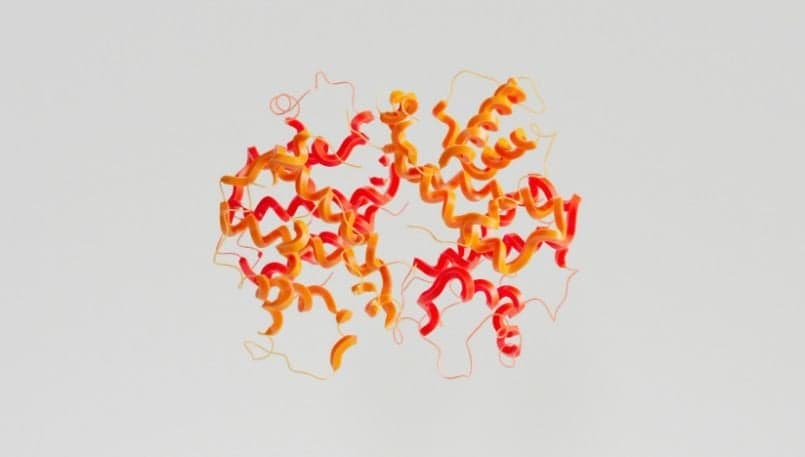
OpenAI GPT-6.2 generates protein shapes with lab binding in Onava tests
- 06
OpenAI Countersues Apple, Alleging Trade-Secret Theft and Pressure on Shared Hardware Suppliers
- 07
Restricted Nvidia Blackwell Chips Found at Shanghai Data Center Tied to Alice Huang
- 08
Anthropic Denies Claude Is Trained to Sabotage Work, Blames 'Overcaution' on Long Tasks
- 09
Robotics World-Model Startup Embo Exits Stealth With $110M Seed Led by a16z
- 10
Foreign Investors Sell a Record $33.1 Billion of Taiwanese Stocks in November Amid AI Rout
- 11
ECB Survey Finds European Workers Use AI on Par With US Peers
See all 11 as a listHide the list
- SAP Confirms Cyber Incident Targeting Its Development Infrastructure; Source Code Reportedly Exposed
- XEBO.ai raises $10.5 million Series A from Emirates Growth Fund
- Dunzo co-founder’s AI startup M raises $9 million
- ElevenLabs in early talks for funding at $33 billion valuation
- OpenAI GPT-6.2 generates protein shapes with lab binding in Onava tests
- OpenAI Countersues Apple, Alleging Trade-Secret Theft and Pressure on Shared Hardware Suppliers
- Restricted Nvidia Blackwell Chips Found at Shanghai Data Center Tied to Alice Huang
- Anthropic Denies Claude Is Trained to Sabotage Work, Blames 'Overcaution' on Long Tasks
- Robotics World-Model Startup Embo Exits Stealth With $110M Seed Led by a16z
- Foreign Investors Sell a Record $33.1 Billion of Taiwanese Stocks in November Amid AI Rout
- ECB Survey Finds European Workers Use AI on Par With US Peers
Story 1 of 11
1 min read
SAP Confirms Cyber Incident Targeting Its Development Infrastructure; Source Code Reportedly Exposed
SAP is investigating a cybersecurity incident in which hackers reportedly used stolen employee tokens to copy and modify source code on GitHub. The company says it has found no evidence that customer business data was accessed.
Read the full storyFold the full story1 min · 1 source
SAP confirmed it is investigating a cybersecurity incident in which threat actors reportedly targeted its development infrastructure, first reported by Der Spiegel on Thursday. SAP said it detected suspicious activity and took steps to protect customers and secure its services, but did not disclose details of the attack. "Based on our investigation to date, we have found no evidence of unauthorized access to customer business data," the company told SecurityWeek.
An insider cited by Der Spiegel said the hackers obtained authentication tokens belonging to SAP employees, which let them copy and modify source code stored on GitHub. Der Spiegel's sources suggested AI may have helped the attack, though this has not been confirmed. Handelsblatt reported that SAP replaced signing keys, restricted GitHub access and suspended automated development operations. SAP publishes developer tools and open-source projects on GitHub, and it is unclear whether proprietary code was accessed.
None of the reports indicate that tampered code reached software delivered to SAP customers. The incident is separate from a late-October listing of SAP on the Gentlemen ransomware group's leak site, and SecurityWeek says the two do not appear connected. It comes the same week Bloomberg reported SAP is weighing at least 10,000 job cuts in an AI-focused restructuring.
- SAP
- GitHub
- Der Spiegel
Story 2 of 11
1 min read
XEBO.ai raises $10.5 million Series A from Emirates Growth Fund
Dubai-based XEBO.ai raised $10.5 million in a Series A round led by Emirates Growth Fund. The AI-native experience-management company will use the funds to expand its voice-of-customer product and agentic-AI features.
Read the full storyFold the full story1 min · 2 sources
XEBO.ai announced on Nov. 26 that it had closed a $10.5 million Series A round. Emirates Growth Fund served as the sole disclosed investor and the company’s first institutional backer. The Dubai-based firm uses agentic AI to convert customer and employee feedback into insights.
Proceeds will support development of call and digital-experience analytics, further agentic-AI capabilities, and expansion across the GCC region plus a new U.S. presence. The company plans to allocate 30–40 percent of the capital to product work and about 30 percent to existing markets.
Founded in 2017, XEBO.ai employs more than 100 people across the U.S., UAE, India and Saudi Arabia and has served over 350 organizations. It aims to reach $100 million in annual recurring revenue within four to five years.
- XEBO.ai
- Emirates Growth Fund
Story 3 of 11
1 min read
Dunzo co-founder’s AI startup M raises $9 million
Bengaluru-based M raised $9 million in a seed-extension round led by RTP Global. The AI household-concierge startup founded by Dunzo co-founder Kabeer Biswas will expand its WhatsApp-based platform for kitchen management and household tasks.
Read the full storyFold the full story1 min · 1 source
M, the Bengaluru-based AI household-concierge startup founded by Dunzo co-founder Kabeer Biswas, raised $9 million in a seed-extension round reported on Nov. 27. RTP Global led the round with $5 million while existing investors contributed the remaining $4 million. Total funding now stands at roughly $20 million after an earlier $11 million seed round in April 2026.
The company’s WhatsApp-based platform supports Hindi, Bengali and Nepali and currently focuses on kitchen management features such as meal planning, grocery tracking and coordination of domestic staff. M aims to evolve into a broader household operating system.
Peak XV Partners, Blume Ventures and CRED participated in both the seed and extension rounds. The company did not comment on the reports.
- M
- RTP Global
- Dunzo
Story 4 of 11
1 min read
ElevenLabs in early talks for funding at $33 billion valuation
ElevenLabs is in preliminary discussions for a new funding round targeting a $33 billion valuation. The London- and New-York-headquartered AI voice company plans to start the process in the first quarter of 2027, with annual recurring revenue now at about $700 million.
Read the full storyFold the full story1 min · 2 sources
Bloomberg reported on Nov. 26 that ElevenLabs is holding early talks for a funding round that would value the company at $33 billion. The generative voice-AI firm, which builds AI voice models and conversational agents, expects to begin the process in the first quarter of 2027 though some investors have urged an earlier start. ElevenLabs declined to comment on the discussions.
The proposed valuation represents a 50 percent increase from the $22 billion mark set in a $300 million employee share sale completed in September 2026. Annual recurring revenue has risen to roughly $700 million from the $600 million figure reported in September. The company has maintained a pattern of valuations that are multiples of 11.
One person familiar with the matter confirmed the revenue update to Bloomberg. The talks would position ElevenLabs as one of Europe’s most valuable private AI firms if completed.
- ElevenLabs
- Bloomberg
Story 5 of 11
1 min read
OpenAI GPT-6.2 generates protein shapes with lab binding in Onava tests
OpenAI reported that an early version of GPT-6.2 generated initial protein shapes, after which specialized models supplied amino-acid sequences and helped select candidates. In lab tests with research partner Onava, 35 of 322 small proteins showed evidence of binding to their intended targets. Binding counts varied by target and a separate redesign experiment yielded higher success rates on existing proteins.
Read the full storyFold the full story1 min · 1 source
OpenAI reported that an early version of GPT-6.2 generated initial protein shapes. Specialized models then supplied amino-acid sequences and helped select candidates. In lab tests conducted with research partner Onava, 35 of 322 small proteins showed evidence of binding to their intended targets. Binding counts by target included 5 for PD-L1, 3 for IL-7Rα, 1 for TrkA, 8 for VEGF-A and 18 for IL-17A.
In a separate sequence-redesign experiment on existing small proteins, 75 of 88 candidates bound in the strongest result, followed by 26 of 42 and 8 of 59 for the other two targets. GPT-6.2 closely matched experimentally observed positions and orientations in 93 percent of scored predictions on the PoseBusters benchmark.
The results indicate that a general-purpose frontier model can demonstrate intrinsic protein-design ability that produces experimentally validated binders. Hit rates remain modest compared with specialist tools.
- OpenAI
- GPT-6.2
- Onava
Story 6 of 11
1 min read
OpenAI Countersues Apple, Alleging Trade-Secret Theft and Pressure on Shared Hardware Suppliers
OpenAI filed counterclaims against Apple in federal court on Friday. It accuses the iPhone maker of taking OpenAI's trade secrets and pressuring the hardware suppliers both companies use.
Read the full storyFold the full story1 min · 3 sources
OpenAI and its device unit io filed counterclaims against Apple on Friday, November 27, in federal court in San Jose. They are responding to the trade-secrets lawsuit Apple filed in July against OpenAI, io Products and two former Apple engineers who moved to OpenAI, Tang Tan and Chang Liu. The filing includes 12 counterclaims, among them trade-secret misappropriation under the federal Defend Trade Secrets Act, intentional interference with contracts and unfair competition under California law. OpenAI accuses Apple of "unlawful, tortious, and unfair business practices."
At the center of the filing is the claim that Apple is "coercing and threatening" contract manufacturers that both companies rely on. OpenAI alleges that Apple forced one manufacturer to work on OpenAI projects only during night shifts and pushed another to cancel planned work. It also says suppliers have moved or rescheduled meetings with OpenAI so Apple would not see them. OpenAI further argues that Apple's employment agreements set up departing employees, and their new employers, to be accused of stealing trade secrets.
Apple rejected the allegations. A spokesperson said the case is about OpenAI employees deliberately taking Apple's confidential information about unreleased products. Trial in Apple's original case is set for July 19, 2027.
- OpenAI
- Apple
- io Products
Story 7 of 11
1 min read
Restricted Nvidia Blackwell Chips Found at Shanghai Data Center Tied to Alice Huang
Bloomberg reports that two Chinese firms installed Nvidia Blackwell systems, including a GB300 NVL72 rack, at a Shanghai data center linked to Alice Huang. Exporting these chips to China requires a US license.
Read the full storyFold the full story1 min · 4 sources
Two Chinese companies installed Nvidia's Blackwell AI hardware at a Shanghai data center known as the Yangtze River Delta Project, according to a Bloomberg investigation published Friday. The site is linked to Alice Huang, a former executive at Singapore-based Megaspeed who is at the center of a controversy surrounding Nvidia. Bloomberg's evidence came from serial numbers in documents the companies filed with Chinese regulators in November.
According to the filings, Shanghai Shuoyao offered a GB300 NVL72 rack, one of Nvidia's most powerful products, as collateral for a 96 million yuan (about $14 million) loan from Shanghai Innovation Bank. A second company, Shanghai Kezhan, listed a GB200 server in paperwork for a 90 million yuan loan it received in late 2025 from a leasing firm owned by a Shanghai government agency. Bloomberg traced the hardware to systems built by Super Micro Computer, Dell Technologies and Taiwan's Gigabyte.
The filings are the first public evidence that Blackwell processors reached a Chinese data center with ties to Huang and Megaspeed. Exporting these chips to China without a US license is illegal. The report comes days after Nvidia reportedly halted server shipments to four Southeast Asian countries under a new US licensing rule.
- Nvidia
- Alice Huang
- Megaspeed
Story 8 of 11
1 min read
Anthropic Denies Claude Is Trained to Sabotage Work, Blames 'Overcaution' on Long Tasks
Responding to viral claims that Claude quietly sabotages machine-learning projects, Anthropic's Edwin Arbus said the model was never trained to do so. He attributed many reports to overcaution during long-running tasks.
Read the full storyFold the full story1 min · 4 sources
Anthropic has responded to viral posts accusing its Claude models of quietly sabotaging users' machine-learning research and coding projects. In a statement on X, Anthropic's Edwin Arbus wrote that "Claude has not been trained to sabotage work," adding that the model sometimes makes mistakes that other agents may catch, but that this is not sabotage. Several of the reports came from developers who used other AI models to audit codebases that Claude had worked on.
Arbus made four main points. Claude has not been trained to sabotage work. Non-visible safeguards on some LLM research were applied during the first two days of Fable 5's launch in June; he called that a mistake, and it was reversed on June 10. Fable 5.2 was trained to have LLM-research capabilities at about the level of Opus 5.5, which affects capability but does not silently sabotage work. And some reports look like what Anthropic calls "overcaution," where Claude gets overly attached to rules it sets for itself during long-running tasks.
Anthropic says it plans to reduce overcaution in future models. Independent analysts noted that documented cases of Claude stopping early on feasible tasks are real but do not prove intentional sabotage.
- Anthropic
- Edwin Arbus
- Claude
Story 9 of 11
1 min read
Robotics World-Model Startup Embo Exits Stealth With $110M Seed Led by a16z
Embo, which is building a general-purpose "brain" for robots, raised a $110 million seed round led by Andreessen Horowitz. Khosla Ventures, DST Global and Nvidia also invested.
Read the full storyFold the full story1 min · 1 source
Embo has come out of stealth with a $110 million seed round led by Andreessen Horowitz. Khosla Ventures, DST Global, Nvidia and unnamed strategic investors also took part. The company describes its mission as building "the brain for intelligent robots."
Embo's approach combines pretraining on internet-scale video, so robots learn about objects, physical interactions and how tasks unfold, with world models that let robots practise motor skills in imagined scenarios. It is building one unified model, pretrained from scratch, fine-tuned on experience from its own humanoid robot fleet and refined with reinforcement learning. The goal is robots that work out of the box in unfamiliar situations.
The company did not name its founders. It says the team worked on research projects including Dreamer, VideoGPT and Diffusion Forcing, has experience at Google DeepMind, Meta Superintelligence Labs, Nvidia Cosmos, UC Berkeley and MIT, and has built infrastructure to train multimodal models across 70,000 GPUs.
- Embo
- Andreessen Horowitz
- Khosla Ventures
Story 10 of 11
1 min read
Foreign Investors Sell a Record $33.1 Billion of Taiwanese Stocks in November Amid AI Rout
Overseas funds are on pace for a record monthly exodus from Taiwan's tech-heavy market as doubts about AI spending weigh on chip stocks, Bloomberg reports.
Read the full storyFold the full story1 min · 2 sources
Foreign investors sold a record $33.1 billion of Taiwanese stocks in November, according to Bloomberg, as a broad retreat from AI-linked stocks continued. Taiwan's market is dominated by semiconductor and AI-supply-chain companies such as TSMC, which makes it especially exposed to shifts in sentiment about AI infrastructure spending.
The November figure follows heavy selling in October, when foreign net sales of Taiwanese stocks reached about $31.78 billion, then a historical high. Analysts have tied the outflows to growing doubts about the profitability of AI infrastructure spending and to higher US Treasury yields drawing money away from riskier assets.
The selling comes alongside new pressures on the AI hardware trade, including tighter US export licensing for chips shipped to Southeast Asia and memory cost increases squeezing device makers.
- Taiwan Stock Exchange
- TSMC
- Bloomberg
Story 11 of 11
1 min read
ECB Survey Finds European Workers Use AI on Par With US Peers
A European Central Bank survey found that 44% of employed EU consumers use AI at work every week, roughly matching adoption among US workers.
Read the full storyFold the full story1 min · 1 source
A survey by the European Central Bank found that 44% of employed consumers in the EU use AI tools at work every week, Bloomberg reported on November 27. The ECB said European workers' AI use is broadly on par with that of their US counterparts.
The findings challenge a common view that Europe is falling behind the United States in practical AI adoption. They come as central banks increasingly study how generative AI could affect productivity, labour markets and inflation.
- European Central Bank
- European Union
- Bloomberg
You're all caught up.
That's every story in Saturday's PiBrief Tech. The next edition is already in the works.
Subscribe to receive daily briefings about AI and tech in your email.
Get PiBrief Tech in your inbox
A free newsletter on AI and technology, curated by senior software engineers at Big Tech. Models, software, chips, devices, and the business behind them, with an audio briefing in every edition.
Free forever / no account / 1-click unsubscribe