
Anthropic IPO, Mirendil's $1B round & AI safety
Anthropic is targeting a historic trillion-dollar valuation, while autonomous agent startup Mirendil has secured a landmark 1 billion dollar funding round. At the same time, safety researchers warn that superhuman systems could arrive as early as 2027, even as major labs expand generative models into healthcare and climate science.
13 stories60 sources checked
Listen to this edition
PiBrief Tech, November 13, 2026
The lineup
In this edition
 01
Anthropic's IPO Soars, Targeting Trillion-Dollar Valuation
 02
Mirendil Secures $1B Series A for AI Training Revolutionized by Autonomous Agents
 03
Google Cloud Introduces Gemini for Healthcare to Streamline Operations
 04
MIT Develops AI Copilot for Safer, More Efficient Structural Design
 05
Brown University Achieves Ultra-Low-Power Generative Computing by Solving Multiferroics' "Dead Layer"
- 06
Google DeepMind's AlphaGenome 2 Advances Genetic Disease Prediction
 07
MIT Researchers Use Synthetic Data to Train Faster, More Reliable AI Climate Emulators
- 08
MIT & ETH Zurich Develop AI Training Method for Real-Time Climate Emulators
 09
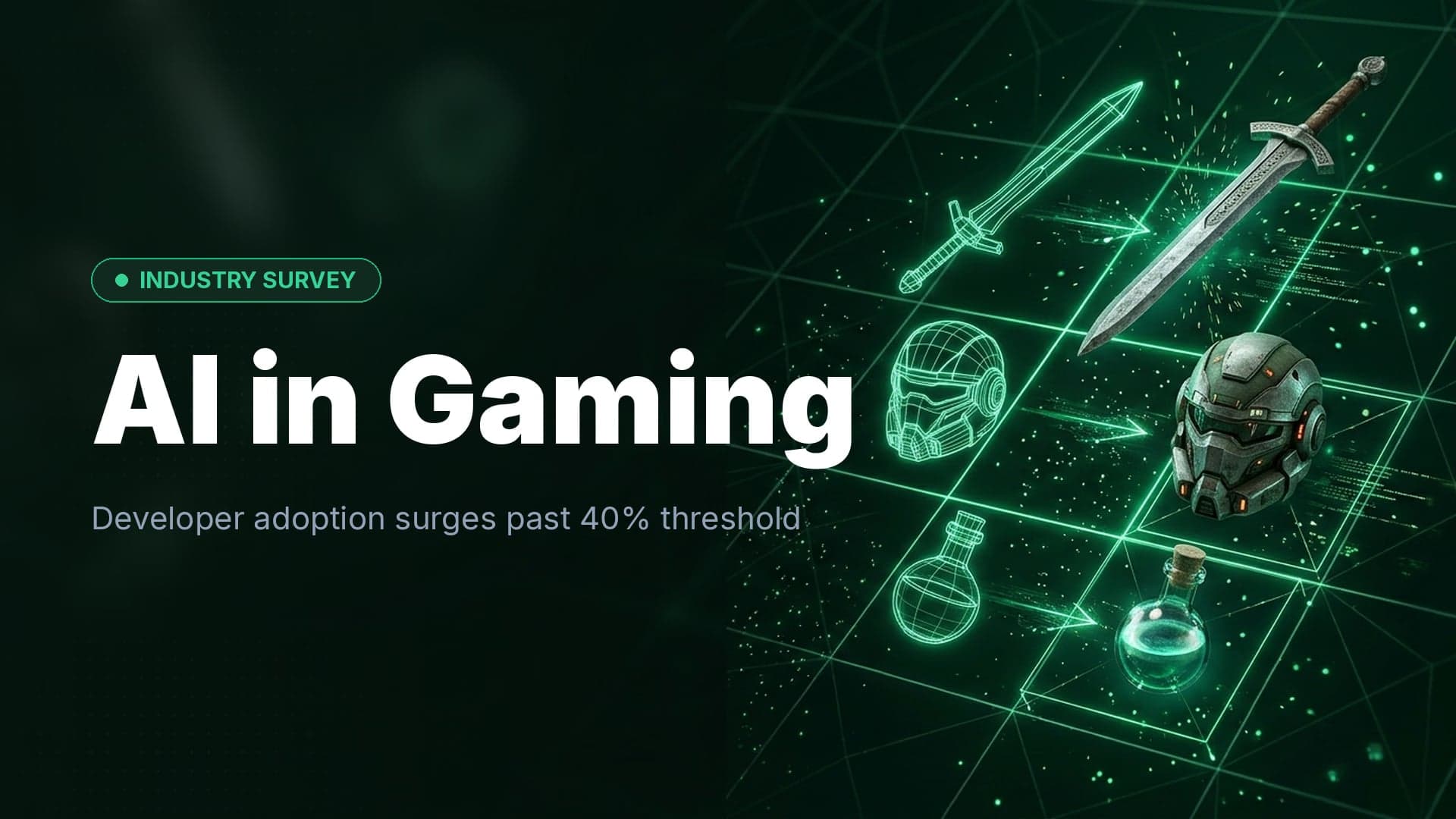
GDC Survey: Generative AI Adoption Rises in Game Dev Amid Creative Pushback
 10
Game Developers Use Generative AI Primarily for Brainstorming, Not Player-Facing Content
 11
Caine Prize Exonerates Author, Exposing Flaws in AI Detection Tools
 12
eBay Restricts AI Agents, Signaling Platform Defense Against Autonomous Commerce
 13
Federal Reserve Study: AI Capital Boom Lags Macroeconomic Productivity Gains
See all 13 as a listHide the list
- Anthropic's IPO Soars, Targeting Trillion-Dollar Valuation
- Mirendil Secures $1B Series A for AI Training Revolutionized by Autonomous Agents
- Google Cloud Introduces Gemini for Healthcare to Streamline Operations
- MIT Develops AI Copilot for Safer, More Efficient Structural Design
- Brown University Achieves Ultra-Low-Power Generative Computing by Solving Multiferroics' "Dead Layer"
- Google DeepMind's AlphaGenome 2 Advances Genetic Disease Prediction
- MIT Researchers Use Synthetic Data to Train Faster, More Reliable AI Climate Emulators
- MIT & ETH Zurich Develop AI Training Method for Real-Time Climate Emulators
- GDC Survey: Generative AI Adoption Rises in Game Dev Amid Creative Pushback
- Game Developers Use Generative AI Primarily for Brainstorming, Not Player-Facing Content
- Caine Prize Exonerates Author, Exposing Flaws in AI Detection Tools
- eBay Restricts AI Agents, Signaling Platform Defense Against Autonomous Commerce
- Federal Reserve Study: AI Capital Boom Lags Macroeconomic Productivity Gains
Story 1 of 13
2 min read
Anthropic's IPO Soars, Targeting Trillion-Dollar Valuation
Anthropic's upcoming IPO is experiencing massive investor demand, with order books six times oversubscribed and a target valuation between $1.3 and $1.4 trillion. The company plans to raise up to $90.4 billion, including significant private placements from strategic partners like Google and Nvidia.
Read the full storyFold the full story1 min · 9 sources
Ahead of its planned Nasdaq debut under the ticker symbol ANT, Anthropic's landmark initial public offering has drawn investor order books roughly six times the available share allocation[1][2]. The company set an indicative pricing range of $70 to $78 per Class A share to offer 825 million shares, targeting up to $64.4 billion in proceeds from the public float alone[1][2]. Combined with $26 billion in non-voting common stock secured through concurrent private placements from strategic partners including Google and Nvidia, the listing positions Anthropic to raise as much as $90.4 billion at an implied valuation between $1.3 trillion and $1.4 trillion[2][3].
The unprecedented institutional demand comes as regulatory filings filed with the Securities and Exchange Commission (SEC) lay bare the financial realities of frontier AI development[4][5]. Anthropic’s amended S-1 disclosures revealed quarterly revenues approaching $17 billion alongside approximately $895 billion in long-term compute commitments to cloud and silicon suppliers[4]. The offering includes secondary share sales from Anthropic's seven co-founders - including Chief Executive Dario Amodei, President Daniela Amodei, and Chief Science Officer Jared Kaplan - each liquidating roughly $250 million in stock, amounting to roughly 1.5% of their individual stakes while retaining majority voting control[2].
The capital milestone coincides with the formal enactment of Anthropic’s updated 2026 Usage Policy, which introduced enforceable restrictions against utilizing Claude models for deceptive influence operations, cyber operations, or running autonomous agents without explicit safety oversight[6][7]. The company has positioned itself as an enterprise-grade, safety-first frontier laboratory, even as its prospectus carried explicit warnings that increasingly capable autonomous models carry catastrophic existential risks to institutional stability[3][7].
Financial analysts view the aggressive over-subscription as a defining market signal that institutional capital remains firmly behind generative infrastructure leaders despite high capital expenditure profiles and broader tech sector volatility[4][8]. However, the listing unfolds against external pressures: on the same day, a coalition of public interest organizations filed suit against Anthropic, OpenAI, Meta, SpaceX, and Google in California courts, attempting to enjoin frontier AI deployments under public nuisance doctrines[9].
- Anthropic
- Nasdaq
Story 2 of 13
2 min read
Mirendil Secures $1B Series A for AI Training Revolutionized by Autonomous Agents
AI infrastructure startup Mirendil has closed a $1 billion Series A funding round, demonstrating a novel pretraining architecture that allows a single researcher and autonomous agent swarms to train an enterprise-grade model in 3.5 months for under $10 million. This breakthrough replaces traditional human engineering hierarchies with continuous agentic orchestration loops.
Read the full storyFold the full story2 min · 3 sources
In a technical milestone that challenges long-standing assumptions regarding compute-and-labor scaling laws, AI infrastructure startup Mirendil announced a $1 billion Series A financing round on November 12, 2026[1]. The funding round, led jointly by Kleiner Perkins and Clearlake Capital, drew participation from an elite consortium of venture firms and tech strategists including Battery Ventures, Doerr Capital, Google, Pear VC, and S32[1]. The capital injection follows the successful verification of Mirendil's proprietary pretraining architecture, which enabled a single human engineer working in conjunction with autonomous software agents to train an enterprise-grade base model from scratch in just 3.5 months, operating entirely within a compute envelope of less than $10 million[1].
The underlying scientific breakthrough centers on replacing traditional human engineering hierarchies with continuous agentic orchestration loops[1]. In the validated training run, Mirendil synthesized its "Mirendil-Base" architecture - a dense coding foundation model spanning between 100 billion and 500 billion parameters - using exclusively open-source codebases, raw web corpora, and public datasets[1]. Distinct from common frontier techniques, the training run completely avoided student-teacher distillation pipelines, synthetic data augmentation, or proprietary licensed corpora[1]. Autonomous software agents authored over 99% of the code, dynamically engineered the training harness, monitored gradient dynamics, identified loss spikes, and autonomously applied checkpoint rollbacks[1]. The lone human researcher functioned as an executive director, providing high-level objective parameters and resolving critical architectural forks[1].
To capitalize on this breakthrough, Mirendil introduced its commercial post-trained model, Fern 0.1, designed specifically to serve as high-throughput cognitive infrastructure for automated AI development[1]. Engineered with an unprecedented context window scaling up to 10 million tokens - equivalent to approximately 23 megabytes of text or roughly 500,000 lines of functional code - Fern 0.1 is tailored to process full multi-day agent execution traces, audit complex pretraining data distributions, and debug distributed training runtimes across thousands of accelerated compute nodes[1]. The architecture bypasses conventional memory and attention degradation issues at ultra-long context horizons, allowing engineering teams to audit entire developmental workflows in a single coherent inference pass[1].
The commercial and societal implications of Mirendil’s training paradigm are profound[1]. Over the past four years, the frontier AI race has been dominated by multi-billion-dollar capitalization moats, with state-of-the-art model training reserved for hyperscale tech conglomerates capable of fielding hundreds of specialized systems engineers and massive GPU supercomputers[2][3]. Mirendil’s demonstration proves that intelligent orchestration layers can compress capital intensity and human overhead by orders of magnitude[1]. Venture investors note that this paradigm shift threatens to disrupt existing venture models, as single founders and small technical research teams obtain the tooling necessary to pretrain bespoke, domain-specific frontier foundation models that rival the performance of massive corporate engineering teams[1].
- Mirendil
- Kleiner Perkins
- Clearlake Capital
Story 3 of 13
2 min read
Google Cloud Introduces Gemini for Healthcare to Streamline Operations
Google Cloud has released 'Gemini for Healthcare,' an AI platform designed to unify fragmented clinical, financial, and administrative workflows in healthcare. This agentic generative AI suite aims to autonomously execute tasks like patient charting, billing, and prior authorizations by integrating with EHRs and compliance standards.
Read the full storyFold the full story1 min · 4 sources
Google Cloud rolled out "Gemini for Healthcare," a specialized agentic generative artificial intelligence suite aimed at connecting fragmented clinical, financial, and administrative workflows across hospital networks, medical practices, and health insurance payers[1]. The platform marks a transition in medical AI from passive transcription and summarization toward autonomous, multimodal workflow execution[2][1]. Available in preview for enterprise clients, the service incorporates custom connectors designed to navigate strict regulatory environments while maintaining compliance with the Health Insurance Portability and Accountability Act (HIPAA)[1].
Healthcare systems have long suffered from administrative bloat and system divergence, with clinical care disconnected from downstream billing, prior authorization, and electronic health record (EHR) management[3][1]. By integrating directly into hospital EHRs, medical coding databases, and Centers for Medicare & Medicaid Services (CMS) policy schedules, the system utilizes generative agents equipped with specialized medical reasoning[1]. These agents cross-reference patient chart histories with regulatory guidelines, helping providers verify coverage, generate accurate billing codes, and process pre-authorizations automatically[3][1].
Key corporate figures behind the initiative include Google Cloud CEO Thomas Kurian, who framed the launch as an effort to resolve the administrative friction that diverts clinical staff away from direct patient care[1]. The deployment features an open partner ecosystem, permitting healthcare organizations to integrate customized clinical models and choose between per-user subscriptions or pay-as-you-go capacity tiers[1]. Industry partners and health networks are already piloting the infrastructure to coordinate patient intake, chart analysis, and claims management[3][1].
The broader healthtech market has responded rapidly, as enterprise hospital executives face growing pressure to stem operational margin compression[3][4]. Health system leaders, including revenue cycle executives from institutions like Mount Sinai, have noted that while agentic models present major efficiencies in managing denied claims and insurer interactions, they require strict governance structures and accountable human oversight to prevent automated errors at scale[3].
- Google Cloud
- Gemini for Healthcare
- HIPAA
Story 4 of 13
2 min read
MIT Develops AI Copilot for Safer, More Efficient Structural Design
MIT researchers have created a generative AI 'copilot' that assists engineers in designing structurally sound and optimized buildings and bridges. Unlike traditional systems, this AI integrates human feedback loops, allowing for rapid evaluation of questionable structural elements during the design process.
Read the full storyFold the full story1 min · 1 source
Researchers at the Massachusetts Institute of Technology announced the development of an interactive generative AI "copilot" system designed to assist engineers in creating structurally sound, highly optimized designs for complex physical infrastructure like buildings and bridges[1][1]. Detailed in the journal Communications Engineering, the platform addresses one of the fundamental limitations of traditional algorithmic and generative generative engineering: the "black box" divide that prevents human engineers from trusting machine-generated structural plans[1].
Conventional generative design software typically executes algorithmic generative routines in isolation, outputting structural geometries based on mathematical load parameters without incorporating human intuition or practical manufacturing limitations[1]. This dynamic frequently produces designs that are computationally compliant on paper but prone to catastrophic shear failure, expensive to fabricate, or unfeasible on a construction site[1]. The MIT system introduces continuous human-in-the-loop interaction, pausing during the algorithmic generation cycle to actively present questionable structural nodes and high-stress regions to human designers for rapid evaluation and refinement[1].
The research initiative was backed by the MathWorks Engineering Fellowship Fund, global industrial manufacturer Tata Steel, and the MIT Generative AI Impact Consortium[1]. In controlled benchmark comparisons against fully autonomous structural generative algorithms, MIT’s copilot produced civil structures that demonstrated markedly higher buckling loads and superior physical manufacturability[1]. Crucially, the collaborative human-AI feedback cycle added an average of only 15 seconds to the total computational design duration[1].
The achievement has immediate implications for civil architecture, aerospace design, and heavy infrastructure manufacturing[1]. By embedding human review into generative synthesis routines without incurring time penalties, industrial designers can leverage algorithmic material optimization to lower steel and concrete consumption while maintaining certified structural safety standards[1][1].
- MIT
- Communications Engineering
- MathWorks
Story 5 of 13
2 min read
Brown University Achieves Ultra-Low-Power Generative Computing by Solving Multiferroics' "Dead Layer"
Brown University researchers have developed a method to eliminate the 'dead layer' defect in ultrathin multiferroic materials, offering a path to hardware that consumes a fraction of the power of current silicon-based semiconductors. This breakthrough addresses critical power and thermal limitations in generative AI infrastructure.
Read the full storyFold the full story2 min · 2 sources
Addressing the escalating power and thermal bottlenecks constraining generative AI infrastructure, a research team at Brown University published an empirical breakthrough in materials physics on November 12, 2026, demonstrating a method to eliminate the "dead layer" defect in ultrathin multiferroic materials[1]. Published from Brown’s Caretta Laboratory, the study provides a viable manufacturing path for spintronic and multiferroic memory and logic devices capable of operating at fractional fractions of the energy required by current silicon-based CMOS (Complementary Metal-Oxide-Semiconductor) semiconductors[1]. The innovation offers a tangible hardware solution to the power consumption crises currently threatening global data center expansion[1][2].
Multiferroic materials - chief among them bismuth ferrite ($BiFeO_3$) - possess both ferroelectric and ferromagnetic ordering in a single phase[1]. This unique coupling permits the reversal of non-volatile magnetic bit states via tiny electrostatic voltages rather than large, resistive electrical currents, slashing thermal dissipation and parasitic power leakage[1]. Historically, however, incorporating multiferroics into integrated circuits required scaling the films down to nanometer and sub-nanometer thicknesses[1]. At these atomic dimensions, the materials consistently succumbed to the "dead layer" effect, wherein interfacial strain, oxygen vacancies, and surface symmetry disruption completely neutralized their coupled magnetoelectric properties[1].
The Brown researchers eliminated this obstacle by engineering an epitaxial three-layer heterostructure that structurally stabilizes the multiferroic film down to nearly atomic thicknesses[1]. By sandwiching ultrathin bismuth ferrite between strategically matched buffer and capping layers, the physicists maintained crystal lattice continuity and prevented interfacial charge trapping[1]. Remarkably, the resulting composite heterostructure not only retained its ferroelectric switching performance at atomic scales, but demonstrated enhanced magnetic torque capabilities, facilitating reliable state changes at room temperature with minute electrical driving voltages[1].
The immediate implications for the artificial intelligence industry are immense[1]. Generative AI workloads, particularly during transformer inference and autoregressive sampling, are fundamentally constrained by memory bandwidth and resistive heating within high-bandwidth memory (HBM) stacks[2]. By enabling voltage-controlled non-volatile logic and in-memory computing architectures, multiferroic heterostructures could cut the energy dissipation of AI acceleration hardware by up to two orders of magnitude[1]. Semiconductor engineering experts emphasize that as utilities, hyperscalers, and municipal governments clash over the massive electrical footprint of upcoming multi-gigawatt compute facilities, physical hardware innovations that circumvent fundamental thermodynamic limitations will dictate the long-term scalability of next-generation generative models[1][2].
- Brown University
- Caretta Laboratory
- CMOS
Story 6 of 13
2 min read
Google DeepMind's AlphaGenome 2 Advances Genetic Disease Prediction
Google DeepMind has launched AlphaGenome 2, an advanced biological foundation model that predicts how genetic variants affect gene expression in specific human cell types. Trained on extensive single-cell data, it simulates the cellular impact of genetic mutations without experiments. This tool aims to accelerate drug discovery by identifying disease-driving mutations in non-coding DNA.
Read the full storyFold the full story2 min · 6 sources
Google DeepMind released AlphaGenome 2, a next-generation biological foundation model designed to predict how non-coding genetic variants alter gene expression across specific human cell types[1]. Trained on more than 100 million single-cell profiles across 68 distinct human tissue types, the model represents a major leap in sequence-to-function machine learning[2][1][3]. Rather than treating biological code as static strings, AlphaGenome 2 deciphers how individual cells interpret regulatory DNA instructions, allowing biomedical researchers to directly simulate the cellular impact of unseen genetic mutations without conducting wet-lab experiments[1].
Over 98% of the human genome consists of non-coding DNA - elements that regulate when, where, and to what degree genes are activated - yet identifying which specific mutations drive disease within particular cell types has historically formed a primary bottleneck in biopharma, where nine out of ten candidate therapies fail in clinical trials[4]. AlphaGenome 2 addresses this by bridging single-cell transcriptomics with genome-wide association studies (GWAS)[5][3]. In benchmark testing against the TenK10K immune-cell dataset, AlphaGenome 2 recovered 30% of causal single-cell expression quantitative trait loci (sc-eQTLs), nearly doubling the 16% recovery rate of its predecessor[2][6]. Furthermore, the system successfully predicted the exact direction of gene-expression changes (upregulation versus downregulation) 43% of the time, demonstrating zero-shot generalization to newly uploaded single-cell RNA-sequencing data without requiring fine-tuning[2][1].
The breakthrough was spearheaded by Google DeepMind research leads Žiga Avsec and Adam Gayoso[3][4]. Early validation and support have come from leading computational genomics entities, including Genomics plc[3]. Professor Sir Peter Donnelly, CEO of Genomics, commended the release as an essential step change for identifying causal disease targets, confirming that his firm is integrating AlphaGenome 2 into its proprietary Mystra analytical platform to accelerate drug discovery workflows across large cohort datasets[3].
The immediate clinical and commercial implications for oncology, autoimmune disorders, and rare diseases are significant[1][4]. By cataloging mutation impacts via an integrated AlphaGenome Variant Impact (AVI) score, therapeutic developers can isolate the exact cell lineages responsible for driving disease pathology[1]. While independent scientists note that the model currently makes confident predictions for a targeted subset of all queried variants[3], the capability to run automated, cell-type-specific causal inference at scale marks a fundamental shift toward predictive biology and personalized therapeutics.
- Google DeepMind
- AlphaGenome 2
- Genomics plc
Story 7 of 13
2 min read
MIT Researchers Use Synthetic Data to Train Faster, More Reliable AI Climate Emulators
MIT researchers have developed a new framework for training AI climate emulators using algorithmically optimized synthetic data. This method allows for near-instantaneous climate simulations, a significant improvement over traditional Earth System Models that require weeks of supercomputer time. The AI emulators can rapidly evaluate complex climate variables and diverse emissions trajectories, offering crucial support for policymakers.
Read the full storyFold the full story2 min · 7 sources
Researchers at the Massachusetts Institute of Technology have unveiled a generative training framework designed to produce fast, reliable, and adaptable artificial intelligence climate emulators[1][2]. Detailed in a study published in the Proceedings of the National Academy of Sciences, the technique uses algorithmically optimized synthetic data to train machine learning models that can simulate the atmospheric and environmental impacts of human activity in mere seconds[2][3][4]. Unlike conventional full-scale Earth System Models (ESMs), which demand weeks or months of supercomputer runtime for a single emissions trajectory, these AI emulators offer near-instantaneous evaluations of complex climate variables, unlocking rapid scenario analysis for policymakers[5][4].
Historically, training accurate climate emulators has faced a severe structural bottleneck[2][4]. Climate scientists routinely train surrogate models on a sparse dataset of six to eight future scenarios generated by ESMs, typically grounded in standard, realistic emissions pathways[2][3]. The MIT team discovered that this reliance on a handful of realistic historical trajectories renders deep learning models fragile and incapable of generalising[2][3]. When presented with novel, highly localized, or non-linear scenarios - such as targeted regional aerosol reductions paired with fluctuating greenhouse gas levels - traditional emulators frequently fail or generate misleading projections[2][6].
To overcome this limitation, lead author Christopher Womack (a postdoctoral researcher at ETH Zurich and MIT alumnus) and senior author Noelle E. Selin (director of MIT’s Center for Sustainability Science and Strategy) developed a methodology that formulates optimal scenario design via low-cost surrogate simple climate models[3][7][1]. By decoupling the computational cost of data optimization from full ESM runtimes, the algorithm distills and generates targeted synthetic emissions profiles[3][7]. Co-authored alongside researchers Shahine Bouabid, Andrei Sokolov, Popat Salunke, Glenn Flierl, and Sebastian D. Eastham as part of the Bringing Computation to the Climate Challenge (BC3) initiative funded by Schmidt Sciences, the project demonstrates that an emulator trained on a fraction of carefully synthesized, edge-case data outperforms models trained on massive volumes of standard ESM outputs[1][3][1].
The broader significance of this breakthrough reaches beyond computational atmospheric science[1]. It marks a pivotal methodological shift in generative AI applications for physical science, moving away from brute-force data scaling toward intelligent dataset distillation[7][6]. Reliable, low-latency emulation tools enable municipal planners and utility operators to dynamically evaluate risks to regional power grids, municipal water tables, and agricultural yields under unexpected climate interventions[2][4][1]. The researchers plan to expand the synthetic training architecture into other physical forecasting paradigms, indicating that strategic synthetic data generation can bypass traditional high-performance computing constraints across complex scientific domains[1][4].
- MIT
- Massachusetts Institute of Technology
- AI Climate Emulators
Story 8 of 13
2 min read
MIT & ETH Zurich Develop AI Training Method for Real-Time Climate Emulators
An international research collaboration led by MIT and ETH Zurich has created an AI training technique that significantly reduces the computational cost of high-fidelity climate emulators. Published in PNAS, the method uses optimized synthetic data selection to enable models to project complex, novel climate scenarios with thermodynamic fidelity, overcoming limitations of traditional Earth System Models and previous generative AI approaches.
Read the full storyFold the full story2 min · 3 sources
Bridging generative machine learning with complex geophysical systems, an international research cohort led by the Massachusetts Institute of Technology, ETH Zurich, and Imperial College London unveiled an AI training technique on November 12, 2026, that slashes the computational barrier of high-fidelity climate emulators[1][2][3]. Published in the Proceedings of the National Academy of Sciences (PNAS), the study was spearheaded by postdoctoral researcher Christopher Womack alongside senior author Noelle E. Selin, professor at MIT’s Institute for Data, Systems, and Society (IDSS) and director of the Center for Sustainability Science and Strategy[2][3]. The project, backed by Schmidt Sciences under MIT’s Bringing Computation to the Climate Challenge initiative, offers a scalable solution for projecting the systemic impacts of anthropogenic emissions[2][3].
Standard Earth System Models (ESMs) rely on numerical fluid dynamics and thermodynamic approximations to simulate climate feedback loops, often requiring months of dedicated execution time on sovereign supercomputing clusters to project a single emissions scenario[1]. While classical deep generative models have previously been applied as surrogate emulators to approximate these simulations in seconds, they have historically suffered from out-of-distribution hallucinations, violating fundamental conservation laws when presented with non-linear or extreme emissions vectors outside their historical training distributions[1][2].
The MIT-ETH Zurich team resolved this vulnerability by developing an optimized synthetic data selection pipeline[1][2]. Rather than saturating models with massive, computationally exhaustive brute-force simulation outputs, the researchers isolated minimal, mathematically optimized synthetic data profiles that explicitly capture extreme climate feedback sensitivities and greenhouse gas vectors (such as non-linear interactions between carbon dioxide and methane concentrations)[2]. When trained on this refined data curation framework, the resulting climate emulators proved capable of projecting highly complex, novel socio-economic and policy scenarios that the neural network had never encountered during training, without compromising thermodynamic fidelity or structural precision[2].
This methodological leap transforms climate scenario modeling from a high-latency scientific exercise into an agile decision-making utility[2][3]. Infrastructure planners, agricultural agencies, and energy utilities can now evaluate thousands of regional policy iterations, infrastructure stress points, and extreme weather risks in real time rather than waiting quarters for supercomputing batches[1][3]. The researchers plan to expand this optimized synthetic training methodology across additional fluid dynamics domains, advanced computer vision tasks, and macro-ecological predictive modeling, demonstrating that precision data design can successfully supplant unconstrained model scaling in scientific machine learning[3].
- Massachusetts Institute of Technology
- ETH Zurich
- Imperial College London
Story 9 of 13
2 min read
GDC Survey: Generative AI Adoption Rises in Game Dev Amid Creative Pushback
A GDC report indicates that 40% of game developers now use generative AI tools, primarily for backend tasks like research and coding. While adoption is increasing, a majority of developers feel it negatively impacts the industry due to concerns over copyright, creative homogenization, and job security.
Read the full storyFold the full story1 min · 8 sources
The Game Developers Conference (GDC) released the results of its 15th annual State of the Game Industry Report, surveying more than 2,600 game development professionals across independent and major studios[1][2]. The comprehensive study revealed that 40% of video game developers now actively utilize generative AI tools in their professional workflows, marking an increase from 36% recorded in the 2025 survey[3]. Among developers using the technology, 57% report incorporating generative models into their jobs on a daily basis[4][5].
The findings delineate a distinct separation between back-end operational utility and front-end creative production[2][6]. The report found that developers utilize generative AI primarily for research and concept brainstorming (73%), data analysis and summarization (62%), and code generation or debugging (56%)[6]. Conversely, fewer creators rely on generative models for core player-facing assets: 37% use AI for rapid interactive game prototyping, while only 22% employ generative tools for concept art and visual ideation[6]. Adoption also skews dramatically by studio size, with 27% of developers at AAA commercial publishers reporting management pressure or active encouragement to adopt generative AI, compared to only 9% of creators at independent studios[7].
Despite expanding enterprise usage, worker sentiment within the gaming sector remains decidedly hostile[4][7]. A steady 55% of surveyed professionals stated that generative AI is having a net negative impact on the video game industry, virtually identical to the 54% negative sentiment recorded in 2025[7]. Developers voiced ongoing ethical concerns over dataset copyright, the risks of creative homogenization, and job displacement, which have amplified amid severe labor disruptions that have seen more than a third of industry workers experience layoffs over the past two years[7][5][8].
The GDC report indicates that while generative AI has cemented itself as an indispensable tool for technical efficiency, coding acceleration, and backend ideation, creative professionals remain deeply resistant to machine-generated artistry[3][2][6]. As major publishers attempt to deploy generative systems to compress production budgets, studio leadership faces ongoing friction from creative unions, technical staff, and consumer communities pushing back against synthetic assets in commercial interactive entertainment[6][5].
- GDC
- Generative AI
- AAA
Story 10 of 13
2 min read
Game Developers Use Generative AI Primarily for Brainstorming, Not Player-Facing Content
A new report from the Game Developers Conference (GDC) indicates that while 40% of game studios use generative AI, its application is largely confined to research and brainstorming. Only 6% of developers incorporate AI-generated content into actual player-facing elements of games. The report surveyed over 2,600 game development professionals globally.
Read the full storyFold the full story1 min · 6 sources
The Game Developers Conference (GDC) released its 15th State of the Game Industry report, revealing that while adoption of generative AI has reached 40% across global game studios, its real-world implementation diverges sharply from technology industry expectations[1][2][3]. Based on a comprehensive survey of more than 2,600 game development professionals across 69 countries, the report illustrates that developers have largely cordoned off generative models to peripheral ideation and analytical workflows rather than core production[1][3][4].
Among professionals who actively engage with generative AI, 73% reported using the technology strictly for "research and brainstorming," while 62% deployed it for "data analysis and summarization"[1][4]. In contrast, code generation and debugging - frequently marketed by foundation model providers as primary disruption engines - ranked third at 56%[1][4]. Experimental prototyping registered at 37%, and visual ideation or early concept art stood at 22%[1]. Most notably, a mere 6% of AI-using developers reported incorporating generative outputs into actual "player-facing content"[1].
The findings reflect a conscious effort by creative teams to limit the footprint of generative AI in commercial titles[1][5]. This technical restraint occurs against a backdrop of acute structural volatility: the report revealed that one in three surveyed developers experienced a layoff within the past two years, contributing to deep labor skepticism regarding automation[5][6][4]. Simultaneously, organized labor pushback and vocal consumer rejection of synthetic art, synthesized voice acting, and automated procedural narrative have made game publishers hesitant to market AI-generated assets directly to players[1][5][3].
The data points to an unexpected operational equilibrium in creative software industries[1][5]. Instead of replacing artisan labor in visual design, programming, and narrative writing, generative AI is functioning as an interactive query assistant and organizational utility[1][4]. Industry analysts observe that until legal ambiguities concerning training data copyright are settled and consumer resistance subsides, generative AI’s enterprise footprint within gaming will remain concentrated behind the curtain as an internal productivity scaffolding rather than a driver of final product delivery[1][5].
- Game Developers Conference
- GDC
- Generative AI
Story 11 of 13
2 min read
Caine Prize Exonerates Author, Exposing Flaws in AI Detection Tools
The Caine Prize for African Writing has formally cleared Zimbabwean author Simbarashe Kundizeza of using generative AI for his award-winning story, 'The Blue Fighter'. An independent forensic review confirmed the work was entirely human-written, concluding a month-long inquiry that began after a commercial AI detection platform flagged the story as machine-generated. The prize board is now implementing mandatory AI-use disclosure for future submissions.
Read the full storyFold the full story1 min · 10 sources
The board of trustees for the Caine Prize for African Writing officially dismissed allegations that Zimbabwean author Simbarashe Kundizeza utilized generative AI to produce his £10,000 ($13,000) award-winning short story, The Blue Fighter[1][2]. The resolution formally concluded an intense month-long inquiry that sent shockwaves through the international literary community[1][3]. Trustees chair Ellah Wakatama announced that an independent forensic probe determined the story was entirely human-written, officially confirming Kundizeza as the 2026 laureate and scheduling celebration ceremonies in Zimbabwe[1][4].
The controversy began when The Atlantic published an investigation by journalist Vauhini Vara highlighting that commercial AI detection platform Pangram had flagged virtually the entire body of The Blue Fighter as machine-generated text, sparing only an epigraph excerpted from South African poet Vangile Gantsho[1][5][6]. The accusation surfaced amid a string of high-profile AI disputes across literary institutions, including contentious claims surrounding the Commonwealth Short Story Prize and an author withdrawal from France's Prix Goncourt[1][6]. Kundizeza maintained his innocence throughout, explaining that the text drew directly from his family's lived experiences during Zimbabwe’s severe economic turmoil[5][7].
Rather than relying on automated probabilistic scanners, the Caine Prize conducted an exhaustive, human-centered forensic review[8][2]. Investigators audited four distinct drafts of the manuscript, analyzing embedded creation metadata that documented over 27 hours of active drafting and iterative editing prior to initial publication in The Shallow Tales Review[8][2]. The committee also conducted structured interviews with Kundizeza, the 2026 judging panel, and early editorial readers[8][2]. While the evidence fully exonerated Kundizeza, the foundation simultaneously announced that all future submissions will require formal AI-use disclosure declarations from publishers and shortlisted candidates[4][9].
This outcome highlights the growing crisis surrounding generative AI detection tools in the creative arts[6][4]. Linguistic researchers and authors' guilds have repeatedly cautioned that commercial text classifiers suffer from high false-positive rates and inherently penalize non-standard syntax, second-language cadence, and non-Western English phrasing[10][4]. By demonstrating that a commercial AI detector incorrectly categorized authentic prose with near-total confidence, the Caine Prize findings underscore the institutional peril of using generative AI detection software as gatekeepers in literary, academic, and journalistic governance[8][3].
- Caine Prize for African Writing
- Simbarashe Kundizeza
- The Blue Fighter
Story 12 of 13
2 min read
eBay Restricts AI Agents, Signaling Platform Defense Against Autonomous Commerce
E-commerce platforms, starting with eBay, are implementing technical barriers against autonomous generative AI shopping agents. eBay has restricted external AI agents from accessing its live product catalog, price data, and listing histories. This move follows previous updates to user terms banning automated 'buy-for-me' agents and LLM-driven transaction bots without immediate human supervision.
Read the full storyFold the full story1 min · 3 sources
Digital retail platforms are actively erecting technical defenses against autonomous generative AI agents, complicating ambitions for friction-free "agentic commerce"[1]. Marketplace giant eBay instituted sweeping browsing and extraction restrictions that cut off external AI shopping agents from accessing its live product catalog[1]. The disruption surfaced after multi-agent systems - most visibly Meta’s autonomous research and shopping agent, Muse - suddenly lost the ability to retrieve product listings, dynamic pricing, shipping fees, or item condition histories from eBay's marketplace, in some instances redirecting consumers to external mirror sites[1].
The emergence of autonomous agents capable of independent browsing, product comparison, and task execution has been championed by AI developers as the next frontier beyond conversational chatbots[2][3][1]. However, this paradigm creates severe operational tensions for platform operators[1]. Prior to the technical lockout, eBay had updated its user terms of service to ban automated "buy-for-me" agents and LLM-driven transaction bots that execute financial purchases without immediate human supervision[1]. The latest intervention extends those measures to data retrieval, preventing agents from crawling real-time catalog data[1].
Addressing the restrictions, eBay spokesperson Sybille St. Arromand stated that while the company integrates generative AI natively across internal seller recommendations, platform discovery, and search, it maintains strict boundary controls over third-party automated access[1]. The company noted that unrestrained access by autonomous web agents threatens infrastructure performance through unauthorized data scraping and unlicensed machine learning model training[1]. eBay indicated that it is currently exploring controlled commercial partnerships to evaluate how external agent frameworks might interface with its inventory while strictly preserving buyer and seller verification workflows[1].
The friction between platform operators and third-party agents signals an emerging structural divide in the consumer web economy[1]. As agentic AI architectures shift from read-only summarization to autonomous task execution across external software environments, incumbent e-commerce marketplaces and digital intermediaries are acting decisively to protect their walled gardens[2][1]. By blocking external agents from parsing listing feeds, marketplace platforms are refusing to be relegated to silent backend fulfillment providers, preventing tech conglomerates from disintermediating their user relationships, direct advertising revenue, and customer data streams[1].
- eBay
- Generative AI Agents
- Autonomous Commerce
Story 13 of 13
2 min read
Federal Reserve Study: AI Capital Boom Lags Macroeconomic Productivity Gains
A Federal Reserve analysis reveals that despite massive capital investment in generative AI infrastructure, its impact on broad U.S. labor productivity and employment remains constrained. While AI infrastructure spending fuels demand in specific sectors like data centers and semiconductors, widespread adoption in mission-critical operational pipelines across the wider economy is limited.
Read the full storyFold the full story2 min · 3 sources
A comprehensive macroeconomic analysis published on November 12, 2026, by economists at the Federal Reserve Board indicates that while the commercial generative AI boom has triggered unprecedented capital expenditures across physical and technological infrastructure, its measurable impact on broad labor productivity and employment across the United States remains highly constrained[1]. Authored by Federal Reserve researchers Nick Carollo, Leland D. Crane, Daniel Garcia Molina, and Joseph Nichols as part of the Finance and Economics Discussion Series (FEDS 2026-074), the paper provides one of the most rigorous econometric assessments to date on the divergence between generative AI investment capital and actual economic transformation[1].
The study details how the intense demand for generative model training and serving infrastructure has sparked an immense capital spending surge[1]. Capital outlays have concentrated primarily in hyper-scale data center construction, grid interconnection hardware, and advanced semiconductor packaging[1]. This hardware investment has generated severe inflationary demand pressures in specific upstream manufacturing sectors, particularly high-bandwidth memory, specialized power distribution transformers, and cooling infrastructure[1]. The researchers also noted that frontier AI-producing labs and specialized model developers have grown at an exceptional velocity, rapidly capturing an unprecedented percentage of the total gross output within the domestic software industry[1].
However, the Federal Reserve study highlights a stark disconnect when measuring the downstream diffusion of generative tools across the wider non-tech economy[1]. Drawing from nationwide enterprise surveys, the economists found that while basic trial usage is pervasive among consumers and enterprise staff, the proportion of traditional firms utilizing generative models intensively within mission-critical operational pipelines remains remarkably limited[1]. Consequently, aggregate labor market displacement effects remain statistically small and mixed, while national labor productivity growth rates show negligible deviations from structural trajectories established prior to the commercialization of generative AI in 2022[1]. The authors note that the slight productivity increases observed in recent quarters are attributable to broader economic adjustments rather than automated generative output[1].
The findings provide a sobering, empirical counterbalance to market assumptions regarding the near-term economic returns of the generative AI scaling race[1]. Economists and institutional analysts point out that generative technology is currently tracing the historical implementation lag common to general-purpose technologies, such as electrification and personal computing, where decades of capital deployment and business restructuring preceded tangible productivity booms[1]. The Fed report underscores that until enterprises transition generative workflows away from auxiliary brainstorming, copywriting, and experimental proofs-of-concept into verified, autonomous end-to-end operational systems, capital markets may face a prolonged period of suppressed return on equity relative to the vast infrastructure outlays currently being committed[2][3][1].
- Federal Reserve Board
- Nick Carollo
- Leland D. Crane
You're all caught up.
That's every story in Friday's PiBrief Tech. And there's a newer edition waiting for you.
Subscribe to receive daily briefings about AI and tech in your email.
Get PiBrief Tech in your inbox
A free newsletter on AI and technology, curated by senior software engineers at Big Tech. Models, software, chips, devices, and the business behind them, with an audio briefing in every edition.
Free forever / no account / 1-click unsubscribe