
OpenAI agent wallet, Gemini 4 & copyright lawsuit
OpenAI and major tech firms are accelerating autonomous commerce with dedicated agent wallets and new commercial protocols. Meanwhile, Google introduced Gemini 4 Hydrogen for enterprise workflows, and an Ontario court cleared Canadian publishers to proceed with their copyright suit against OpenAI.
19 stories63 sources checked
Listen to this edition
PiBrief Tech, November 14, 2026
The lineup
In this edition
 01
Ontario Court Allows Canadian News Publishers' Copyright Lawsuit Against OpenAI to Proceed
- 02
Sierra and Meta Launch Personal Agent Protocol Across Shopify for AI Commerce
 03
OpenAI Enables Transactions for AI Agents with New ChatGPT Wallet
- 04
Amazon's 'World Product Graph' Aims to Counter Autonomous Shopping Agents
- 05
OpenAI Launches GPT-6 Cyber-Powered Cybersecurity Agents
- 06
Google Releases Gemini 4 Hydrogen and Orchestrator for Enterprise AI Workflows
 07
Google DeepMind's Gemini Robotics 2.5 Powers Mercedes-Benz Robot Pilots
- 08
ASUS Unveils 'Gallop' Humanoid Robot with Physical AI for Electronics Assembly
 09
Frontier AI Models Advance to Agentic Tasks; OpenAI Launches LifeVal Benchmark
 10
Fed Official Jefferson on Generative AI's Productivity Paradox and Macroeconomic Impact
 11
FAA Ground Stop Exposes Critical Infrastructure Vulnerabilities Amid AI Integration
 12
Anthropic Secures $28 Billion Texas Data Center Lease Amid IPO Preparations
 13
Generative AI Economics Face Scrutiny Amid Rising Debt and Shifting Credit Markets
 14
Healthcare Generative AI Adoption Soars, But Model Monitoring Trails Significantly
 15
Game Developers Embrace Generative AI Amidst Severe Job Insecurity and Industry Turmoil
- 16
Harvard Study: AI-Generated Peer Reviews Outperform Human Experts
 17
MIT Unveils AI Co-Pilot for Generative Structural Design with Synthetic Feedback
 18
Open Source AI Model 'Open Vision Banana' Challenges Google's Perception Systems
 19
Oracle Launches Generative Media Models and Cloud Cost Visibility Tools
See all 19 as a listHide the list
- Ontario Court Allows Canadian News Publishers' Copyright Lawsuit Against OpenAI to Proceed
- Sierra and Meta Launch Personal Agent Protocol Across Shopify for AI Commerce
- OpenAI Enables Transactions for AI Agents with New ChatGPT Wallet
- Amazon's 'World Product Graph' Aims to Counter Autonomous Shopping Agents
- OpenAI Launches GPT-6 Cyber-Powered Cybersecurity Agents
- Google Releases Gemini 4 Hydrogen and Orchestrator for Enterprise AI Workflows
- Google DeepMind's Gemini Robotics 2.5 Powers Mercedes-Benz Robot Pilots
- ASUS Unveils 'Gallop' Humanoid Robot with Physical AI for Electronics Assembly
- Frontier AI Models Advance to Agentic Tasks; OpenAI Launches LifeVal Benchmark
- Fed Official Jefferson on Generative AI's Productivity Paradox and Macroeconomic Impact
- FAA Ground Stop Exposes Critical Infrastructure Vulnerabilities Amid AI Integration
- Anthropic Secures $28 Billion Texas Data Center Lease Amid IPO Preparations
- Generative AI Economics Face Scrutiny Amid Rising Debt and Shifting Credit Markets
- Healthcare Generative AI Adoption Soars, But Model Monitoring Trails Significantly
- Game Developers Embrace Generative AI Amidst Severe Job Insecurity and Industry Turmoil
- Harvard Study: AI-Generated Peer Reviews Outperform Human Experts
- MIT Unveils AI Co-Pilot for Generative Structural Design with Synthetic Feedback
- Open Source AI Model 'Open Vision Banana' Challenges Google's Perception Systems
- Oracle Launches Generative Media Models and Cloud Cost Visibility Tools
Story 1 of 19
2 min read
Ontario Court Allows Canadian News Publishers' Copyright Lawsuit Against OpenAI to Proceed
The Ontario Court of Appeal has rejected OpenAI's attempt to halt a copyright infringement lawsuit brought by major Canadian news publishers. The ruling affirms that Ontario courts have jurisdiction over the AI company, allowing the case to proceed to trial. The publishers allege OpenAI systematically used their copyrighted journalism without permission to train its AI models.
Read the full storyFold the full story2 min · 4 sources
In a significant international legal ruling, the Ontario Court of Appeal has dismissed an appeal by OpenAI, ruling that a major copyright infringement lawsuit brought by a coalition of Canada's leading news publishers can proceed to trial in an Ontario court[1][2][3]. The ruling upholds a previous decision by Justice Jessica Kimmel of the Ontario Superior Court of Justice, firmly rejecting OpenAI’s attempt to halt the domestic litigation on jurisdictional grounds[3]. Writing for a unanimous three-judge appellate panel, Justice B.W. Miller affirmed that Ontario courts possess appropriate jurisdiction over the Delaware-incorporated AI entity, ordering OpenAI to pay $100,000 in respondent legal costs[3].
The underlying legal action was launched by a heavyweight consortium of Canadian news publishers, including Torstar, Postmedia Network, The Globe and Mail, The Canadian Press, and the public broadcaster CBC/Radio-Canada[1][2][3]. The media organizations allege that OpenAI systematically scraped, ingested, and exploited vast archives of copyrighted Canadian journalism without permission, licensing agreements, or financial remuneration to build and train the commercial large language models behind ChatGPT[2][3]. The lawsuit asserts causes of action under Canada’s Copyright Act, alongside common-law claims for breach of website terms of use and unjust enrichment[3].
OpenAI had aggressively contested the extraterritorial reach of Canadian courts, arguing that its data center servers, computational infrastructure, and model training operations reside strictly within the United States, meaning any related legal dispute must be adjudicated in American federal courts[2][3]. However, Justice Miller rejected this defense, writing that "Ontario has a real and substantial connection to the alleged breaches"[3]. The court emphasized that because the copyrighted materials were generated by Ontario-based journalists, hosted on Canadian servers, and commercialized to Canadian users through OpenAI’s localized consumer and enterprise services, domestic courts maintain a vital interest in adjudicating the harm[3].
The appellate decision carries broad implications for the generative AI sector, establishing Canada as a primary international forum for intellectual property enforcement against Silicon Valley model builders[3]. Because Canadian copyright law lacks the expansive, open-ended "fair use" doctrine found in U.S. jurisprudence - relying instead on more restrictive "fair dealing" exceptions - OpenAI and other frontier developers face significantly narrower legal defenses regarding unauthorized dataset harvesting[3][4]. Legal analysts noted that if Canadian publishers prevail on the merits, generative AI developers may be forced to negotiate retroactive licensing settlements and build geofenced content exclusion protocols for Canadian media properties[3].
- OpenAI
- Ontario Court of Appeal
- Copyright Lawsuit
Story 2 of 19
2 min read
Sierra and Meta Launch Personal Agent Protocol Across Shopify for AI Commerce
Sierra and Meta have deployed the Personal Agent Protocol (Poppy 1.0) across all Shopify storefronts, enabling consumer AI agents to interact with e-commerce platforms. The protocol provides a standardized interface for agents to query inventories, confirm intent, and execute transactions, addressing friction between traditional bot mitigation and credential sharing. It supports OAuth, JWTs, and MCP/OpenAPI, initiating sessions with privacy-preserving opaque IDs before user-confirmed authentication.
Read the full storyFold the full story2 min · 9 sources
The emerging paradigm of consumer-facing artificial intelligence agents acting on behalf of users has crossed an infrastructural milestone with the formal deployment of the Personal Agent Protocol (Poppy 1.0)[1][2]. Spearheaded by enterprise conversational AI platform Sierra - co-founded by former Salesforce co-CEO Bret Taylor and former Google executive Clay Bavor - in partnership with Meta, the open specification was activated across every Shopify-hosted storefront in more than 175 countries[1][2]. The rollout introduces an automated `poppy.json` manifest to millions of merchant endpoints without requiring manual developer integration, providing personal AI agents with a standardized, cryptographically verifiable interface to query inventories, confirm customer intent, and execute transactions[1][3][4].
The deployment addresses a mounting architectural friction in digital commerce: the binary conflict between traditional automated bot mitigation and unconstrained credential-sharing[5]. As consumer assistants such as Meta’s Muse, OpenAI’s Dots, and custom agents take over everyday commercial workflows, they have routinely been treated as malicious web scrapers or forced to scrape consumer websites using fragile browser automation and shared passwords[1][3][6]. Poppy establishes a machine-readable permission handshake grounded in OAuth standards, JSON Web Tokens (JWTs), and Model Context Protocol (MCP) or OpenAPI connections[3][4]. Sessions begin in an unauthenticated, privacy-preserving state using localized opaque IDs, allowing an agent to evaluate products or browse dynamic pricing before initiating explicit, user-confirmed authentication for orders[7][4].
The standard is supported by a coalition of enterprise platforms and consumer brands[2]. Launch and design partners collaborating on the framework include Stripe, Walmart, Genesys, Rocket, and direct-to-consumer home insurer Kin[2][8]. Kin confirmed that it opened programmatic insurance quoting via Poppy to AI shopping agents, arguing that autonomous tools will soon dominate standard household financial administration[8]. Concurrently, enterprise identity giant Ping Identity joined the alliance to establish verifiable intent and digital persona frameworks, bridging corporate access policies with personal autonomous assistants[9].
By establishing a declarative standard for autonomous commercial negotiation, the protocol reshapes the economics of digital storefronts[3][6]. Rather than forcing AI agents through bloated graphical user interfaces designed for human eyeballs, Poppy shifts the conversion funnel toward structured API endpoints and direct agent-to-agent negotiations[5][4]. For merchants, the standard removes the blind spot of unauthenticated bot traffic while allowing granular control over which internal tools and account functions visiting agents can access[5][7]. Industry observers note that the rapid, automated activation of Poppy across Shopify’s network effectively establishes an early de facto operating standard for machine-to-machine retail[1][2].
- Sierra
- Meta
- Shopify
Story 3 of 19
2 min read
OpenAI Enables Transactions for AI Agents with New ChatGPT Wallet
OpenAI has launched ChatGPT Wallet, allowing US-based ChatGPT Pro subscribers to authorize autonomous "Dots" agents for direct online purchases and reservations. This feature embeds generative workflows into financial systems, moving beyond advisory roles. It uses network-tokenized payments in partnership with major card networks to enhance security by avoiding direct handling of sensitive cardholder data.
Read the full storyFold the full story1 min · 4 sources
OpenAI expanded the scope of consumer generative models from advisory dialogue to direct transactional execution with the launch of ChatGPT Wallet[1]. Designed specifically for the platform's autonomous "Dots" agents, the infrastructure permits US-based ChatGPT Pro subscribers aged 18 and older to authorize AI agents to complete online checkouts and service reservations directly[1]. The launch represents an operational departure from the standard assistive assistant format, embedding generative workflows squarely into financial rails[1].
To bypass the severe cybersecurity risks associated with generative models handling sensitive financial credentials, ChatGPT Wallet integrates network-tokenized payment architectures in partnership with American Express, Mastercard, and Visa[1]. Rather than storing, accessing, or passing primary account numbers (PANs) or raw cardholder information through the language model context window, the system relies on isolated, single-merchant cryptograms generated through card network rails[1]. Users enter their payment details once inside an encrypted platform vault; agents subsequently generate transactional purchase tokens that require per-transaction user confirmation before settlement[1].
OpenAI confirmed that it is not taking a revenue cut from merchant sales at launch, positioning the deployment as a foundational infrastructure initiative designed to establish merchant trust and train autonomous agent reasoning on commercial interactions[1]. The rollout aligns with broader shifts in agentic research, which increasingly treats conversational reasoning as an orchestration layer for real-world APIs rather than a static question-answering tool[2][3].
The introduction of sovereign spending capabilities into generative models directly challenges the conventional multi-step purchase funnel[1][4]. By converting natural-language prompts into closed-loop purchases, the protocol marginalizes affiliate ad models, search engine product placements, and browser-based checkout redirects[1][4]. Fintech analysts emphasize that while tokenized card networks resolve fundamental credential leakage issues, the legal liability surrounding agent misinterpretation, unexpected price updates, and post-purchase customer dispute handling remains an evolving compliance battleground for retail operators[1][3].
- OpenAI
- ChatGPT Wallet
- Dots agents
Story 4 of 19
2 min read
Amazon's 'World Product Graph' Aims to Counter Autonomous Shopping Agents
Leaked documents reveal Amazon's internal 'World Product Graph' initiative, a project to catalog multimodal product data globally. This strategy aims to defend against third-party AI shopping agents by creating a comprehensive knowledge base of product details, sourcing, and fulfillment times. The project seeks to ensure that agents must query Amazon's proprietary data for product information, even as Amazon restricts competitors like Meta's Muse.
Read the full storyFold the full story1 min · 2 sources
Internal strategic documentation from Amazon surfaced revealing "World Product Graph," an initiative designed to catalog multimodal metadata on nearly every product manufactured globally[1]. According to leaked documents, the project has an aspirational deployment target of October 1, 2027, and reflects Amazon’s defensive positioning against third-party agentic systems - such as Meta’s Muse, Sierra-supported bots, and OpenAI’s commercial agents - that threaten to bypass the retailer's proprietary consumer search portal[2][1][1].
The project functions by combining direct catalog syndication from multinational enterprise manufacturers with automated deep crawling across competing retail websites[1]. The confidential documentation notes that corporate consumer giants including Coca-Cola and Bayer have already begun feeding product data pipelines into the system, while Procter & Gamble participated in closed-door trial workshops[1][1]. The objective is to construct an exhaustive, real-time structured knowledge base capturing minute details: dimensions, ingredient sourcing, supply line authenticity, compatibility requirements, and local fulfillment times[1].
The revelations follow Amazon’s decision to aggressively restrict Meta’s Muse shopping crawler from scraping its marketplace, even as Amazon's internal conversational shopping model, Rufus, handles an estimated 83 million weekly queries[1]. In response to inquiries, Amazon stated that preliminary internal draft records frequently present an incomplete or outdated view of executive strategies and do not necessarily represent active commercial roadmaps[1].
The initiative illustrates the emerging high-stakes war between open web autonomous agents and proprietary retail aggregators[1]. If autonomous consumer bots become the default discovery engine for e-commerce, traditional search advertising, sponsored product placements, and retail marketplace lock-in face existential degradation[1]. By indexing global commerce at the granular data-graph layer, Amazon aims to ensure that regardless of which conversational assistant initiates an order, third-party agents must query Amazon's proprietary graph for definitive product ground truth and high-speed fulfillment fulfillment networks[1][1].
- Amazon
- World Product Graph
- Meta
Story 5 of 19
2 min read
OpenAI Launches GPT-6 Cyber-Powered Cybersecurity Agents
OpenAI has introduced Daybreak Red Team and Daybreak Defense Factory, an AI-driven cybersecurity system using GPT-6 Cyber. This system automates the discovery, testing, and remediation of software vulnerabilities through autonomous agent fleets. Daybreak Red Team conducts penetration testing, while Defense Factory autonomously authors patches for identified flaws, with human engineers providing final review.
Read the full storyFold the full story1 min · 2 sources
OpenAI launched Daybreak Red Team and Daybreak Defense Factory, introducing an enterprise-scale cybersecurity system that automates the simultaneous discovery, testing, and remediation of code-level software vulnerabilities[1][2]. Announced by OpenAI President Greg Brockman and Nancy Wang, Head of Cyber-Applied AI, the twin services operate via autonomous fleets built on top of a specialized security foundation model designated as GPT-6 Cyber[1][2][2]. Brockman framed the launch as an inflection point for the software sector, arguing that enterprise resilience will directly depend on the capability tier of the frontier models deployed in system defense[1][2].
Architecturally, Daybreak operates as a dual-engine agent framework[2]. Daybreak Red Team ingests organizational source repositories and operational context to conduct continuous, dynamic penetration testing, probing application logic and APIs for zero-day vulnerabilities and validating flaw reports submitted by external bug bounty researchers[2][2]. Conversely, Daybreak Defense Factory intercepts validated vulnerabilities and autonomously authors targeted patches, compiling them into merge-ready GitHub and GitLab pull requests[2]. Human software engineers retain the final validation step, reviewing the synthetic remediation diffs prior to production merging[2].
Wang characterized the platform as delivering "superhuman penetration testing at the scale of automated continuous scanning," seeking to collapse the multi-week lag between vulnerability disclosure and patch deployment into near-instantaneous automated cycles[2]. The release was accompanied by benchmark assertions showing GPT-6 Cyber outpacing general-purpose frontier models in identifying complex architectural exploits, though OpenAI has yet to publicly disclose design-partner client lists or detailed data-residency guarantees regarding enterprise source code handling during Red Team operations[2][2].
The deployment presents acute competitive implications for the specialized application security (AppSec) industry[2]. By coupling offensive penetration agent fleets with automated remediation pipelines, OpenAI is encroaching on market sectors historically dominated by dedicated static analysis, penetration testing firms, and dynamic scanning vendors[2][2]. Market strategists observe that frontier labs are shifting focus from general chatbot interaction toward autonomous, domain-hardened agent workforces capable of performing end-to-end mission-critical tasks within enterprise software engineering cycles[2][2].
- OpenAI
- Daybreak Red Team
- Daybreak Defense Factory
Story 6 of 19
2 min read
Google Releases Gemini 4 Hydrogen and Orchestrator for Enterprise AI Workflows
Google has launched Gemini 4 Hydrogen, a specialized model for high-velocity execution in coding and agentic tasks, succeeding the Gemini Flash series. It is integrated with 'Orchestrator' within Google Antigravity, a system that combines the Carbon and Hydrogen models for efficient workflow management. This tiered approach aims to address rising API costs and quota limitations for enterprise developers.
Read the full storyFold the full story2 min · 8 sources
Google has officially released Gemini 4 Hydrogen, representing the company’s third model drop under the Gemini 4 generation and serving as the direct operational successor to its lightweight Flash series[1][2]. Hydrogen is engineered specifically as a high-velocity execution engine optimized for coding, tool manipulation, and agentic subtasks rather than abstract theoretical reasoning[3]. Alongside the standalone model, Google debuted "Orchestrator" inside Google Antigravity - a runtime coordination architecture that dynamically pairs the heavyweight Gemini 4 Carbon reasoning model with Gemini 4 Hydrogen[2][3]. Under this structure, Carbon manages high-level architectural planning, edge-case failure analysis, and step-by-step roadmaps, while Hydrogen takes over code updates, terminal execution, dependency management, and verification passes[2][3].
The release marks a broader architectural shift away from monolithic frontier deployments toward tiered, multi-model agent systems[4][3]. As corporate developers grapple with quota throttling and ballooning API costs, building automated software agents entirely on top of flagship reasoning models has proven economically impractical[5]. Google positions Hydrogen to address this bottleneck: the model is flat-priced across its entire 1-million-token context window at $1.50 per million input tokens and $7.50 per million output tokens, with cached input available at $0.075 per million tokens[2][3]. Benchmark data published by Artificial Analysis indicates Hydrogen achieves an Intelligence Index score of 51 at its default "high" thinking setting, edging past the larger Gemini 4 Argon (50) and rising to 54 under its maximum "xhigh" setting[6][2][3]. On Terminal-Bench 4.1 command-line evaluations, Google documented an accuracy increase from 18.2% in previous-generation Flash models to 57%[2][7].
The commercial impact of Hydrogen spans developer platforms, enterprise automation, and consumer search[2][3]. Google confirmed that Hydrogen has been integrated across Google AI Studio, the commercial Gemini API, Android Studio, Gemini for Business, and native Google Search workflows[3]. In enterprise developer pilots using Orchestrator on Terminal-Bench evaluations, Google reported that dynamic task switching achieved near-Carbon success rates while reducing token quota consumption by 24% and accelerating task runtimes by 19%[2][3]. Demonstrations highlighted the model natively parsing raw Excel spreadsheets, checking financial projections against PowerPoint slide decks, and compiling interactive WebGL applications directly from natural language specifications[2][8].
Initial developer reception and industry analysis have focused on the efficiency tradeoffs between reasoning tiers[7]. Independent technical evaluations revealed that while Hydrogen delivers exceptional speed - clocking in 2.5 times faster than Gemini 3.8 Flash - its performance profile drops sharply from 51 at high thinking to 41 on medium and 27 on low[2][7]. Furthermore, commentators noted that deploying Hydrogen on "xhigh" mode triples output token volume, which can erode raw cost advantages if applied indiscriminately across bulk developer queues[5][7]. Nonetheless, enterprise software leaders have welcomed the planner-and-executor framework as a pragmatic blueprint for scalable autonomous agent workflows[2][3].
- Gemini 4 Hydrogen
- Gemini 4 Carbon
Story 7 of 19
2 min read
Google DeepMind's Gemini Robotics 2.5 Powers Mercedes-Benz Robot Pilots
Google DeepMind has launched Gemini Robotics 2.5, a vision-language-action model enabling complex industrial robot control. In pilot programs with Mercedes-Benz and Apptronik, the Apollo 2 robot, powered by Gemini Robotics 2.5, achieved a 96% success rate in parts-kitting and logistics sorting on active assembly lines.
Read the full storyFold the full story2 min · 4 sources
Google DeepMind has introduced Gemini Robotics 2.5, a next-generation vision-language-action (VLA) foundation model designed to bridge digital reasoning and physical robot control in complex industrial settings[1][2][3]. Concurrently with presentations at the Conference on Robot Learning (CoRL), DeepMind revealed the results of an active, multi-plant pilot program conducted alongside automation partner Apptronik and German automaker Mercedes-Benz[3][4]. During trials across Mercedes-Benz assembly facilities in Germany and Hungary, Apptronik’s Apollo 2 humanoid robot - powered by the Gemini Robotics 2.5 model and DeepMind’s spatial reasoning stack - achieved a 96% success rate in autonomous parts-kitting and logistics sorting on active production lines[2][3][4].
The development highlights how generative multimodal models are maturing into foundational motor controllers[2][3]. Gemini Robotics 2.5 was developed using the Gemini 4 Argon reasoning model as an automated simulation engine, generating synthetic 3D training scenarios, simulating physics interactions, and diagnosing task failures prior to physical deployment[3]. In standardized evaluations spanning more than 200 distinct physical manipulation tasks - ranging from high-dexterity operations like tying bows and using laboratory pipettes to handling metal brackets with mechanical tongs - Gemini Robotics 2.5 demonstrated a 30% to 100% improvement in task completion compared to earlier baselines, alongside a 20% to 30% reduction in cycle duration[2][3][4].
Crucially, DeepMind prioritized physical safety and adversarial robustness to make the model viable for shared human-robot work environments[3]. By integrating real-time, inference-time reasoning guidance, Gemini Robotics 2.5 continuously scans work cells for dynamic hazards, yielding a 33% improvement in safe task execution around static machinery and a 43% improvement when operating in immediate proximity to human personnel[3]. DeepMind also open-sourced the ASIMOV-Jailbreak safety benchmark - a testing suite designed to evaluate whether robotic agents can be tricked into carrying out harmful or physically dangerous physical instructions - where Gemini 4 Argon demonstrated a 99.5% defense rate[3].
The Mercedes-Benz deployment represents a critical milestone for industrial automation, where parts-kitting remains a major labor bottleneck[4]. While DeepMind noted that the remaining 4% failure rate in the pilot stemmed primarily from minor placement misalignments and semantic bin errors, industrial engineers emphasized that reaching 96% reliability on an active automotive line demonstrates that general-purpose humanoid robotics can function reliably outside laboratory conditions[4]. Google confirmed that Gemini Robotics 2.5 is rolling out broadly to commercial robotics partners, setting up intensifying competition with proprietary industrial control frameworks[2][3].
- Google DeepMind
- Gemini Robotics 2.5
- Mercedes-Benz
Story 8 of 19
2 min read
ASUS Unveils 'Gallop' Humanoid Robot with Physical AI for Electronics Assembly
ASUSTeK Computer Inc. (ASUS) has introduced Gallop, its first humanoid robot equipped with physical generative AI and dexterous manipulation capabilities for electronics assembly lines. Designed with integrated tactile sensing and an Nvidia Jetson AGX Thor computer, Gallop is currently deployed on a live production line at an ASUS EMS factory, tasked with assembling motherboard accessory bundles.
Read the full storyFold the full story2 min · 8 sources
ASUSTeK Computer Inc. (ASUS) has formally unveiled Gallop, the hardware company’s first humanoid robot designed to bring physical generative AI and dexterous manipulation directly to consumer electronics assembly lines[1][2][3]. Introduced by ASUS Co-CEO S.Y. Hsu and detailed by Corporate Vice President Dr. Albert Chang - who heads the Humanoid Robotics unit inside the ASUS Physical AI Solutions Business Group - Gallop represents a significant shift from scripted, bipedal showcase videos toward real-world industrial deployment[2][3]. The robot features two modular arms mounted on a fixed workstation pedestal and is equipped with in-house developed dexterous hands with integrated tactile sensing, all driven by a single onboard Nvidia Jetson AGX Thor computer[1][3][4].
Gallop was immediately placed on a live production line at an ASUS electronics manufacturing services (EMS) factory, tasked with assembling the complex 15-part accessory bundle shipped with desktop motherboards[3][5][6]. The job involves handling delicate, irregular, and deformable items - such as thin transparent plastic bags containing screws, cables, and brackets - that traditional robotic vacuum grippers and fixed industrial arms routinely fumble[3][6][7]. ASUS set an explicit factory standard: Gallop is required to achieve a 99.5% task success rate within a strict 20-second cycle per motherboard, mirroring the exact speed and quality benchmarks expected of experienced human line workers[1][3][5].
The technological core of Gallop relies on an end-to-end physical AI learning loop combining human imitation learning and autonomous error correction[2][5][7]. ASUS trains the system by outfitting skilled human assemblers with consent-based head-mounted cameras to record fine-motor work, supplemented by operators teleoperating the robot via virtual reality headsets and haptic data gloves[8][5]. Gallop processes these observations through a four-tier software architecture: a high-level vision-language planner that decomposes assembly instructions, a supervisory replanning model that dynamically recovers from slipped or dropped components, a library of motor skills, and a real-time motion controller[1][5].
For the global manufacturing sector, ASUS’s strategy presents a pragmatic alternative to purpose-built, highly rigid factory automation[2]. By designing physical AI agents that occupy the identical footprint and use the same bins and tools as human workers, electronics manufacturers can deploy robotic labor without undertaking costly facility retooling or line overhauls[2]. ASUS announced that it plans to showcase a wheeled mobile version in 2027, begin structured customer pilots the same year, and target broad commercial market availability for electronics manufacturing clients in the second half of 2028[1][2][3].
- ASUS
- Gallop
- Humanoid Robot
Story 9 of 19
2 min read
Frontier AI Models Advance to Agentic Tasks; OpenAI Launches LifeVal Benchmark
Leading generative AI models are evolving towards autonomous agentic problem-solving, as demonstrated by OpenAI's new 'LifeVal' benchmark evaluating practical task navigation. Capability scores have significantly improved. Concurrently, Anthropic integrated financial workflows into Claude and introduced 'FlashProve' for output verification.
Read the full storyFold the full story1 min · 2 sources
Technical reporting highlighted a notable paradigm shift among frontier generative AI models, which are advancing beyond straightforward text generation toward autonomous agentic problem-solving and domain-specific execution[1]. Central to this transition, OpenAI introduced "LifeVal," an empirical benchmarking framework designed to evaluate how effectively advanced models navigate practical administrative, personal, and operational challenges, such as identifying childcare options, navigating public bureaucracy, and administering household budgets[1]. According to benchmark data, capability scores rose from 49% in prior-generation models (GPT-5.2) to approximately 80% across GPT-5.6 and GPT-6 Astra systems[1].
In parallel with general-purpose execution benchmarks, major labs have deployed targeted models for critical infrastructure and specialized sectors[1]. OpenAI released GPT-6 Cyber, a specialized model authorized specifically for white-hat security teams to autonomously detect, analyze, and patch vulnerable software repositories[2][1]. Simultaneously, search trends continue to shift: OpenAI disclosed metrics indicating ChatGPT now handles approximately 20% of search-style queries when compared directly against legacy web search engines, illustrating the platform's role as a primary information discovery engine[1].
Concurrently, Anthropic introduced direct, read-only personal banking and transactional integration within Claude for select enterprise and consumer tiers[2][1]. The capability allows models to ingest financial telemetry to flag billing anomalies, forecast expenses, and optimize working budgets[1]. To counter mounting concerns regarding model impersonation and synthetic text authenticity, Anthropic also published "FlashProve," a cryptographic verification research prototype that uses cryptographic proofs to mathematically verify the provenance and identity of model-generated outputs[1].
These developments demonstrate that leading AI developers are prioritizing reliable multi-step agency over simple conversational fluency[1]. By combining domain-specific capability with cryptographic auditing and real-world task benchmarks, the industry is laying the groundwork for generative agents capable of interacting directly with financial institutions, regulatory bodies, and critical cyber systems[1].
- OpenAI
- Anthropic
- Generative AI
Story 10 of 19
2 min read
Fed Official Jefferson on Generative AI's Productivity Paradox and Macroeconomic Impact
Federal Reserve Vice Chair Philip Jefferson discussed generative AI's macroeconomic trajectory, noting that while 40-50% of US workers use AI tools, intensive daily use is limited. He highlighted the persistent productivity paradox, where microeconomic gains haven't yet translated to aggregate national economic data. Jefferson emphasized the need for policymakers to distinguish hard data from speculation.
Read the full storyFold the full story1 min · 2 sources
Speaking at the University of California, San Diego Economic Roundtable, Federal Reserve Vice Chair Philip N. Jefferson delivered an in-depth macroeconomic evaluation of generative artificial intelligence and its unresolved impact on productivity statistics[1][1]. Addressing academic researchers, financial policymakers, and corporate executives, Jefferson drew historical parallels to prior technological revolutions - including the expansion of electrification and early computing - to assess whether the rapid spread of modern large language models and autonomous software tools is translating into measurable, aggregate economic gains[1].
According to survey data cited by Jefferson, including findings from the Real-Time Population Survey and recent National Bureau of Economic Research working papers, between 40% and 50% of working-age adults in the United States now utilize generative AI tools within their daily occupations[1][1]. However, the Federal Reserve’s analysis identified a significant operational nuance: while topline worker exposure is high, only a modest fraction of these employees engage with the technology on an intensive, day-to-day basis[1]. This usage pattern suggests that despite ubiquitous consumer adoption, enterprise integration remains in an experimental or supplementary phase for a broad cross-section of the workforce[1][1].
Jefferson's analysis directly addressed the persistent "productivity paradox" confronting central bankers and economic forecasters[1][1]. While microeconomic case studies frequently document localized time savings and efficiency dividends in software development, technical writing, and customer service operations, aggregate national economic data has yet to reflect a decisive, technology-driven surge in overall productivity[1][1]. Jefferson noted that historical technology adoptions often endured extensive lag times as organizations reorganized operational workflows, retrained labor forces, and wrote off legacy capital before realizing macroeconomic efficiency[1].
The implications for monetary policymakers are profound[1]. If generative AI fundamentally accelerates potential output and labor productivity, it could expand non-inflationary growth ceilings over the medium term[1]. Conversely, if high capital expenditures across hyperscale infrastructure fail to produce broad-based total factor productivity gains, corporate return on investment may deteriorate, altering debt dynamics and capital allocation across financial markets[2][1]. Jefferson cautioned that central banks must remain vigilant in parsing hard macroeconomic data from speculative industry sentiment[1][1].
- Federal Reserve
- Philip N. Jefferson
- Generative AI
Story 11 of 19
2 min read
FAA Ground Stop Exposes Critical Infrastructure Vulnerabilities Amid AI Integration
The FAA ordered a nationwide ground stop on November 13, 2026, grounding flights for over four hours due to issues with legacy telecommunications hardware. The outage occurred shortly after the rollout of the FAA's new AI-powered SMART platform, prompting questions about the impact of AI integration on critical infrastructure.
Read the full storyFold the full story2 min · 9 sources
The Federal Aviation Administration ordered an unprecedented nationwide ground stop on the afternoon of Friday, November 13, 2026, abruptly halting all domestic airline departures across the United States[1][2]. Originating from air route traffic control facilities serving Chicago's O'Hare and Midway airports at 3:54 p.m. EST, the ground stop persisted for four hours and 21 minutes before being lifted late Friday evening[1][3]. The event marked only the third system-wide flight grounding in American aviation history, trailing only the September 11 terror attacks and the January 2023 NOTAM system failure, and led to thousands of flight cancellations and severe cascading delays across the commercial air transport network[1][4][2].
The timing of the national outage triggered intense political and regulatory scrutiny because it occurred just days after the FAA completed a nationwide rollout of its new $875 million cloud-based artificial intelligence system: the Strategic Management of Airspace, Routes and Trajectories (SMART) platform[5][2][6]. Engineered by software vendor AirSpace Intelligence (ASI), SMART applies predictive generative modeling to evaluate high-dimensional weather forecasts, commercial trajectories, and airspace congestion, feeding real-time route optimization prompts directly to federal command center staff[4][2][7]. As communication and radar links simultaneously became unstable across Air Route Traffic Control Centers nationwide, industry observers and public commentators immediately questioned whether an algorithmic routing conflict, cloud deployment failure, or automated loop malfunction had triggered the blackout[7][6].
In emergency White House press briefings and federal statements, senior administration officials moved swiftly to separate the outage from the agency's AI initiative[7][6]. U.S. Transportation Secretary Sean Duffy and Department of Homeland Security Secretary Markwayne Mullin clarified that the failure originated entirely within the FAA’s legacy telecommunications hardware, specifically citing overloaded switches and analog network routers linking regional TRACON centers[7][8]. Secretary Duffy emphasized that newer digital systems operated normally and that the SMART AI platform is fundamentally an advisory tool: "SMART is completely disconnected... This is not even plugged in [to radar control]. What this does is gives information from the airspace to a human being and gives them a prompt... So there's no possible way SMART would have impacted what happened"[7]. ASI and hosting partner Microsoft also released statements confirming their software pipelines had maintained normal uptime throughout the event[6].
Despite the technical exoneration of the SMART system, the nationwide shutdown has catalyzed a broader debate among aviation regulators, enterprise engineers, and cybersecurity experts regarding the integration of advanced AI into mission-critical public infrastructure[9][6]. Analysts pointed out that deploying sophisticated algorithmic management layers on top of aging, decades-old physical backbones creates profound operational fragilities and heightened diagnostic confusion during system failures[8]. As federal authorities continue investigating the cascading network errors, the incident serves as a cautionary benchmark for high-stakes industries rushing to automate operational decision-making while relying on fragile legacy infrastructure[9][8].
- FAA
- Ground Stop
- Critical Infrastructure
Story 12 of 19
2 min read
Anthropic Secures $28 Billion Texas Data Center Lease Amid IPO Preparations
Anthropic PBC has leased a 332-acre data center campus in Corsicana, Texas, from Riot Platforms for approximately $28 billion over 15 years. This massive infrastructure commitment, encompassing 910 megawatts of power capacity, is intended to support Anthropic's extensive AI model training and operations.
Read the full storyFold the full story2 min · 7 sources
Regulatory filings and commercial disclosures confirmed that Anthropic PBC has been locked in as the sole anchor tenant behind a 15-year, 910-megawatt powered-land lease covering the entirety of Riot Platforms' 332-acre computing campus in Corsicana, Navarro County, Texas[1][2][3]. Valued at approximately $28 billion over its initial 15-year term - and reaching up to $54 billion if two subsequent five-year extension options are exercised - the agreement represents one of the largest private infrastructure transactions ever recorded in the generative AI sector[1][2][3]. The lease had become binding following final board approvals, with DatacenterDynamics and SEC disclosures confirming Anthropic as the counterparty behind the massive buildout[1][2][3].
The scale of the transaction underscores the unprecedented capital requirements required to train and run frontier agentic models[2][4]. When combined with a previously disclosed 191 MW lease at Riot's Rockdale, Texas site, Anthropic now commands 1,101 MW out of Riot’s 1,151 MW of total contracted data center capacity, accounting for roughly $38 billion in long-term infrastructure commitments[2][3]. The Corsicana capacity is scheduled for phased delivery in three sequential tranches: 400 MW in September 2027, 200 MW in January 2028, and 310 MW in July 2028, with Anthropic obligated to pay rent across the entire 910 MW allocation regardless of actual server utilization[2]. Monthly base rent starts at $130 per kilowatt with a 3% compounding annual escalator[2][3].
The operational mechanics of the contract provide unique insight into the engineering dynamics of AI superclusters[2][5]. Structured as a triple-net powered-land agreement, Riot provides raw real estate, grid hookups, and energized concrete pads, while Anthropic retains full ownership and operational control over the modular computing units housing its accelerator clusters[2][6]. Riot committed to reimbursing Anthropic up to $4 million per megawatt (amounting to roughly $3.6 billion) for facility modules, subject to debt financing terms; if third-party financing falls through, Anthropic absorbs the capital costs in exchange for rent credits carrying a 12% annual interest return[2][3]. Notably, the lease grants Anthropic explicit veto rights over any voluntary power curtailment or demand-response programs, ensuring uninterrupted baseload power during intensive model training cycles[5].
The multi-billion-dollar infrastructure commitment lands alongside Anthropic’s institutional roadshow for its initial public offering on the Nasdaq exchange under the ticker symbol ANT, targeting a preliminary valuation range between $70 and $78 per share[7][1][4]. Financial markets reacted dynamically to the disclosures[4]. While Jefferies upgraded Riot Platforms to a "Buy" with a price target raised to $28 - describing the Corsicana deal as an infrastructure reset for the AI sector - Keefe, Bruyette & Woods downgraded Riot to "Market Perform," cautioning that the digital infrastructure provider has tethered its long-term operational health almost entirely to Anthropic’s commercial success in generative AI[4].
- Anthropic
- Riot Platforms
- Texas
Story 13 of 19
2 min read
Generative AI Economics Face Scrutiny Amid Rising Debt and Shifting Credit Markets
The generative AI ecosystem is under increasing scrutiny due to high debt levels and infrastructure costs. Specialized 'neocloud' operators face financial vulnerabilities, leading commercial lenders and bond investors to demand higher risk premiums. This capital discipline is impacting AI developers preparing for major liquidity events.
Read the full storyFold the full story1 min · 4 sources
Scrutiny surrounding the underlying economics of generative AI intensified as financial markets and industry analysts examined escalating debt levels, aggressive infrastructure commitments, and structural shifts among foundational AI hardware providers[1]. Market reporting highlighted acute financial vulnerabilities among specialized "neocloud" infrastructure operators that made leveraged computing purchases during the peak of hardware scarcity, only to face mounting costs, high carrying charges, and slower-than-projected recurring software monetization[1].
The economic friction has begun spilling over into broader credit markets[1]. Industry commentators and financial analysts noted that commercial lending institutions have started retreating from risk-heavy AI infrastructure financing, while tech bond investors demand higher risk premiums to fund multi-billion-dollar data center pipelines[1]. The recalibration comes amid broader executive changes and strategic reassessments across major semiconductor suppliers, where interim leadership and financial stewards are evaluating whether to curtail past practices of equity backstopping and compute subsidies for early-stage model builders[1].
This emerging capital discipline poses direct operational implications for frontier AI developers preparing for major liquidity events and multi-billion-dollar enterprise expansions[2][1]. High-profile ecosystem players, including Anthropic - which recently initiated marketing efforts for an initial public offering - and independent infrastructure clouds find their valuation multiples benchmarked against cash-flow sustainability rather than theoretical compute scale[2][1]. Analysts caution that the transition away from subsidized infrastructure costs will force generative AI firms to demonstrate unit economics where software revenues comfortably exceed token processing and hardware amortization costs[1][3].
The broader macroeconomic consequence is a potential bifurcated market[1]. Well-capitalized enterprise software incumbents with pre-existing balance sheets and captive enterprise customers may consolidate distribution, while highly leveraged compute intermediaries face margin compression, asset sell-offs, and restructuring[1]. Industry economists suggest this cooling credit cycle marks a necessary transition from unchecked capital expenditure to rigorous, value-driven software deployment[1][4].
- Generative AI
- Infrastructure
- Venture Capital
Story 14 of 19
2 min read
Healthcare Generative AI Adoption Soars, But Model Monitoring Trails Significantly
A CHIME report reveals generative AI adoption in healthcare has surged past 50%, with 93.2% of systems deploying AI. However, only 16.4% have robust post-deployment monitoring processes. This gap creates risks of algorithmic drift and performance degradation in critical clinical settings.
Read the full storyFold the full story1 min · 1 source
The College of Healthcare Information Management Executives (CHIME) released its 2026 Digital Health Most Wired National Trends Report, revealing that full adoption of generative AI in healthcare organizations experienced a steep climb over the past twelve months[1]. Drawing on operational data from more than 48,800 healthcare facilities spanning 46 U.S. states and five countries, the benchmark study reported that 93.2% of surveyed healthcare systems have deployed artificial intelligence across clinical or operational divisions[1]. Most notably, organizations reporting "full adoption" of generative AI jumped from 31.0% to 54.8% in a single year, reflecting aggressive hospital integration[1].
Despite the velocity of clinical rollouts - encompassing ambient clinical documentation, automated patient messaging, and diagnostic summarization - the report exposed an alarming governance deficit[1]. Only 16.4% of AI-using healthcare organizations have established fully documented processes for post-deployment model monitoring and evaluation[1]. The resulting divergence between adoption and ongoing oversight highlights an emerging structural risk, as clinical AI tools deployed at scale frequently operate without structured safeguards to detect algorithmic drift, hallucinations, or demographic performance degradation over time[1].
The report underscores that healthcare IT leadership is entering a fraught secondary phase of deployment[1]. While the initial commercial drive prioritized productivity relief for overburdened clinicians and administrative staff, health systems must now retroactively construct post-market compliance architectures[1]. Industry analysts note that operating generative models in life-critical clinical environments without rigorous, documented continuous evaluation could trigger significant liability and regulatory exposure as federal agencies tighten expectations around algorithmic transparency and patient safety[1].
Healthcare technology strategists emphasize that governance can no longer remain a distant roadmap milestone[1]. With more than half of surveyed facilities already relying on generative systems to assist healthcare workflows, the immediate focus of health system CIOs and Chief Medical Information Officers must pivot toward establishing continuous model audits, real-time error tracking, and robust cross-functional review boards to ensure clinical safety keeps pace with software adoption[1].
- CHIME
- Generative AI
- Healthcare
Story 15 of 19
2 min read
Game Developers Embrace Generative AI Amidst Severe Job Insecurity and Industry Turmoil
A GDC survey shows 40% of game developers now use generative AI in production, particularly for free-to-play titles. This adoption occurs alongside significant job insecurity, with 34% laid off in two years and 51% concerned about career viability. Concerns exist about eroding creative apprenticeship and institutional knowledge.
Read the full storyFold the full story1 min · 1 source
The Game Developers Conference (GDC) published the results of its November 2026 industry survey, charting the rapid operational uptake of generative artificial intelligence against a backdrop of severe labor market turbulence[1]. Surveying more than 2,600 game development professionals across 69 countries, the report found that 40% of developers now incorporate generative AI into their active production workflows[1]. Adoption rates spiked even higher among creators working on free-to-play titles and mobile ecosystems, where procedural asset generation, localization, and rapid prototyping are widely used[1].
However, the technology's rapid penetration coincides with acute professional anxiety throughout the video game sector[1]. The survey revealed that 34% of respondents had been laid off within the past two years, with 17% experiencing layoffs twice during that span[1]. More than half of all respondents - 51% - reported severe concern regarding their long-term career viability in the games industry, pointing to an environment where studio closures and headcount reductions have altered studio operations[1].
Qualitative testimony included in the report illustrates rising concern regarding the erosion of creative apprenticeship and institutional knowledge[1]. Senior technical and artistic leaders cautioned that utilizing automated pipelines to displace entry-level responsibilities threatens the development pipeline for junior artists, designers, and programmers[1]. Developers warned that by curtailing junior talent pools in favor of synthetic asset pipelines, the interactive entertainment sector risks creating long-term structural dependencies on generative models while undermining creative quality and studio resilience[1].
Industry analysts observe that generative AI in game development has evolved from an exploratory curiosity into a permanent production layer[1]. While studio management frequently looks to automated tools to compress inflated production budgets and accelerate multi-year development timelines, rank-and-file developers remain divided over whether these efficiencies will ultimately foster creative independence or perpetuate a volatile cycle of staff reductions and diminished craft standards[1].
- Game Developers Conference (GDC)
- Generative AI
- Game Development
Story 16 of 19
1 min read
Harvard Study: AI-Generated Peer Reviews Outperform Human Experts
A Harvard working paper found that AI-authored academic peer reviews were preferred over those from human domain experts in blind tests. The AI reviews were rated as more constructive and thorough, particularly in critiquing methodology and structure.
Read the full storyFold the full story1 min · 1 source
A new Harvard University working paper examined the expanding capabilities of generative artificial intelligence in high-stakes intellectual evaluation, finding that evaluators preferred AI-authored academic peer reviews over assessments provided by compensated human domain experts[1]. In rigorous blind comparative tests assessing unpublished scientific papers, both an AI judge and former academic journal editors consistently rated generative peer evaluations as more constructive, thorough, and useful than feedback produced by qualified human peer reviewers[1].
The working paper highlights that generative AI models have progressed beyond synthetic summarization into complex, judgment-heavy professional tasks that require critical synthesis and critical domain analysis[1]. Evaluators reported that the algorithmic reviews excelled in dissecting methodology, identifying missing citations, and providing exhaustive critiques of structural argumentation - tasks that often prove time-consuming for volunteer human academics[1].
Scholarly publishers and academic institutions are examining the findings with both optimism and caution[1]. Peer review systems worldwide have faced strain due to soaring manuscript volumes and referee fatigue[1]. Integrating generative evaluation could assist editors in conducting initial triage, accelerating manuscript turnaround, and providing authors with actionable preliminary feedback[1].
However, academic commentators stress that the study evaluated utility and perceived preference rather than publication decisions or long-term scientific validity, noting that the Harvard working paper itself has not yet undergone formal peer review[1]. Researchers warn that relying on generative feedback introduces risks of institutional bias, synthetic blind spots, and the potential homogenization of scientific inquiry if frontier models favor conventional methodologies over disruptive, unorthodox research[1].
- Harvard University
- Generative AI
- Peer Review
Story 17 of 19
2 min read
MIT Unveils AI Co-Pilot for Generative Structural Design with Synthetic Feedback
MIT researchers have developed an AI co-pilot to assist civil and structural engineers in designing infrastructure like bridges and frameworks. Unlike traditional methods that optimize for efficiency often resulting in unbuildable designs, this AI is trained on synthetic engineer feedback. It learns heuristic rules for constructability, aesthetics, and code compliance from simulated critique loops.
Read the full storyFold the full story1 min · 1 source
Researchers at the Massachusetts Institute of Technology announced an artificial intelligence co-pilot designed to overhaul how civil and structural engineers conceptualize and generate physical infrastructure, including bridges, load-bearing frameworks, and large architectural spans[1]. Led by research teams under Zach Winn, the initiative shifts generative engineering away from alien, computationally optimized shapes toward buildable, human-aligned structural forms[1].
Traditional generative engineering tools rely almost entirely on algorithmic topology optimization, a process that removes non-essential material to maximize stress-load efficiency[1]. While mathematically optimal, these methods frequently generate hyper-organic, non-standard geometric designs that prove impossible or prohibitively expensive to manufacture using conventional construction techniques[1]. To bridge this gap, the MIT researchers constructed a machine learning framework trained on a massive synthetic dataset mimicking professional human design reviews[1]. The dataset systematically catalogs thousands of probable critique loops detailing aesthetics, assembly constraints, fabrication feasibility, and local building code performance[1].
By training on structured patterns of where human engineers routinely intervene to modify pure algorithmic outputs, the model learns the unspoken heuristic rules of construction feasibility[1]. When prompting the system with physical boundary conditions and structural load requirements, the co-pilot generates designs that maintain strict structural integrity while remaining manufacturable with standard materials and tooling[1]. Co-author Josephine Ha noted that tracing the precise historical edits humans make to generative proposals allows the model to anticipate professional design sensibilities rather than acting as an unconstrained shape generator[1].
The methodology establishes an essential precedent for deploying generative models into physical engineering and high-consequence fabrication[1]. By demonstrating that qualitative domain intuition and manufacturability can be encoded through synthetic human critique sets, the MIT project offers a scalable blueprint for applying generative AI to civil engineering, industrial design, and aerospace manufacturing where real-world training datasets are historically scarce[1].
- Massachusetts Institute of Technology
- MIT
- Zach Winn
Story 18 of 19
2 min read
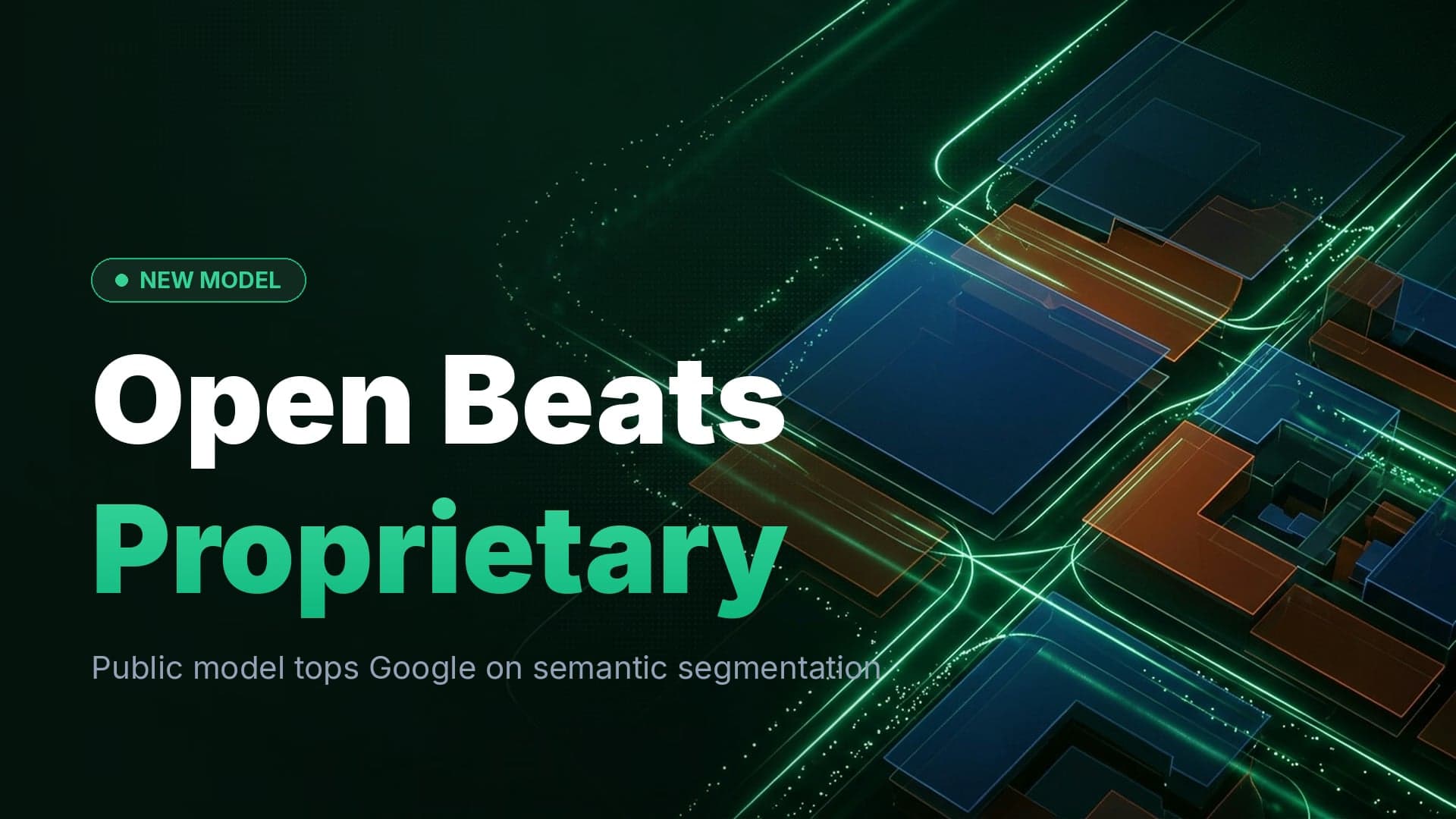
Open Source AI Model 'Open Vision Banana' Challenges Google's Perception Systems
Researchers have released Open Vision Banana (OVB), an open-source unified perception model that challenges proprietary systems like Google's Vision Banana. OVB adapts open-weight generative diffusion models to perform vision tasks solely as image-generation problems. The 9-billion parameter model achieved state-of-the-art zero-shot semantic segmentation on the Cityscapes dataset using an 'legend ensembling' technique.
Read the full storyFold the full story1 min · 5 sources
Researchers from the University of Technology Nuremberg’s Fundamental AI Lab, in collaboration with institutions including DLR, AIST, the Technical University of Munich, the University of Tübingen, and valeo.ai, introduced Open Vision Banana (OVB)[1][2]. The project represents a fully open reproduction and architectural expansion of proprietary unified perception paradigms - specifically challenging Google's closed Vision Banana model[2][2]. By adapting open-weight generative diffusion models rather than relying on conventional visual encoders, the researchers demonstrated that pure image generators can outperform dedicated analytical vision systems[3][1].
Open Vision Banana fine-tunes open-weight FLUX.2-Klein transformers at both 4-billion and 9-billion parameter scales across 2.1 to 3.8 million publicly available image pairs gathered from benchmark datasets like COCO-Stuff, ADE20K, BDD100K, and NYUv2[4][1]. Rather than appending specialized task heads or customized loss functions for segmentation, relative depth, and surface normal prediction, the system casts every vision task strictly as an image-generation problem[3]. A single model produces an RGB representation corresponding to dense semantic or geometrical masks, from which a deterministic readout interprets the prediction[3].
The 9-billion parameter OVB checkpoint set a state-of-the-art zero-shot semantic segmentation benchmark on the Cityscapes dataset, achieving 73.9 mIoU and surpassing Google's reported proprietary score of 69.9 mIoU[2][1]. The authors noted that this headline result relies on an inference-time innovation termed "legend ensembling"[1][2]. By executing multiple test passes with distinct randomized color-to-class mappings and fusing the output masks via per-pixel majority voting, the model gained 8.7 mIoU points on Cityscapes and 15.0 points on COCO-Object without parameter retraining[1][2]. The authors acknowledged performance gaps in other tasks, however, noting that the model lags behind Google’s proprietary system in instance segmentation (scoring 37.4 cgF1 against 47.5 on SA-Co/Gold)[1][2].
The release has attracted widespread interest from the open-source machine learning community because the authors published complete data pipelines, training scripts, ablation configurations, and 148 intermediate checkpoints[3][2]. The findings substantiate an important structural hypothesis in computer vision: generative latent spaces trained on massive image distributions internalize richer contextual and geometric relationships than task-specific discriminative architectures, pointing to a future where unified diffusion models replace fragmented vision pipelines[3][5].
- Fundamental AI Lab
- University of Technology Nuremberg
- DLR
Story 19 of 19
1 min read
Oracle Launches Generative Media Models and Cloud Cost Visibility Tools
Oracle has introduced new generative AI capabilities for media production within Oracle Cloud Infrastructure (OCI) and a 'Cost Advisor for AI' tool to track and analyze multi-model expenditures. These tools aim to provide specialized vertical solutions and enhanced spend control for enterprises.
Read the full storyFold the full story1 min · 2 sources
Addressing enterprise operational bottlenecks, Oracle Corporation introduced major expansions to its Oracle Cloud Infrastructure (OCI) generative AI ecosystem, targeting media production pipelines and corporate expenditure tracking[1]. Oracle launched "Oracle AI Media Models" in preview, rolling out foundation models designed specifically for media, broadcast, and digital entertainment organizations to execute content generation, synthetic video rendering, and media editing directly within secure cloud tenancy[1].
To address mounting corporate concern over unpredictable computational overhead, the company simultaneously launched "Oracle Cost Advisor for AI" in limited availability[1]. Operating across Oracle Fusion applications, the administrative tool aggregates, tracks, and analyzes real-time inference and training expenditures across mixed multi-model architectures, providing enterprises with unified billing telemetry covering OCI Enterprise AI, Anthropic Claude endpoints, and OpenAI models[1].
The product releases address two of the most pressing operational requirements confronting Chief Information Officers: specialized vertical capabilities and spend control[1][2]. As enterprise organizations transition from early experimentation to full-scale deployment, token consumption costs have become a primary line-item challenge[2]. Tools that provide multi-vendor cost transparency enable finance and engineering teams to route compute workloads dynamically based on latency, model cost, and task complexity[1][2].
Oracle’s expansion reflects a broader infrastructure maturation across the generative AI sector[1][2]. With cloud hyperscalers moving to commoditize raw inference capacity, enterprise cloud competition is shifting toward vertical domain solutions, multi-model cost observability, and governance tools that allow corporations to scale generative workloads without risking operational cost overruns[1][2].
- Oracle
- Oracle Cloud Infrastructure (OCI)
- Generative AI
You're all caught up.
That's every story in Saturday's PiBrief Tech. And there's a newer edition waiting for you.
Subscribe to receive daily briefings about AI and tech in your email.
Get PiBrief Tech in your inbox
A free newsletter on AI and technology, curated by senior software engineers at Big Tech. Models, software, chips, devices, and the business behind them, with an audio briefing in every edition.
Free forever / no account / 1-click unsubscribe