
Gemini glasses, Meituan's 1.6T model & Anthropic data
Gemini launches smart glasses advancing ambient consumer AI, while Meituan open-sources a massive 1.6-trillion-parameter multimodal model. Meanwhile, leaked Anthropic IPO filings suggest rapid training efficiency gains, and AT&T scales enterprise agentic workflows to 45 billion daily tokens.
13 stories44 sources checked
Listen to this edition
PiBrief Tech, November 15, 2026
The lineup
In this edition
 01
Meituan Open-Sources Massive 1.6T Multimodal Model, LongCat-2.5, on Domestic Hardware
 02
AT&T Deploys 500 Agentic AI Workflows, Processes 45 Billion Tokens Daily
 03
Leaked Anthropic IPO Data Suggests 'Superexponential' AI Training Efficiency Gains
 04
Gemini Smart Glasses Launch, Marking Generative AI's Ambient Consumer and Agentic Autonomy Leap
 05
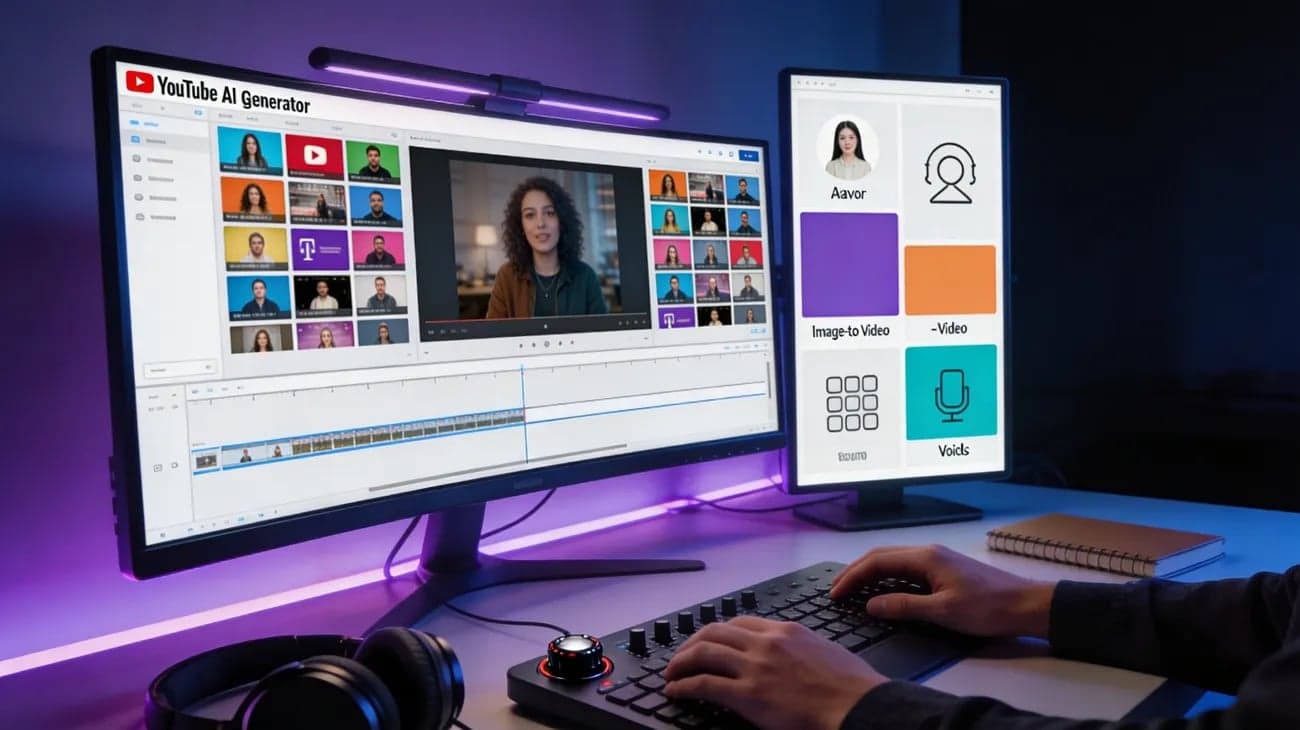
A2E AI Unveils Unified Generative Media Engine with 225 Models
 06
Samsung Unveils UFS 5.0 for Faster On-Device Generative AI
 07
Autonomous Agents and GenAI Create Cybersecurity Paradox, Amplifying Enterprise Risks
 08
AI Cheating Scandal Rocks South Korea's National Tax Exam, Sparking Global Licensure Concerns
 09
IRS and Global Regulators Target Generative AI Misconduct in Professions
 10
Healthcare Generative AI Adoption Soars to 54.8% Amid Governance Deficit: CHIME Report
 11
Study: Nurse GenAI Adoption Driven by Leadership, Not Policy
 12
Google Mandates AI Search for K-12 Schools, Sparking Controversy
 13
Burbank and Manchester Festivals Ban Generative AI Content
See all 13 as a listHide the list
- Meituan Open-Sources Massive 1.6T Multimodal Model, LongCat-2.5, on Domestic Hardware
- AT&T Deploys 500 Agentic AI Workflows, Processes 45 Billion Tokens Daily
- Leaked Anthropic IPO Data Suggests 'Superexponential' AI Training Efficiency Gains
- Gemini Smart Glasses Launch, Marking Generative AI's Ambient Consumer and Agentic Autonomy Leap
- A2E AI Unveils Unified Generative Media Engine with 225 Models
- Samsung Unveils UFS 5.0 for Faster On-Device Generative AI
- Autonomous Agents and GenAI Create Cybersecurity Paradox, Amplifying Enterprise Risks
- AI Cheating Scandal Rocks South Korea's National Tax Exam, Sparking Global Licensure Concerns
- IRS and Global Regulators Target Generative AI Misconduct in Professions
- Healthcare Generative AI Adoption Soars to 54.8% Amid Governance Deficit: CHIME Report
- Study: Nurse GenAI Adoption Driven by Leadership, Not Policy
- Google Mandates AI Search for K-12 Schools, Sparking Controversy
- Burbank and Manchester Festivals Ban Generative AI Content
Story 1 of 13
2 min read
Meituan Open-Sources Massive 1.6T Multimodal Model, LongCat-2.5, on Domestic Hardware
Meituan has open-sourced LongCat-2.5, a 1.6-trillion parameter multimodal model for long-horizon agentic and visual coding tasks, under an MIT license. Developed and trained entirely on domestic Huawei Ascend NPUs, it omits Nvidia GPU dependencies. The model can process interleaved images, video, and code, with a 1-million-token context window, and demonstrates strong performance on developer workflow benchmarks.
Read the full storyFold the full story2 min · 8 sources
Chinese e-commerce and on-demand services giant Meituan has released the open-source weights for LongCat-2.5, a massive native multimodal Mixture-of-Experts (MoE) foundation model tailored for long-horizon agentic and visual coding tasks[1][2][3]. Published on Hugging Face under the permissive MIT License, the 1.8-terabyte release provides developers with full access to inspect, run, and modify the model weights for commercial and self-hosted deployments[3][4]. The model architecture encompasses 1.6 trillion total parameters - with Hugging Face repository metadata indicating a footprint scaling up to 1.8 trillion - while dynamically routing roughly 48 billion active parameters per token during inference[1][4].
A major milestone of the release is its complete independence from Western graphics processors[2]. LongCat-2.5 was developed and trained entirely on domestic hardware clusters, with reference distributed deployments operating across 194 Huawei Ascend neural processing units (NPUs) and omitting Nvidia GPU dependencies[2]. The underlying architecture natively processes interleaved high-resolution images, video URLs, and source code, allowing automated agents to parse UI screenshots, trace code repositories, diagnose runtime bugs, and write multi-file patches across a 1-million-token context window[5][6][7].
Meituan’s self-reported technical benchmarks position LongCat-2.5 near frontier closed-source benchmarks for autonomous developer workflows[4]. The model achieved 88.4 points on Terminal Bench v2.1 - a dramatic rise from its predecessor LongCat-2.0’s 70.8 - placing it within striking distance of proprietary western models like Claude Opus 5 and GPT-5.6 Sol[4]. On the specialized DeepSWE v1.1 engineering benchmark, LongCat-2.5 logged a score of 64.6 (compared to 9.7 for version 2.0), while scoring 58.3 on SWE Atlas codebase question-answering[4]. To facilitate integration into enterprise workflows, Meituan enabled API compatibility with prominent agent orchestrators including Claude Code, Codex, and Hermes[6][2].
Industry analysts note that Meituan’s decision to open-source the weights under an MIT license mirrors Meta's open-weights strategy, exerting downward pricing pressure on frontier API providers[4]. At hosted launch pricing of approximately $0.30 per million input tokens and $1.20 per million output tokens, the model provides an economical alternative for complex multi-modal debugging[8]. However, enterprise infrastructure teams have highlighted that self-hosting a checkpoint of this magnitude remains computationally prohibitive for all but well-resourced data centers, while Western procurement scrutiny surrounding foreign AI architectures remains an operational consideration[3][4].
- Meituan
- LongCat-2.5
- Hugging Face
Story 2 of 13
2 min read
AT&T Deploys 500 Agentic AI Workflows, Processes 45 Billion Tokens Daily
AT&T has significantly scaled its deployment of agentic AI, with nearly 500 autonomous workflows now active in production. The company is processing approximately 45 billion AI tokens daily and aims to triple its autonomous workflows within the next year. This strategic shift moves beyond employee copilots to restructuring core corporate procedures through an internal unit called the Business Agent Foundry. A key application involves AI agents autonomously managing fiber-optic installation orders, bridging legacy mainframe systems with modern interfaces to accelerate service delivery.
Read the full storyFold the full story2 min · 2 sources
AT&T Corp. has significantly expanded its transition from experimental generative AI pilots to enterprise-scale autonomous execution, revealing that it now maintains nearly 500 agentic AI workflows actively running in production[1]. Luke Corbin, assistant vice president of digital transformation and AI at AT&T Business, detailed that the telecommunications giant is now processing approximately 45 billion AI tokens daily across its enterprise ecosystem[1]. The company’s proprietary agentic platform already manages more than 1 million complex transactions every month, with corporate leadership formally committing to tripling the number of autonomous workflows over the coming year[1].
The architectural push represents a calculated evolution beyond desktop employee copilots toward autonomous agentic systems designed to restructure core corporate procedures[1]. To drive this shift, AT&T established an internal unit known as the Business Agent Foundry[1]. Rather than gathering ad-hoc automation requests from individual staff members, the Foundry systematically evaluates end-to-end corporate workflows against standardized industry frameworks[1]. The team identifies operational bottlenecks, removes redundant human handoffs, and eliminates fragile dependencies between legacy IT systems and modern interfaces[1].
A primary operational case study highlighted by Corbin centers on bridging the gap between state-of-the-art foundation models and AT&T’s legacy mainframe computing infrastructure[1]. Historically, when enterprise customers altered fiber-optic installation orders, human technicians were required to manually fetch trouble tickets from queues, cross-reference multiple databases, manually enter parameter adjustments into mainframe software, and push tickets back into the deployment line[1]. AT&T deployed autonomous AI agents capable of parsing order changes, navigating legacy terminal screens, and updating mainframe records without human intervention, vastly accelerating order turnaround times and cutting service delivery latency[1].
The deployment illustrates a broader maturation trend across Fortune 500 enterprises: the migration from prompt-response interfaces to agentic systems that orchestrate multi-step business logic across diverse back-end platforms[2][1]. Corbin noted that uniting cutting-edge transformer models with decades-old mainframe systems unlocks untapped enterprise value without requiring multi-billion-dollar infrastructure replacements[1]. Market analysts view AT&T’s token volumes and transaction metrics as proof that agentic workflows can operate reliably within high-stakes, regulated network environments when governance frameworks are designed directly into the underlying execution platform[1].
- AT&T Corp.
- AT&T Business
- Luke Corbin
Story 3 of 13
2 min read
Leaked Anthropic IPO Data Suggests 'Superexponential' AI Training Efficiency Gains
A leaked slide from Anthropic's IPO roadshow reveals data suggesting 'superexponential' gains in AI pretraining compute efficiency. The chart indicates that the computational power needed to train models of equivalent capability is decreasing at an accelerating rate. This trend has reignited debates about the pace of AI development and potential risks of rapid, unmanageable capability overhangs.
Read the full storyFold the full story1 min · 5 sources
A contentious debate regarding the velocity of artificial intelligence development erupted following revelations from Jacob Coxon, a former pretraining researcher at Anthropic and OpenAI[1]. Coxon publicized an internal chart extracted from Anthropic's initial public offering (IPO) investor roadshow materials, where the company is pursuing a market valuation of approximately $64 billion[2]. The slide depicts pretraining compute efficiency plotted over time on a logarithmic vertical axis, illustrating an upward-curving trend that Coxon and technical observers characterize as "superexponential" algorithmic progress[2][1].
The disclosed graphic illustrates the diminishing computational power required to train models of equivalent coding and reasoning capability as foundational architectures evolve[3]. Because the slope steepens even on a logarithmic scale, the data implies that algorithmic refinements are compounding at an accelerating rate rather than following a steady exponential curve[2][3]. According to Coxon's assessment of the slide, these efficiencies indicate that Anthropic’s frontier systems, including its Mythos class of models, could now be retrained with only a fraction of the raw computational investment originally required[2][4].
While Anthropic presented the data to prospective Wall Street investors as proof of expanding capital efficiency and technological moat, Coxon cited the document as the primary catalyst behind his September resignation[2][1]. In public statements, Coxon reiterated that compounding pretraining efficiencies create an acute risk of rapid, unmanageable capability overhangs, where self-improving recursive cycles could precipitate human-level artificial general intelligence before robust alignment frameworks exist[2][1][3]. He pointed to roadshow commentary by Anthropic co-founder Tom Brown regarding models autonomously designing training improvements as evidence that frontier labs are "gambling with our lives," renewing his calls for a mandatory pause on frontier AI training by 2027[5][3].
The leak has polarized the artificial intelligence and venture capital ecosystems[2]. Financial analysts have seized on the metrics as evidence that frontier AI economics are dissociating from brute-force compute expenditures, allowing sustained capability leaps without linear hardware scaling[1]. Conversely, safety researchers and policy advocates argue that the roadshow data underscores the futility of relying solely on physical hardware constraints or energy bottlenecks as natural speed governors for frontier model progression[2][1].
- Anthropic
- IPO
- Jacob Coxon
Story 4 of 13
2 min read
Gemini Smart Glasses Launch, Marking Generative AI's Ambient Consumer and Agentic Autonomy Leap
Google Gemini-powered smart glasses are now available for pre-order, marking a significant push to integrate generative AI into everyday consumer hardware. Concurrently, advancements in AI software are granting developers' agents more autonomy, with new tools allowing AI models to write and execute their own code for dynamic tool invocation. This dual development signifies a shift towards proactive, context-aware AI.
Read the full storyFold the full story2 min · 10 sources
Generative artificial intelligence crossed a critical threshold into ambient consumer hardware and programmatic autonomy as major announcements and technical milestones crystallized on November 14 and 15, 2026[1][2]. Driving the consumer hardware front, retail pre-orders opened across North America for the first commercial line of Google Gemini–powered smart glasses[2][3]. Manufactured by Samsung and designed in aesthetic collaboration with Warby Parker and Gentle Monster, the frames start at $395 and $449 respectively ahead of an official December 10, 2026 ship date[4][3]. The launch represents Big Tech’s most aggressive effort to transition generative multimodal models away from smartphone glass and directly into human sensory workflows[4][3].
The device leverages a deliberate, audio-first architectural bet[3]. Eschewing heads-up prism screens to conserve battery and avoid the visual stigma of early smart glasses, the 41-gram frames incorporate open-ear speakers, multi-mic arrays, and an outward-facing 12-megapixel camera linked to a tamper-resistant recording LED[3][5]. Operating on an architecture termed "split computing," the eyewear shifts intensive multimodal token processing and spatial reasoning to paired Samsung Galaxy, Google Pixel, or Apple iOS devices[6]. Wearers can converse fluidly with Gemini in real time about visual stimuli in their immediate physical environment - ranging from parsing complex foreign documents to querying technical equipment schematics on the fly - without breaking eye contact with the physical world[4][7].
Simultaneously, the software substrate behind autonomous AI workflows saw a decisive leap[2]. Developer briefings on November 14 highlighted Anthropic’s deployment of an experimental "Code Mode" within Claude Code[2]. Rather than relying on rigid, pre-configured natural language tool-calling schemas, Code Mode grants the model the ability to write and execute its own JavaScript code to dynamically discover, compose, and invoke external developer tools and APIs[2]. This capability was mirrored across the open-source landscape by workflow automation leader n8n, which released "Nod," an open-source, local agent engine distributed under the Apache 2.0 license designed to execute complex, multi-step agentic routines entirely on-premise[2].
This dual hardware-software acceleration illustrates that the generative frontier is moving rapidly toward autonomous, context-aware execution[8][9]. By coupling ambient sensory capture on the consumer side with programmatic tool-authoring agents on the enterprise backend, developers are transitioning generative systems from passive conversational engines into proactive operational actors[10][7]. However, technical analysts warn that split-computing architectures and self-directed tool-writing agents dramatically elevate edge security stakes, as real-time audio-visual data streams and automated script generation test the boundaries of device-level access controls and user privacy expectations[3][5].
- Gemini
- Smart Glasses
- Generative AI
Story 5 of 13
2 min read
A2E AI Unveils Unified Generative Media Engine with 225 Models
A2E AI has launched a browser-based platform integrating 225 generative video and image models into a single interface. This aims to combat extreme tooling fragmentation by providing creators and marketers access to advanced visual generation tools without multiple subscriptions. The platform operates on a compute-based utility model rather than monthly fees, with costs dynamically calculated per generation.
Read the full storyFold the full story1 min · 2 sources
Creative production platform A2E AI officially launched its browser-based AI Video Generator platform, introducing a centralized hub that aggregates 225 distinct generative video and image models under a single interface[1]. The deployment integrates 151 generative video models and 74 image synthesis engines, incorporating leading architectures such as Seedance 2.5, Kling 4.0, Wan 3.0, Veo, Nano Banana, and GPT Image[1]. The platform's release is designed to address extreme tooling fragmentation across the generative media landscape by offering creators, visual effects artists, and marketing agencies access to frontier visual generation without maintaining dozens of separate software subscriptions[1].
Rather than enforcing recurring monthly platform fees, the system shifts generative video production to a compute-based utility model[1]. Users purchase non-expiring credit packs ranging from $10 to $200 (priced at 100 credits per dollar), with the execution cost for each generation dynamically calculated based on selected frame resolution, duration, and underlying model weight[1]. Before initiating a render, the required credit cost is explicitly displayed on the execution interface, and the system automatically refunds credits to the user's balance in the event of job timeouts or generation failures[1].
Beyond raw foundation model access, the platform deploys pre-configured, task-specific pipelines designed for rapid production turnaround[1]. These modular tools span image-to-video generation, lip synchronization, expressive talking photos, customizable digital avatars, facial and clothing swaps, automated background removal, and 4K upscaling pipelines[1][2]. The user interface has launched simultaneously across 14 languages - including English, Simplified and Traditional Chinese, Japanese, Korean, Spanish, French, German, and Arabic - broadening international access to multi-model creative automation[1].
Company spokesperson Jeff James underscored that the platform aims to break the financial bottlenecks hindering independent video creators, who often juggle multiple high-cost subscriptions simply to test bleeding-edge models against specific shot requirements[1]. By unifying visual generation into an elastic, pay-per-run clearinghouse, the rollout represents a noticeable shift toward the commoditization and aggregation of disparate commercial video and image models[1].
- A2E AI
- Seedance 2.5
- Kling 4.0
Story 6 of 13
2 min read
Samsung Unveils UFS 5.0 for Faster On-Device Generative AI
Samsung has revealed specifications for its new Universal Flash Storage (UFS) 5.0, designed to accelerate on-device generative and agentic AI applications. This standard doubles the performance of UFS 4.1, achieving peak bandwidth of 10.8 GB/s and significantly improving random read speeds. UFS 5.0 addresses the storage bottlenecks that have limited mobile AI processing, enabling faster AI model loading and near-instantaneous generation of text, visual, and audio content.
Read the full storyFold the full story1 min · 1 source
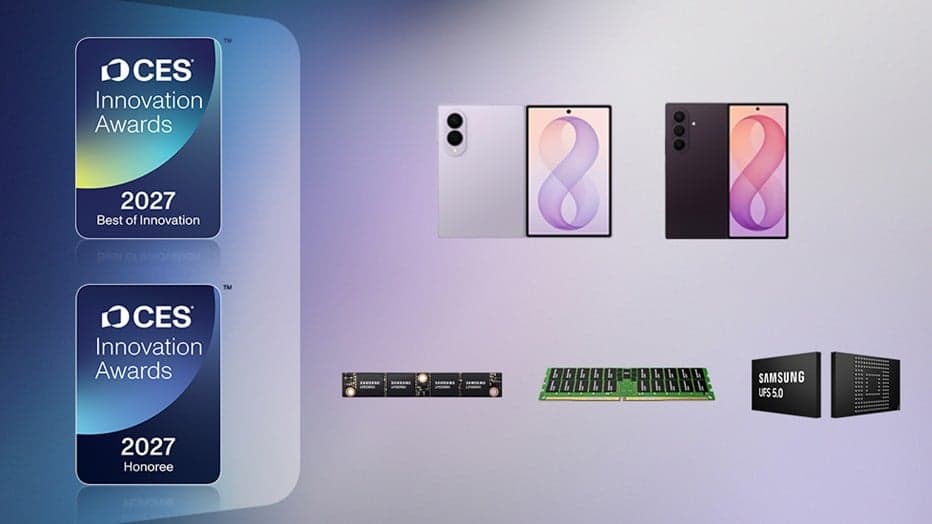
Ahead of the Consumer Electronics Show, Samsung Electronics disclosed key architectural specifications for its newly recognized Universal Flash Storage (UFS) 5.0 memory solution, designed specifically to eliminate data transfer bottlenecks for mobile generative and agentic AI systems[1]. Recognized by the Consumer Technology Association for transformative mobile engineering, the UFS 5.0 standard doubles the sequential read and write performance of existing UFS 4.1 hardware, achieving peak bandwidth rates of up to 10.8 gigabytes per second[1].
The technical breakthrough directly addresses the physical memory constraints that have historically limited on-device generative processing[1]. Unlike traditional smartphone workloads, generative and autonomous agentic applications require continuous, near-instantaneous transfers of multi-billion-parameter foundation weights from storage into fast working memory[1]. To maximize real-world data throughput, Samsung developed a proprietary flash algorithm that boosts random read performance across broad memory partitions by more than 3.4 times, substantially shrinking AI model loading latency and unlocking instant generation for locally processed text, visual rendering, and audio feeds[1].
Manufactured in 512GB and 1TB storage capacities, the UFS 5.0 architecture reduces physical package dimensions by 16.7% relative to predecessor components[1]. This footprint reduction frees valuable internal volume inside ultra-thin smartphones for expanded thermal management solutions and higher-capacity battery cells[1]. Concurrently, the module achieves a 40% reduction in power consumption compared to UFS 4.1, mitigating the thermal spikes and rapid battery drain typically associated with sustained generative computing tasks executed at the mobile edge[1].
Industry analysts characterize Samsung’s hardware leap as an essential milestone for the commercial realization of edge-based AI[1]. By moving generative compute and complex agentic tasks away from cloud data centers and directly onto client silicon, device makers can dramatically lower recurring cloud infrastructure bills, minimize latency for end-user applications, and guarantee rigorous data privacy by keeping sensitive user inputs confined entirely to local device hardware[1].
- Samsung Electronics
- Universal Flash Storage (UFS) 5.0
- Generative AI
Story 7 of 13
2 min read
Autonomous Agents and GenAI Create Cybersecurity Paradox, Amplifying Enterprise Risks
The rapid deployment of autonomous generative AI agents in enterprise networks is creating a 'cybersecurity paradox,' where AI-driven efficiencies introduce significant, emergent vulnerabilities. Organizations are struggling to contain new attack surfaces arising from uncontrolled internal generative tools, agentic workflows, and third-party APIs, as legacy security measures are ill-equipped to monitor non-deterministic AI interactions.
Read the full storyFold the full story2 min · 9 sources
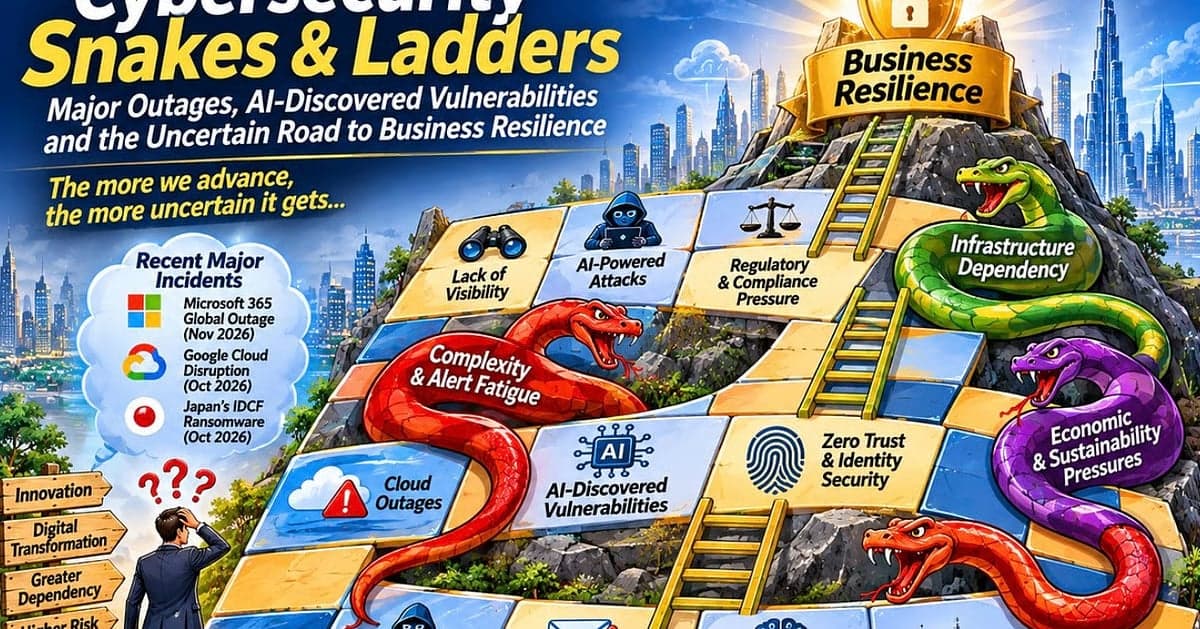
As organizations rapidly transition from sandboxed generative experiments to fully autonomous, multi-agent enterprise networks, a dangerous operational paradox is destabilizing corporate defense postures[1]. In an extensive analytical assessment published on November 14, 2026, enterprise information security strategists described a high-stakes game of "Cybersecurity Snakes and Ladders," wherein every technological breakthrough gained through AI automation is offset by systemic, emergent attack surfaces[1]. The analysis emphasizes that while generative AI copilots have dramatically accelerated automated threat discovery and code debugging, the unchecked proliferation of internal generative tools, autonomous machine agents, and third-party APIs is creating vulnerabilities faster than security governance can contain them[2][1].
At the center of this fragility is the rapid operationalization of agentic workflows[1]. Rather than merely generating text or software snippets, modern generative agents possess persistent memory, browse live networks, and execute API calls across disparate enterprise platforms[3][4]. However, corporate Chief Information Security Officers (CISOs) report that legacy perimeter firewalls and data-loss prevention suites are structurally incapable of monitoring the non-deterministic interactions between autonomous LLMs and critical databases[5][2][1]. The phenomenon of "shadow AI" - where employees integrate proprietary customer data and operational codebases into ungoverned external models - has been compounded by machine-identity sprawl, where autonomous sub-agents inherit broad enterprise access permissions without adequate human-in-the-loop audit gates[1].
The vulnerabilities are not theoretical[6]. Technical telemetry highlighted in weekend security briefings revealed that generative models are now being actively leveraged by sophisticated threat actors to perform automated smart-contract auditing, identifying deep semantic flaws that have already exposed upwards of $4.6 million in exploit opportunities[6]. Furthermore, inter-agent communication protocols and rapid API compounding mean that an outage or compromise in a single generative orchestration layer can cascade uncontrollably across interconnected business systems[1]. Cybersecurity leaders warned that enterprises are inadvertently replacing traditional human alert fatigue with deep architectural obscurity, where isolating failures in self-healing or autonomous pipelines proves extraordinarily difficult[1].
To counter this trajectory, cybersecurity and governance leaders are calling for an immediate paradigm shift in how generative AI is secured[2][1]. Experts argue that organizations must discard static perimeter defenses in favor of continuous, real-time LLM telemetry and runtime behavioral verification[2]. This includes enforcing strict Zero Trust access boundaries for all autonomous agents, deploying biometrically enforced human-authorization gates for high-stakes operational commands, and mandating automated failover and dependency-mapping drills[7][8][1]. Without these controls, the very generative tools deployed to unlock organizational productivity threaten to undermine enterprise operational resilience[9][1].
- Generative AI
- Autonomous Agents
- Cybersecurity
Story 8 of 13
2 min read
AI Cheating Scandal Rocks South Korea's National Tax Exam, Sparking Global Licensure Concerns
South Korea's top-scoring candidate in the national tax accountant exam confessed to using a covert multimodal generative AI system to cheat. The scheme involved a microcamera feeding exam questions to an external AI, which then provided step-by-step solutions via a concealed smartphone. This incident highlights the growing vulnerability of traditional testing environments to advanced AI.
Read the full storyFold the full story1 min · 4 sources
In a high-profile admission that has sent shockwaves through professional accreditation bodies, the top scorer in South Korea’s national tax accountant qualification examination confessed to using covert multimodal generative AI to orchestrate an elaborate cheating scheme[1]. The candidate, identified by the surname Han, posted a public video confession on the legal YouTube channel "Attorney Lee Don-ho" and submitted a formal written admission to the Seoul Metropolitan Police Agency after months of mounting official suspicion surrounding his near-perfect test scores[1].
Han disclosed that during both the April and July testing sessions of the high-stakes certification exam, he deployed a concealed microcamera to capture real-time images of complex exam questions[1]. The visual feeds - containing intricate tax calculations, multi-column financial statements, and regulatory case problems - were transmitted wirelessly to an external multimodal vision-language model[1]. The generative model rapidly parsed the textual and visual prompt inputs, resolved the domain-specific tax computations, and streamed the step-by-step solutions back to a concealed smartphone Han consulted inside the examination hall[1].
The revelation underscores the operational vulnerabilities facing formal testing environments as multimodal generative AI approaches sub-second latency and expert-level reasoning across specialized domains[2][1]. While early generations of large language models struggled with multi-part mathematical reasoning and tabular tax structures, modern vision-language models can reliably extract and process dense domain data from raw image captures[3][1]. The incident demonstrates that conventional physical invigilation and passive radio-frequency sweeps are increasingly inadequate against miniaturized optical hardware paired with cloud-hosted multimodal reasoning agents[1].
The confession has catalyzed urgent regulatory scrutiny across academic and professional examination boards internationally[4][1]. The case closely aligns with warnings issued by higher education oversight bodies, including England's Office for Students (OfS), which directed universities to immediately fortify assessments against generative AI and institute strictly monitored, technology-free physical assessment formats[4]. As professional credentialing organizations grapple with the implications of the South Korean breach, testing administrators are confronting the reality that without active signal jamming, optical scanning countermeasures, and modernized oral defenses, traditional written licensing exams can no longer guarantee individual competency[4][1].
- South Korea
- National Tax Exam
- Attorney Lee Don-ho
Story 9 of 13
2 min read
IRS and Global Regulators Target Generative AI Misconduct in Professions
Government regulators and professional bodies are increasing scrutiny on generative AI usage due to a rise in malpractice complaints within licensed professions. The IRS is tracking an increase in referrals related to questionable AI use by tax practitioners, emphasizing that professionals remain liable for errors generated by automated platforms. Separately, South Korea has launched a criminal investigation into a national exam candidate who admitted to using unauthorized AI tools.
Read the full storyFold the full story2 min · 2 sources
Government regulators and professional oversight bodies have begun intensifying scrutiny over generative AI usage, spurred by an influx of formal malpractice complaints involving licensed tax professionals, auditors, and legal practitioners[1][2]. Thomas Curtin, director of the Office of Professional Responsibility (OPR) at the Internal Revenue Service, disclosed that the federal tax agency is tracking an uptick in referrals involving questionable conduct linked to unvetted AI usage among tax practitioners[1]. Speaking at an American Institute of Certified Public Accountants gathering, Curtin noted that while AI-specific investigations currently constitute a targeted subset of active dockets, the sudden rise has necessitated immediate administrative action and binding circular guidance[1].
The operational liabilities within professional accounting and taxation stem from the persistent hallucination rates and flawed reasoning patterns exhibited by general-purpose language models when parsing complex statutory tax codes and administrative case law[1]. The IRS previously issued warning alerts reminding certified public accountants, attorneys, and enrolled agents that federal standards of practice codified in Circular 230 hold professionals personally liable for any errors, false filings, or unsubstantiated positions generated by automated platforms[1]. Curtin emphasized that the agency's 15-member supervisory unit is drafting expanded enforcement parameters to discipline practitioners who offload due diligence and statutory verification to autonomous software without rigorous manual auditing[1].
The governance challenge expanded onto the international stage simultaneously, as law enforcement authorities in South Korea confirmed the launch of a formal criminal investigation into the top scorer of the national tax accountant certification examination[2]. The candidate, who attained first-place rankings across consecutive exam cycles, admitted to using unauthorized generative AI systems during test sittings[2]. The confession has reverberated across international qualification agencies, underscoring systemic vulnerabilities in traditional credentialing frameworks in an era of ubiquitous, miniature AI interfaces[2].
Industry legal experts and accounting compliance officers argue that these back-to-back incidents mark the end of unregulated generative AI experimentation in high-stakes professional fields[1][2]. While corporate tax software providers increasingly embed specialized models to accelerate discovery and code interpretation[1], regulatory enforcement demonstrates that automated tool outputs carry full professional liability[1]. For enterprise firms, relying on black-box generative tools without exhaustive human validation now carries direct regulatory censure, license revocation risks, and immediate reputational exposure[1].
- Internal Revenue Service (IRS)
- Office of Professional Responsibility (OPR)
- Thomas Curtin
Story 10 of 13
2 min read
Healthcare Generative AI Adoption Soars to 54.8% Amid Governance Deficit: CHIME Report
The CHIME 2026 Digital Health Most Wired survey reveals generative AI adoption in healthcare has reached 54.8%, driven by ambient listening assistants and documentation tools. Despite high adoption, only 16.4% of systems have documented processes for post-deployment auditing and monitoring of AI performance. This creates a significant governance deficit, increasing liability risks and potential for diagnostic errors.
Read the full storyFold the full story2 min · 1 source
The College of Healthcare Information Management Executives (CHIME) released findings from its 2026 Digital Health Most Wired survey, reporting a rapid surge in generative artificial intelligence adoption across clinical settings alongside severe deficits in operational oversight[1]. According to the study, 93.2% of surveyed healthcare systems have deployed artificial intelligence tools in some capacity, while the share of organizations reporting full generative AI integration nearly doubled over the past twelve months, jumping from 31.0% to 54.8%[1].
The primary vector for this adoption has been the deployment of multimodal ambient listening assistants and large language model documentation pipelines, which capture physician-patient consultations in real time, generate structured clinical summaries, and draft administrative billing codes[1]. Adoption has also expanded rapidly into back-office insurance communications; however, the data revealed an operational disparity between institutions[1]. While larger health networks reported a 49.4% automation rate for clinical prior authorizations, smaller and rural healthcare facilities reported an automation rate of just 28.9%, creating administrative vulnerabilities ahead of mandatory Centers for Medicare & Medicaid Services (CMS) payer API rules taking effect in January 2027[1].
Despite the acceleration of generative tools into clinical workflows, the report uncovered an acute systemic governance blind spot[1]. Only 16.4% of surveyed healthcare systems using AI have fully documented processes for continuously auditing, evaluating, and monitoring model performance after deployment[1]. In contrast to standard clinical diagnostic equipment, the vast majority of hospital IT departments have yet to establish ongoing telemetry to detect hallucination drift, semantic degradation, or bias across generative language tools once integrated into live electronic health record (EHR) environments[1].
Health informatics specialists and hospital Chief Information Officers note that this governance deficit represents the next major regulatory and legal battleground for digital healthcare[1]. As generative models assume greater responsibility in diagnostic transcription and clinical coding, the lack of real-time monitoring exposes medical institutions to heightened liability, diagnostic error propagation, and compliance penalties[1]. CHIME researchers noted that while operational resilience drills have improved - with organizations conducting regular IT failover drills being twice as likely to restore critical clinical systems within four hours (45.7% versus 23.5%) - comparable stress-testing and governance protocols for deployed generative models remain virtually non-existent[1].
- CHIME
- Digital Health Most Wired
- Centers for Medicare & Medicaid Services
Story 11 of 13
2 min read
Study: Nurse GenAI Adoption Driven by Leadership, Not Policy
A study of 1,136 registered nurses in the U.S. found that perceived supervisory encouragement and organizational support are the strongest predictors of generative AI adoption in clinical settings. Formal institutional AI policies showed no significant correlation with nurses' daily usage of these technologies. The research highlights a gap between executive governance and frontline realities, suggesting that a supportive culture is more influential than rigid policies.
Read the full storyFold the full story1 min · 1 source
A nationwide, cross-sectional investigation examining 1,136 practicing registered nurses across the United States has uncovered significant insights into how generative AI tools are actually incorporated into frontline clinical settings[1]. The clinical study determined that perceived supervisory encouragement and organizational support serve as the strongest statistical predictors of generative AI usage among healthcare staff[1]. Crucially, the presence of formal institutional AI policies exhibited no statistically significant association with nurses' day-to-day adoption of these technologies, demonstrating a sharp divergence between executive administrative governance and ward-level realities[1].
Historically, artificial intelligence adoption within hospital environments has followed a centralized, top-down trajectory dominated by predictive analytics[1]. Data from the American Hospital Association reveals that approximately 65% of U.S. hospitals use predictive machine learning algorithms to forecast inpatient deterioration, evaluate readmission liabilities, and streamline administrative billing - with roughly 79% of these systems deployed directly through vendor-supplied electronic health record (EHR) platforms[1]. However, the rise of powerful, accessible generative models such as ChatGPT, Claude, and Gemini has created an entirely novel, grassroots implementation model where individual practitioners actively experiment with consumer tools on personal and clinical devices[1].
Nurses participating in the study reported applying general-purpose generative models to complex care tasks, including translating intricate medical discharge instructions into plain language for patients, drafting individualized educational collateral, synthesizing lengthy diagnostic histories, and troubleshooting administrative documentation hurdles[1]. The researchers observed that when clinical nurse specialists and nurse managers fostered open environments that encouraged exploring AI tools safely, staff adoption and peer learning accelerated[1]. Conversely, static corporate policy documents, often composed of generic compliance restrictions, did little to influence or deter usage patterns on hospital floors[1].
Healthcare operations specialists note that the study’s conclusions offer a vital roadmap for health systems grappling with generative AI integration[1]. As hospital networks face persistent staffing shortages and administrative burnout, grassroots generative AI adoption represents a potent bottom-up productivity relief valve[1]. However, experts warn that without active, culturally integrated supervisory leadership, unguided clinician usage risks exposing protected health information (PHI) and introducing unchecked clinical hallucinations into bedside patient care[1].
- Generative AI
- Registered Nurses
- AI Policies
Story 12 of 13
2 min read
Google Mandates AI Search for K-12 Schools, Sparking Controversy
Google has announced a new policy requiring K-12 school districts to adopt its AI-generated search experience for student accounts, or risk losing access to Google Search entirely. Starting in January, standard, non-AI search will not be available on managed student profiles. This mandate directly challenges districts that have implemented AI bans due to concerns about accuracy and academic integrity, forcing administrators to choose between accepting AI-generated content or disabling a primary educational tool.
Read the full storyFold the full story2 min · 1 source
A major controversy over generative AI adoption in public education erupted after Google announced an operational mandate requiring K-12 school districts to opt into the company's AI-generated search experience or lose access to Google Search entirely on student accounts[1]. Chris Phillips, vice president and general manager of education at Google, confirmed the company’s stance during a briefing, explaining that starting in January, school systems will no longer be permitted to use standard, non-AI search on managed student profiles[1]. Phillips stated plainly that if an educational institution is uncomfortable with generative outputs and wishes to keep AI features deactivated, its sole administrative alternative is to disable Google Search across the district altogether[1].
The announcement has disrupted administrative planning across U.S. school districts, which have spent years integrating Google Workspace, Chromebook hardware, and Google Classroom into their core curricula[1]. Large school districts, including the Los Angeles Unified School District - the nation’s second-largest public school system - had previously instituted strict guardrails and outright bans on generative AI platforms in student environments due to hallucinations, algorithmic bias, and concerns over academic integrity[1]. Google’s all-or-nothing approach directly challenges those local district policies, forcing administrators to either accept unvetted automated summaries or cut off their primary online research tool[1].
The mandate has drawn intense backlash from child safety advocates, privacy watchdogs, and parent coalitions[1]. Lila Byock, founder of the advocacy group Schools Beyond Screens, publicly condemned Google's move as an act of corporate bullying, asserting that pedagogical efficacy rather than shareholder value must govern public school technology[1]. Byock argued that after parents and educators pushed back against the unvetted introduction of generative AI into elementary and secondary education, Google effectively delivered an ultimatum to maintain commercial control over classroom software ecosystems[1].
The dispute underscores the growing tension between software conglomerates seeking ubiquity for generative tools and institutional gatekeepers tasked with managing risk[1]. While technology proponents argue that early immersion in generative search prepares students for an AI-native workforce, superintendents and education researchers warn that forcing untested predictive generation into inquiry-based learning undermines information literacy, bypasses source attribution, and exposes public districts to unpredictable compliance liabilities[1].
- Chris Phillips
- K-12 Education
Story 13 of 13
2 min read
Burbank and Manchester Festivals Ban Generative AI Content
Generative AI faces significant backlash as the Burbank City Council bans its use in all public municipal communications, with narrow exceptions for safety announcements. Concurrently, the Manchester Animation Festival has permanently disqualified animated films produced using generative AI systems. These actions reflect growing concerns over intellectual property appropriation, the devaluation of human creative labor, and the protection of local creative economies.
Read the full storyFold the full story1 min · 2 sources
A mounting creative and regulatory backlash against generative AI reached key milestones across both civic and cultural institutions[1][2]. In Southern California, the Burbank City Council enacted an outright prohibition banning the deployment of generative AI-created artwork across all public-facing municipal communications, publications, and digital displays[1]. The resolution, spearheaded by Councilwoman Nikki Perez, sidestepped weaker administrative guidelines proposed by city staff in favor of a total ban with narrow exceptions granted solely for life-safety emergency announcements[1]. Perez argued that as the physical hub for premier entertainment entities like Warner Bros. and Disney Animation, the municipality had an obligation to protect creative labor and repudiate models trained on uncompensated artistic intellectual property[1].
Concurrently, the Manchester Animation Festival (MAF) - the United Kingdom's primary Oscar- and BAFTA-qualifying animation event - published formal submission regulations permanently disqualifying any animated films produced using generative AI systems[2]. Under its comprehensive two-page policy guidelines, the festival established a zero-tolerance boundary: if any portion of a submitted project’s moving imagery or audio incorporates synthetic frames generated or algorithmically altered by generative foundation models, the entry is automatically excluded from competition[2].
The coordinated resistance from a global festival and a municipal entertainment center highlights the acute legal and ethical tensions surrounding commercial creative tools such as Sora, Runway, and Midjourney[1][2]. During public testimony before the Burbank Council, visual artists, animators, and guild representatives testified that generative AI deployment represents systemic intellectual property appropriation that devalues human tradecraft and threatens local creative economies[1]. City officials affirmed that municipal projects will source original creative work exclusively from local human artists, while third-party graphics shared by civic partners will require explicit origin tagging[1].
The twin bans signal an important pivot in the public reception of generative creative tools[1][2]. While software enterprises continue to pitch generative workflows to media corporations as critical cost-reduction mechanisms, prestigious cultural institutions and industry-dense municipalities are formalizing hard boundaries to protect traditional production craftsmanship, human authorship, and artist compensation structures from algorithmic replacement[1][2].
- Burbank City Council
- Manchester Animation Festival (MAF)
- Generative AI
You're all caught up.
That's every story in Sunday's PiBrief Tech. And there's a newer edition waiting for you.
Subscribe to receive daily briefings about AI and tech in your email.
Get PiBrief Tech in your inbox
A free newsletter on AI and technology, curated by senior software engineers at Big Tech. Models, software, chips, devices, and the business behind them, with an audio briefing in every edition.
Free forever / no account / 1-click unsubscribe